

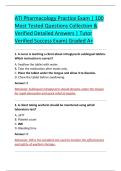
ATI Pharmacology Practice Exam | 100
Most Tested Questions Collection &
Verified Detailed Answers | Tutor
Verified Success Exam) Graded A+
1. A nurse is teaching a client about nitroglycerin sublingual tablets.
Which instruction is correct?
A. Swallow the tablet with water.
B. Take the medication after meals only.
C. Place the tablet under the tongue and allow it to dissolve.
D. Chew the tablet before swallowing.
Answer: C
Rationale: Sublingual nitroglycerin should dissolve under the tongue
for rapid absorption and quick relief of angina.
2. A client taking warfarin should be monitored using which
laboratory test?
A. aPTT
B. Platelet count
C. INR
D. Bleeding time
Answer: C
Rationale: INR is the standard test used to monitor the effectiveness
and safety of warfarin therapy.
,3. Which electrolyte imbalance is commonly associated with
furosemide therapy?
A. Hyperkalemia
B. Hypernatremia
C. Hypercalcemia
D. Hypokalemia
Answer: D
Rationale: Loop diuretics increase potassium excretion, increasing the
risk of hypokalemia.
4. Which medication should be readily available when
administering morphine?
A. Flumazenil
B. Protamine sulfate
C. Naloxone
D. Vitamin K
Answer: C
Rationale: Naloxone is an opioid antagonist used to reverse
respiratory depression caused by opioids.
5. A client taking lisinopril develops a persistent dry cough. The
nurse recognizes this as:
A. Allergic reaction
B. Expected therapeutic effect
C. Common adverse effect of ACE inhibitors
D. Sign of pneumonia
Answer: C
,Rationale: ACE inhibitors commonly cause a dry, persistent cough due
to increased bradykinin.
6. Which insulin has the fastest onset of action?
A. NPH
B. Glargine
C. Regular insulin
D. Lispro
Answer: D
Rationale: Lispro is a rapid-acting insulin that begins working within
approximately 15 minutes.
7. Before administering digoxin, the nurse should assess:
A. Respiratory rate
B. Temperature
C. Blood glucose
D. Apical pulse
Answer: D
Rationale: Digoxin slows heart rate. Hold the medication and notify
the provider if the apical pulse is below prescribed parameters.
8. Which medication is classified as a beta-blocker?
A. Amlodipine
B. Losartan
C. Metoprolol
D. Hydrochlorothiazide
Answer: C
, Rationale: Metoprolol blocks beta-adrenergic receptors, lowering
heart rate and blood pressure.
9. A client taking metformin should temporarily discontinue the
medication before:
A. Vaccination
B. Exercise
C. IV contrast administration
D. Eating carbohydrates
Answer: C
Rationale: Metformin is withheld around iodinated contrast
procedures to reduce the risk of lactic acidosis.
10. Which finding indicates therapeutic effectiveness of albuterol?
A. Bradycardia
B. Decreased blood pressure
C. Improved breath sounds and decreased wheezing
D. Increased sputum production
Answer: C
Rationale: Albuterol relaxes bronchial smooth muscle, improving
airflow.
11. Which adverse effect is most concerning after starting heparin?
A. Mild headache
B. Dry mouth
C. Bleeding gums
D. Constipation
Most Tested Questions Collection &
Verified Detailed Answers | Tutor
Verified Success Exam) Graded A+
1. A nurse is teaching a client about nitroglycerin sublingual tablets.
Which instruction is correct?
A. Swallow the tablet with water.
B. Take the medication after meals only.
C. Place the tablet under the tongue and allow it to dissolve.
D. Chew the tablet before swallowing.
Answer: C
Rationale: Sublingual nitroglycerin should dissolve under the tongue
for rapid absorption and quick relief of angina.
2. A client taking warfarin should be monitored using which
laboratory test?
A. aPTT
B. Platelet count
C. INR
D. Bleeding time
Answer: C
Rationale: INR is the standard test used to monitor the effectiveness
and safety of warfarin therapy.
,3. Which electrolyte imbalance is commonly associated with
furosemide therapy?
A. Hyperkalemia
B. Hypernatremia
C. Hypercalcemia
D. Hypokalemia
Answer: D
Rationale: Loop diuretics increase potassium excretion, increasing the
risk of hypokalemia.
4. Which medication should be readily available when
administering morphine?
A. Flumazenil
B. Protamine sulfate
C. Naloxone
D. Vitamin K
Answer: C
Rationale: Naloxone is an opioid antagonist used to reverse
respiratory depression caused by opioids.
5. A client taking lisinopril develops a persistent dry cough. The
nurse recognizes this as:
A. Allergic reaction
B. Expected therapeutic effect
C. Common adverse effect of ACE inhibitors
D. Sign of pneumonia
Answer: C
,Rationale: ACE inhibitors commonly cause a dry, persistent cough due
to increased bradykinin.
6. Which insulin has the fastest onset of action?
A. NPH
B. Glargine
C. Regular insulin
D. Lispro
Answer: D
Rationale: Lispro is a rapid-acting insulin that begins working within
approximately 15 minutes.
7. Before administering digoxin, the nurse should assess:
A. Respiratory rate
B. Temperature
C. Blood glucose
D. Apical pulse
Answer: D
Rationale: Digoxin slows heart rate. Hold the medication and notify
the provider if the apical pulse is below prescribed parameters.
8. Which medication is classified as a beta-blocker?
A. Amlodipine
B. Losartan
C. Metoprolol
D. Hydrochlorothiazide
Answer: C
, Rationale: Metoprolol blocks beta-adrenergic receptors, lowering
heart rate and blood pressure.
9. A client taking metformin should temporarily discontinue the
medication before:
A. Vaccination
B. Exercise
C. IV contrast administration
D. Eating carbohydrates
Answer: C
Rationale: Metformin is withheld around iodinated contrast
procedures to reduce the risk of lactic acidosis.
10. Which finding indicates therapeutic effectiveness of albuterol?
A. Bradycardia
B. Decreased blood pressure
C. Improved breath sounds and decreased wheezing
D. Increased sputum production
Answer: C
Rationale: Albuterol relaxes bronchial smooth muscle, improving
airflow.
11. Which adverse effect is most concerning after starting heparin?
A. Mild headache
B. Dry mouth
C. Bleeding gums
D. Constipation


