

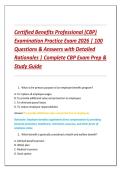
Certified Benefits Professional (CBP)
Examination Practice Exam 2026 | 100
Questions & Answers with Detailed
Rationales | Complete CBP Exam Prep &
Study Guide
1. What is the primary purpose of an employee benefits program?
A. To replace all employee wages
B. To provide additional value and protection to employees
C. To eliminate payroll taxes
D. To reduce employee responsibilities
Answer: To provide additional value and protection to employees
Rationale: Employee benefits supplement direct compensation by providing
financial protection, healthcare, retirement resources, and other forms of
employee value.
2. Which benefit is generally considered a health and welfare benefit?
A. Defined benefit pension
B. 401(k) plan
C. Medical insurance
D. Stock option
,Answer: Medical insurance
Rationale: Medical insurance is a health and welfare benefit designed to help
employees manage healthcare expenses.
3. What is a deductible in a health insurance plan?
A. The amount the employer contributes annually
B. The amount an employee generally pays before the plan begins paying covered
expenses
C. The insurance company's profit
D. The employee's monthly premium
Answer: The amount an employee generally pays before the plan begins paying
covered expenses
Rationale: A deductible is the amount a covered individual typically must pay for
eligible expenses before the insurer begins sharing costs under the plan.
4. What is coinsurance?
A. A fixed amount paid for a service
B. A percentage of covered costs paid by the member after applicable cost-
sharing requirements
C. The annual insurance premium
D. A retirement contribution
Answer: A percentage of covered costs paid by the member after applicable
cost-sharing requirements
Rationale: Coinsurance represents cost sharing based on a percentage of the
allowed or covered expense.
5. What is a copayment?
A. A fixed amount paid for a covered healthcare service
B. An employer retirement contribution
,C. A tax penalty
D. An insurance deductible
Answer: A fixed amount paid for a covered healthcare service
Rationale: A copayment, or copay, is generally a predetermined dollar amount
that a participant pays for a covered service.
6. Which type of health plan commonly requires members to use a network
and may require a primary care provider to coordinate care?
A. HMO
B. PPO
C. Indemnity plan
D. HSA
Answer: HMO
Rationale: Health Maintenance Organizations commonly emphasize
coordinated care through a provider network and primary care structure.
7. What is a major characteristic of a PPO?
A. No provider network exists
B. Members generally have greater flexibility to use out-of-network providers
C. Only preventive care is covered
D. Retirement savings are required
Answer: Members generally have greater flexibility to use out-of-network
providers
Rationale: Preferred Provider Organizations generally provide network
advantages while allowing some coverage for out-of-network care, usually at
higher member cost.
8. What is a Health Savings Account (HSA) primarily designed to do?
, A. Fund qualified medical expenses using tax-advantaged contributions
B. Replace Social Security
C. Provide life insurance
D. Pay employee bonuses
Answer: Fund qualified medical expenses using tax-advantaged contributions
Rationale: HSAs allow eligible individuals to set aside money on a tax-
advantaged basis for qualified medical expenses.
9. Which type of health plan is commonly associated with HSA eligibility?
A. Any health plan without exception
B. A qualifying high-deductible health plan
C. A traditional pension plan
D. A dental-only plan
Answer: A qualifying high-deductible health plan
Rationale: HSA eligibility generally requires coverage under an HSA-compatible
high-deductible health plan and satisfaction of applicable eligibility
requirements.
10.What is a Flexible Spending Account (FSA)?
A. A tax-advantaged account that can reimburse eligible expenses under
applicable rules
B. A defined benefit pension
C. An employer stock plan
D. A life insurance policy
Answer: A tax-advantaged account that can reimburse eligible expenses under
applicable rules
Rationale: FSAs allow employees to set aside pre-tax compensation for eligible
expenses, subject to plan terms and applicable tax rules.
11.What is the primary purpose of dental insurance?
Examination Practice Exam 2026 | 100
Questions & Answers with Detailed
Rationales | Complete CBP Exam Prep &
Study Guide
1. What is the primary purpose of an employee benefits program?
A. To replace all employee wages
B. To provide additional value and protection to employees
C. To eliminate payroll taxes
D. To reduce employee responsibilities
Answer: To provide additional value and protection to employees
Rationale: Employee benefits supplement direct compensation by providing
financial protection, healthcare, retirement resources, and other forms of
employee value.
2. Which benefit is generally considered a health and welfare benefit?
A. Defined benefit pension
B. 401(k) plan
C. Medical insurance
D. Stock option
,Answer: Medical insurance
Rationale: Medical insurance is a health and welfare benefit designed to help
employees manage healthcare expenses.
3. What is a deductible in a health insurance plan?
A. The amount the employer contributes annually
B. The amount an employee generally pays before the plan begins paying covered
expenses
C. The insurance company's profit
D. The employee's monthly premium
Answer: The amount an employee generally pays before the plan begins paying
covered expenses
Rationale: A deductible is the amount a covered individual typically must pay for
eligible expenses before the insurer begins sharing costs under the plan.
4. What is coinsurance?
A. A fixed amount paid for a service
B. A percentage of covered costs paid by the member after applicable cost-
sharing requirements
C. The annual insurance premium
D. A retirement contribution
Answer: A percentage of covered costs paid by the member after applicable
cost-sharing requirements
Rationale: Coinsurance represents cost sharing based on a percentage of the
allowed or covered expense.
5. What is a copayment?
A. A fixed amount paid for a covered healthcare service
B. An employer retirement contribution
,C. A tax penalty
D. An insurance deductible
Answer: A fixed amount paid for a covered healthcare service
Rationale: A copayment, or copay, is generally a predetermined dollar amount
that a participant pays for a covered service.
6. Which type of health plan commonly requires members to use a network
and may require a primary care provider to coordinate care?
A. HMO
B. PPO
C. Indemnity plan
D. HSA
Answer: HMO
Rationale: Health Maintenance Organizations commonly emphasize
coordinated care through a provider network and primary care structure.
7. What is a major characteristic of a PPO?
A. No provider network exists
B. Members generally have greater flexibility to use out-of-network providers
C. Only preventive care is covered
D. Retirement savings are required
Answer: Members generally have greater flexibility to use out-of-network
providers
Rationale: Preferred Provider Organizations generally provide network
advantages while allowing some coverage for out-of-network care, usually at
higher member cost.
8. What is a Health Savings Account (HSA) primarily designed to do?
, A. Fund qualified medical expenses using tax-advantaged contributions
B. Replace Social Security
C. Provide life insurance
D. Pay employee bonuses
Answer: Fund qualified medical expenses using tax-advantaged contributions
Rationale: HSAs allow eligible individuals to set aside money on a tax-
advantaged basis for qualified medical expenses.
9. Which type of health plan is commonly associated with HSA eligibility?
A. Any health plan without exception
B. A qualifying high-deductible health plan
C. A traditional pension plan
D. A dental-only plan
Answer: A qualifying high-deductible health plan
Rationale: HSA eligibility generally requires coverage under an HSA-compatible
high-deductible health plan and satisfaction of applicable eligibility
requirements.
10.What is a Flexible Spending Account (FSA)?
A. A tax-advantaged account that can reimburse eligible expenses under
applicable rules
B. A defined benefit pension
C. An employer stock plan
D. A life insurance policy
Answer: A tax-advantaged account that can reimburse eligible expenses under
applicable rules
Rationale: FSAs allow employees to set aside pre-tax compensation for eligible
expenses, subject to plan terms and applicable tax rules.
11.What is the primary purpose of dental insurance?


