

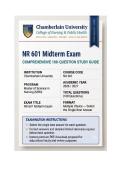
,NR 601 Midterm Exam – Primary Care: Maturing & Aged
Family – Q&A (2026) PDF | Chamberlain
1. The aging process causes which normal physiological change in the heart valves?
A) Heart valves thicken and become stiffer
B) Heart valves thin and become more flexible
C) Heart valves remain unchanged
D) Heart valves increase in size
Correct Answer: A) Heart valves thicken and become stiffer
Rationale: With aging, valves develop fibrotic thickening and calcification, leading to stiffness.
This can produce murmurs and reduce cardiac efficiency. They do not thin or become more
flexible, and size increase is not a primary age-related change.
2. Beginning at approximately age 55, most people can expect which of the following
changes?
A) Stable body weight
B) A 1- to 2-inch decline in height
C) Sharper vision and hearing
D) Increased muscle mass
Correct Answer: B) A 1- to 2-inch decline in height
Rationale: Height loss of 1-2 inches is common due to vertebral disc compression, decreased
bone density, and postural changes. Vision and hearing typically decline, muscle mass
decreases, and body weight may fluctuate.
3. Which theory of aging proposes that aging results from cumulative mistakes in DNA and
RNA over time?
,A) Free radical theory
B) Neuroendocrine theory
C) Error theory
D) Immunological theory
Correct Answer: C) Error theory
Rationale: Error theory posits that genetic mutations accumulate from DNA replication errors
and RNA transcription mistakes, impairing cell function. Free radical theory involves oxidative
damage; neuroendocrine theory involves hormonal decline.
4. A lipid panel should ideally be measured after:
A) A full meal
B) Any time of day
C) A high-fat breakfast
D) An overnight fast
Correct Answer: D) An overnight fast
Rationale: Fasting for 9-12 hours provides accurate baseline LDL, HDL, and triglyceride levels
essential for ASCVD risk assessment. Non-fasting samples may overestimate triglycerides and
affect calculated LDL values.
5. According to the 2017 ACC hypertension guidelines, Stage 1 hypertension is defined as a
systolic blood pressure of:
A) <120 mmHg
B) 130-139 mmHg or diastolic 80-89 mmHg
C) ≥140 mmHg or diastolic ≥90 mmHg
D) 120-129 mmHg and diastolic <80 mmHg
, Correct Answer: B) 130-139 mmHg or diastolic 80-89 mmHg
Rationale: Stage 1 hypertension is systolic 130-139 or diastolic 80-89. Stage 2 is ≥140/90.
Elevated BP is systolic 120-129 with diastolic <80. Lifestyle modification is initial; medication
if high ASCVD risk.
6. Which ACC/AHA heart failure stage describes a patient at high risk for heart failure but
without structural heart disease or symptoms?
A) Stage A
B) Stage B
C) Stage C
D) Stage D
Correct Answer: A) Stage A
Rationale: Stage A includes patients with hypertension, diabetes, or other risk factors but no
structural heart changes or symptoms. Stage B has structural disease without symptoms;
Stage C has symptoms; Stage D is refractory.
7. The nurse practitioner recognizes that an atypical presentation of pneumonia in an elderly
patient is:
A) Fever and productive cough
B) Pleuritic chest pain
C) Hemoptysis
D) Acute confusion and functional decline
Correct Answer: D) Acute confusion and functional decline
Family – Q&A (2026) PDF | Chamberlain
1. The aging process causes which normal physiological change in the heart valves?
A) Heart valves thicken and become stiffer
B) Heart valves thin and become more flexible
C) Heart valves remain unchanged
D) Heart valves increase in size
Correct Answer: A) Heart valves thicken and become stiffer
Rationale: With aging, valves develop fibrotic thickening and calcification, leading to stiffness.
This can produce murmurs and reduce cardiac efficiency. They do not thin or become more
flexible, and size increase is not a primary age-related change.
2. Beginning at approximately age 55, most people can expect which of the following
changes?
A) Stable body weight
B) A 1- to 2-inch decline in height
C) Sharper vision and hearing
D) Increased muscle mass
Correct Answer: B) A 1- to 2-inch decline in height
Rationale: Height loss of 1-2 inches is common due to vertebral disc compression, decreased
bone density, and postural changes. Vision and hearing typically decline, muscle mass
decreases, and body weight may fluctuate.
3. Which theory of aging proposes that aging results from cumulative mistakes in DNA and
RNA over time?
,A) Free radical theory
B) Neuroendocrine theory
C) Error theory
D) Immunological theory
Correct Answer: C) Error theory
Rationale: Error theory posits that genetic mutations accumulate from DNA replication errors
and RNA transcription mistakes, impairing cell function. Free radical theory involves oxidative
damage; neuroendocrine theory involves hormonal decline.
4. A lipid panel should ideally be measured after:
A) A full meal
B) Any time of day
C) A high-fat breakfast
D) An overnight fast
Correct Answer: D) An overnight fast
Rationale: Fasting for 9-12 hours provides accurate baseline LDL, HDL, and triglyceride levels
essential for ASCVD risk assessment. Non-fasting samples may overestimate triglycerides and
affect calculated LDL values.
5. According to the 2017 ACC hypertension guidelines, Stage 1 hypertension is defined as a
systolic blood pressure of:
A) <120 mmHg
B) 130-139 mmHg or diastolic 80-89 mmHg
C) ≥140 mmHg or diastolic ≥90 mmHg
D) 120-129 mmHg and diastolic <80 mmHg
, Correct Answer: B) 130-139 mmHg or diastolic 80-89 mmHg
Rationale: Stage 1 hypertension is systolic 130-139 or diastolic 80-89. Stage 2 is ≥140/90.
Elevated BP is systolic 120-129 with diastolic <80. Lifestyle modification is initial; medication
if high ASCVD risk.
6. Which ACC/AHA heart failure stage describes a patient at high risk for heart failure but
without structural heart disease or symptoms?
A) Stage A
B) Stage B
C) Stage C
D) Stage D
Correct Answer: A) Stage A
Rationale: Stage A includes patients with hypertension, diabetes, or other risk factors but no
structural heart changes or symptoms. Stage B has structural disease without symptoms;
Stage C has symptoms; Stage D is refractory.
7. The nurse practitioner recognizes that an atypical presentation of pneumonia in an elderly
patient is:
A) Fever and productive cough
B) Pleuritic chest pain
C) Hemoptysis
D) Acute confusion and functional decline
Correct Answer: D) Acute confusion and functional decline


