

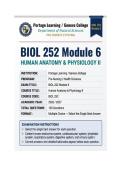
,BIOL 252 Module 6 Exam | Human Anatomy &
Physiology II w/Lab Exam Q&A | Portage Learning
1. The correct order of the digestive processes is:
A) Ingestion, propulsion, mechanical digestion, chemical digestion, absorption,
defecation
B) Propulsion, ingestion, mechanical digestion, absorption, chemical digestion,
defecation
C) Ingestion, mechanical digestion, propulsion, absorption, chemical digestion,
defecation
D) Absorption, ingestion, propulsion, mechanical digestion, chemical digestion,
defecation
Correct Answer: A) Ingestion, propulsion, mechanical digestion, chemical
digestion, absorption, defecation
Rationale: The digestive system processes food in a sequential manner:
ingestion (eating), propulsion (swallowing and peristalsis), mechanical
breakdown (chewing, churning), chemical digestion (enzymes), absorption of
nutrients, and defecation of waste. This order ensures efficient nutrient
extraction.
2. The layer of the alimentary canal responsible for nutrient absorption is the:
A) Serosa
B) Mucosa
C) Submucosa
D) Muscularis externa
,Correct Answer: B) Mucosa
Rationale: The mucosa is the innermost layer, consisting of epithelium, lamina
propria, and muscularis mucosae. Its epithelium is specialized for secretion and
absorption, and it contains blood vessels and lymphatics that transport
absorbed nutrients.
3. Which of the following correctly lists the four tissue layers of the alimentary
canal from the lumen outward?
A) Serosa, muscularis externa, submucosa, mucosa
B) Mucosa, submucosa, serosa, muscularis externa
C) Mucosa, submucosa, muscularis externa, serosa
D) Submucosa, mucosa, muscularis externa, serosa
Correct Answer: C) Mucosa, submucosa, muscularis externa, serosa
Rationale: The layers from the innermost (lumen side) to outermost are:
mucosa (epithelium, lamina propria, muscularis mucosae), submucosa
(connective tissue with vessels and nerves), muscularis externa (smooth muscle
for motility), and serosa/adventitia (outer covering).
4. The esophagus is lined by which type of epithelium?
A) Simple columnar
B) Stratified squamous keratinized
C) Pseudostratified ciliated columnar
D) Non‑keratinized stratified squamous
, Correct Answer: D) Non‑keratinized stratified squamous
Rationale: The esophagus is subject to abrasion from swallowed food.
Non‑keratinized stratified squamous epithelium provides a protective,
multilayered surface that resists mechanical stress while remaining moist,
unlike keratinized skin.
5. The stomach and small intestine are lined by which epithelium?
A) Stratified squamous
B) Simple columnar
C) Transitional
D) Simple cuboidal
Correct Answer: B) Simple columnar
Rationale: Simple columnar epithelium lines the stomach and intestines,
facilitating secretion of mucus, enzymes, and acid, as well as absorption of
nutrients. Its single layer allows efficient transport while maintaining a
protective barrier.
6. Longitudinal folds in the stomach mucosa that allow it to expand after a meal
are:
A) Rugae
B) Villi
C) Plicae circulares
D) Haustra
Physiology II w/Lab Exam Q&A | Portage Learning
1. The correct order of the digestive processes is:
A) Ingestion, propulsion, mechanical digestion, chemical digestion, absorption,
defecation
B) Propulsion, ingestion, mechanical digestion, absorption, chemical digestion,
defecation
C) Ingestion, mechanical digestion, propulsion, absorption, chemical digestion,
defecation
D) Absorption, ingestion, propulsion, mechanical digestion, chemical digestion,
defecation
Correct Answer: A) Ingestion, propulsion, mechanical digestion, chemical
digestion, absorption, defecation
Rationale: The digestive system processes food in a sequential manner:
ingestion (eating), propulsion (swallowing and peristalsis), mechanical
breakdown (chewing, churning), chemical digestion (enzymes), absorption of
nutrients, and defecation of waste. This order ensures efficient nutrient
extraction.
2. The layer of the alimentary canal responsible for nutrient absorption is the:
A) Serosa
B) Mucosa
C) Submucosa
D) Muscularis externa
,Correct Answer: B) Mucosa
Rationale: The mucosa is the innermost layer, consisting of epithelium, lamina
propria, and muscularis mucosae. Its epithelium is specialized for secretion and
absorption, and it contains blood vessels and lymphatics that transport
absorbed nutrients.
3. Which of the following correctly lists the four tissue layers of the alimentary
canal from the lumen outward?
A) Serosa, muscularis externa, submucosa, mucosa
B) Mucosa, submucosa, serosa, muscularis externa
C) Mucosa, submucosa, muscularis externa, serosa
D) Submucosa, mucosa, muscularis externa, serosa
Correct Answer: C) Mucosa, submucosa, muscularis externa, serosa
Rationale: The layers from the innermost (lumen side) to outermost are:
mucosa (epithelium, lamina propria, muscularis mucosae), submucosa
(connective tissue with vessels and nerves), muscularis externa (smooth muscle
for motility), and serosa/adventitia (outer covering).
4. The esophagus is lined by which type of epithelium?
A) Simple columnar
B) Stratified squamous keratinized
C) Pseudostratified ciliated columnar
D) Non‑keratinized stratified squamous
, Correct Answer: D) Non‑keratinized stratified squamous
Rationale: The esophagus is subject to abrasion from swallowed food.
Non‑keratinized stratified squamous epithelium provides a protective,
multilayered surface that resists mechanical stress while remaining moist,
unlike keratinized skin.
5. The stomach and small intestine are lined by which epithelium?
A) Stratified squamous
B) Simple columnar
C) Transitional
D) Simple cuboidal
Correct Answer: B) Simple columnar
Rationale: Simple columnar epithelium lines the stomach and intestines,
facilitating secretion of mucus, enzymes, and acid, as well as absorption of
nutrients. Its single layer allows efficient transport while maintaining a
protective barrier.
6. Longitudinal folds in the stomach mucosa that allow it to expand after a meal
are:
A) Rugae
B) Villi
C) Plicae circulares
D) Haustra


