

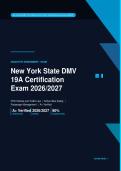
New York State DMV 19A Certification Exam Practice Test Questions and Answers 2026/2027
OBJECTIVE ASSESSMENT - EXAM
New York State DMV
19A Certification
Exam 2026/2027
NYS Vehicle and Traffic Law | School Bus Safety |
Passenger Management | A+ Verified
A+ Verified 2026/2027 80%
VERIFICATION EDITION PASSING SCORE
COVER PAGE - 1
, New York State DMV 19A Certification Exam Practice Test Questions and Answers
SECTIONS COVERED 2026/2027
New York State DMV 19A Certification Exam Practice Test Questions and Answers 2026/2027
Sections in this exam:
1 SECTION 1: Pre-Trip Inspection and Vehicle Systems
Daily pre-trip inspection sequence, brake system checks, tire and wheel condition, lighting and signal function, mirror
adjustment, emergency equipment, fluid levels, exhaust system, steering components, door and exit operation
2 SECTION 2: Passenger Management and Loading Procedures
Student pickup and dropoff protocol, safe loading sequence, behavior management, special needs passengers, wheelchair
securement, evacuation drills, crossing procedures, signaling to students, route deviation protocol, capacity limits
3 SECTION 3: Driving Operations and Defensive Driving
Following distance, railroad crossing procedure, right-of-way rules, speed management, turning technique, backing
maneuvers, blind spots, adverse weather driving, intersection approach, lane change protocol
4 SECTION 4: Emergency Procedures, NYS VTL, and 19A Regulations
Collision response, fire emergency protocol, hazardous materials reporting, breakdown procedure, student medical
emergency, NYS VTL statutes, 19A biennial requirements, drug and alcohol testing, logbook compliance, accident reporting
This examination assesses mastery of New York State DMV 19A certification requirements for school bus drivers,
including pre-trip inspection, passenger management, defensive driving, emergency procedures, and NYS
Vehicle and Traffic Law. Each question presents a realistic scenario requiring application of safety protocols and
19A regulations.
New York State DMV 19A Certification Exam Practice Test Questions and Answers 2026/2027
SECTION 1: Pre-Trip Inspection and Vehicle Systems
Q1. Section 1 of 4
Before departing the bus yard at 6:15 a.m., a 19A-certified driver begins the daily pre-trip inspection. The
driver approaches the bus and notices the right rear dual tires have a tread depth of 2/32 inch at the lowest
point. According to NYS DMV regulations, what is the correct action?
A. Inflate the tires to maximum pressure and proceed with the route
B. Drive the route slowly and report the tire wear at the end of the shift
C. Place the bus out of service until the tire is replaced
D. Continue the route because dual tires provide backup tread
Correct Answer: A
Rationale:
NYS DMV regulations require a minimum tread depth of 4/32 inch on front tires and 2/32 inch on rear tires for
school buses, but tires worn to the legal minimum must still be evaluated for safe operation. A tire at the absolute
minimum on a dual assembly warrants out-of-service placement to ensure passenger safety. Driving on marginally
legal tires risks a blowout and violates the duty of care. Inflating the tires does not restore tread depth.
New York State DMV 19A Certification Exam Practice Test Questions and Answers 2026/2027 Page 2
, Q2. Section 1 of 4
During the pre-trip inspection, the driver checks the air brake system and notes that the air pressure builds
from 85 psi to 100 psi in 45 seconds at idle. The driver remembers that NYS inspection standards specify
a maximum buildup time. What should the driver do next?
A. Place the bus out of service because buildup exceeds the allowed time
B. Increase engine RPM and recheck the buildup time before deciding
C. Note the reading on the post-trip report and continue the route
D. Proceed with the route because pressure eventually reached 100 psi
Correct Answer: C
Rationale:
NYS DMV air brake standards require that air pressure build from 85 to 100 psi within 40 seconds at idle for a
school bus. A 45-second buildup indicates a malfunction in the compressor or system, requiring the bus to be
placed out of service. Increasing RPM may mask the underlying fault but does not correct it. Noting it on the
post-trip report delays needed repair and endangers students.
Q3. Section 1 of 4
A driver completes the pre-trip inspection and finds that one of the eight red overhead warning lights is not
functioning. The bus is needed for the morning route within ten minutes. What is the correct procedure
under NYS 19A requirements?
A. Use only the functioning lights and proceed with the route
B. Delay the route until the faulty light is repaired or the bus is replaced
C. Activate the hazard lights instead and continue with the route
D. Notify dispatch after the morning route is completed
Correct Answer: B
Rationale:
All eight red overhead warning lights must be operational for a school bus to legally transport students in New
York State. A single failed light requires the bus to be removed from service until repaired or replaced. Hazard
lights do not substitute for the legally mandated warning light system. Notifying dispatch after the route would
allow an unsafe condition to persist.
New York State DMV 19A Certification Exam Practice Test Questions and Answers 2026/2027 Page 3
OBJECTIVE ASSESSMENT - EXAM
New York State DMV
19A Certification
Exam 2026/2027
NYS Vehicle and Traffic Law | School Bus Safety |
Passenger Management | A+ Verified
A+ Verified 2026/2027 80%
VERIFICATION EDITION PASSING SCORE
COVER PAGE - 1
, New York State DMV 19A Certification Exam Practice Test Questions and Answers
SECTIONS COVERED 2026/2027
New York State DMV 19A Certification Exam Practice Test Questions and Answers 2026/2027
Sections in this exam:
1 SECTION 1: Pre-Trip Inspection and Vehicle Systems
Daily pre-trip inspection sequence, brake system checks, tire and wheel condition, lighting and signal function, mirror
adjustment, emergency equipment, fluid levels, exhaust system, steering components, door and exit operation
2 SECTION 2: Passenger Management and Loading Procedures
Student pickup and dropoff protocol, safe loading sequence, behavior management, special needs passengers, wheelchair
securement, evacuation drills, crossing procedures, signaling to students, route deviation protocol, capacity limits
3 SECTION 3: Driving Operations and Defensive Driving
Following distance, railroad crossing procedure, right-of-way rules, speed management, turning technique, backing
maneuvers, blind spots, adverse weather driving, intersection approach, lane change protocol
4 SECTION 4: Emergency Procedures, NYS VTL, and 19A Regulations
Collision response, fire emergency protocol, hazardous materials reporting, breakdown procedure, student medical
emergency, NYS VTL statutes, 19A biennial requirements, drug and alcohol testing, logbook compliance, accident reporting
This examination assesses mastery of New York State DMV 19A certification requirements for school bus drivers,
including pre-trip inspection, passenger management, defensive driving, emergency procedures, and NYS
Vehicle and Traffic Law. Each question presents a realistic scenario requiring application of safety protocols and
19A regulations.
New York State DMV 19A Certification Exam Practice Test Questions and Answers 2026/2027
SECTION 1: Pre-Trip Inspection and Vehicle Systems
Q1. Section 1 of 4
Before departing the bus yard at 6:15 a.m., a 19A-certified driver begins the daily pre-trip inspection. The
driver approaches the bus and notices the right rear dual tires have a tread depth of 2/32 inch at the lowest
point. According to NYS DMV regulations, what is the correct action?
A. Inflate the tires to maximum pressure and proceed with the route
B. Drive the route slowly and report the tire wear at the end of the shift
C. Place the bus out of service until the tire is replaced
D. Continue the route because dual tires provide backup tread
Correct Answer: A
Rationale:
NYS DMV regulations require a minimum tread depth of 4/32 inch on front tires and 2/32 inch on rear tires for
school buses, but tires worn to the legal minimum must still be evaluated for safe operation. A tire at the absolute
minimum on a dual assembly warrants out-of-service placement to ensure passenger safety. Driving on marginally
legal tires risks a blowout and violates the duty of care. Inflating the tires does not restore tread depth.
New York State DMV 19A Certification Exam Practice Test Questions and Answers 2026/2027 Page 2
, Q2. Section 1 of 4
During the pre-trip inspection, the driver checks the air brake system and notes that the air pressure builds
from 85 psi to 100 psi in 45 seconds at idle. The driver remembers that NYS inspection standards specify
a maximum buildup time. What should the driver do next?
A. Place the bus out of service because buildup exceeds the allowed time
B. Increase engine RPM and recheck the buildup time before deciding
C. Note the reading on the post-trip report and continue the route
D. Proceed with the route because pressure eventually reached 100 psi
Correct Answer: C
Rationale:
NYS DMV air brake standards require that air pressure build from 85 to 100 psi within 40 seconds at idle for a
school bus. A 45-second buildup indicates a malfunction in the compressor or system, requiring the bus to be
placed out of service. Increasing RPM may mask the underlying fault but does not correct it. Noting it on the
post-trip report delays needed repair and endangers students.
Q3. Section 1 of 4
A driver completes the pre-trip inspection and finds that one of the eight red overhead warning lights is not
functioning. The bus is needed for the morning route within ten minutes. What is the correct procedure
under NYS 19A requirements?
A. Use only the functioning lights and proceed with the route
B. Delay the route until the faulty light is repaired or the bus is replaced
C. Activate the hazard lights instead and continue with the route
D. Notify dispatch after the morning route is completed
Correct Answer: B
Rationale:
All eight red overhead warning lights must be operational for a school bus to legally transport students in New
York State. A single failed light requires the bus to be removed from service until repaired or replaced. Hazard
lights do not substitute for the legally mandated warning light system. Notifying dispatch after the route would
allow an unsafe condition to persist.
New York State DMV 19A Certification Exam Practice Test Questions and Answers 2026/2027 Page 3


