

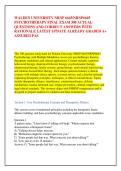
WALDEN UNIVERSITY NRNP 6645/NRNP6645
PSYCHOTHERAPY FINAL EXAM 300 ACTUAL
QUESTIONS AND CORRECT ANSWERS WITH
RATIONALE LATEST UPDATE ALREADY GRADED A+
ASSURED PAS
This 300-question study bank for Walden University NRNP 6645/NRNP6645
Psychotherapy with Multiple Modalities covers core psychotherapy theories,
therapeutic modalities, and clinical applications. Content includes cognitive-
behavioral therapy, dialectical behavior therapy, psychodynamic therapy,
interpersonal therapy, family systems, group therapy, motivational interviewing,
and solution-focused brief therapy. Each unique question features a clinical
scenario with multiple-choice options, a correct answer, and a detailed rationale
explaining therapeutic principles, techniques, or ethical considerations. Topics
include therapeutic alliance, transference, countertransference, defense
mechanisms, trauma-informed care, relapse prevention, cultural competence, and
legal-ethical standards. This resource aligns with PMHNP competencies and is
designed to prepare students for midterm and final examinations.
Section 1: Core Psychotherapy Concepts and Therapeutic Alliance
This section covers foundational principles including the therapeutic frame,
alliance building, and basic psychotherapy concepts applicable across modalities.
Question 1
A patient states, "I don't know if talking will help." Which response best
demonstrates a therapeutic frame?
A) "Talking always helps, trust me."
B) "Medication might be a better option for you."
C) "Some people feel that way. What concerns you about talking?"
D) "Let's just try it for 15 minutes."
Answer: C) "Some people feel that way. What concerns you about talking?"
,Rationale: Validating the patient's concern while inviting exploration respects
autonomy and builds therapeutic alliance. Option A is dismissive, B changes the
subject prematurely, and D imposes without addressing resistance .
Question 2
The therapeutic alliance is best defined as:
A) The patient's dependency on the therapist
B) Mutual collaboration and trust between therapist and patient
C) The therapist's authority over treatment decisions
D) A signed treatment agreement
Answer: B) Mutual collaboration and trust between therapist and patient
Rationale: A strong therapeutic alliance predicts improved treatment outcomes
across modalities. It is built through empathy, validation, and collaborative goal-
setting .
Question 3
Which therapist behavior most strengthens the therapeutic alliance?
A) Frequent self-disclosure
B) Judgmental confrontation
C) Empathy and active listening
D) Emotional detachment
Answer: C) Empathy and active listening
Rationale: Empathy, validation, and collaboration improve rapport and patient
engagement. Active listening demonstrates understanding and respect for the
patient's experience .
Question 4
Informed consent in psychotherapy includes discussing:
A) Therapist political opinions
B) Treatment risks, benefits, and alternatives
C) Personal financial information
D) Family secrets unrelated to treatment
Answer: B) Treatment risks, benefits, and alternatives
Rationale: Ethical informed consent requires discussing treatment expectations,
risks, benefits, alternatives, and patient rights. This establishes transparency and
respects patient autonomy .
Question 5
A PMHNP notices a patient consistently arrives 10 minutes late to sessions. Which
psychodynamic concept best explains this behavior?
,A) Transference
B) Resistance
C) Countertransference
D) Free association
Answer: B) Resistance
Rationale: Resistance is a defense mechanism that protects against anxiety or
uncomfortable feelings. Chronic lateness may represent unconscious avoidance of
therapy content .
Question 6
A PMHNP feels irritated with a patient who frequently misses sessions. The best
initial step is to:
A) Terminate the patient from practice
B) Discuss the missed sessions directly with the patient
C) Seek supervision to explore potential countertransference
D) Charge a higher no-show fee
Answer: C) Seek supervision to explore potential countertransference
Rationale: Countertransference (therapist's emotional response) should be
examined first in supervision before confronting the patient or acting
administratively .
Question 7
During a session, a patient says, "I feel nothing about my father's death." The
PMHNP responds, "And yet your fists are clenched." Which technique is being
used?
A) Confrontation
B) Interpretation
C) Clarification
D) Containment
Answer: A) Confrontation
Rationale: Confrontation gently points out a discrepancy between affect and verbal
content. Interpretation explains unconscious meaning; clarification seeks more
detail .
Question 8
A patient asks, "Are you a doctor?" The PMHNP responds, "I'm a nurse
practitioner with advanced training in psychotherapy. What made you ask?" This
response demonstrates:
A) Defensiveness
B) Transparency with exploration
, C) Violation of boundaries
D) Role confusion
Answer: B) Transparency with exploration
Rationale: Honest disclosure of credentials plus exploring the patient's curiosity
maintains transparency and therapeutic inquiry .
Question 9
What does the biological basis of psychotherapy refer to?
A) How brain systems and physiology influence mental health and how treatment
can affect functioning
B) The use of psychotropic medications in therapy
C) Genetic testing for mental disorders
D) Neuroimaging techniques for diagnosis
Answer: A) How brain systems and physiology influence mental health and how
treatment can affect functioning
Rationale: The biological basis of psychotherapy encompasses neuroplasticity and
how therapeutic interventions can alter brain functioning and physiological
responses .
Question 10
A patient with schizophrenia says, "The voices tell me I'm worthless." Which
supportive therapy response is most appropriate?
A) "Those voices are not real; ignore them."
B) "That sounds frightening. What helps you cope when that happens?"
C) "Let's analyze the meaning of the voices."
D) "You need to increase your antipsychotic."
Answer: B) "That sounds frightening. What helps you cope when that happens?"
Rationale: Validates distress, reinforces coping, and maintains supportive stance
without challenging delusions directly. Option A may increase distress; C is
interpretive; D is prescriptive outside therapy .
Question 11
The primary goal of supportive psychotherapy is:
A) Unconscious conflict resolution
B) Restructuring maladaptive schemas
C) Enhancing existing coping mechanisms and adaptive functioning
D) Achieving insight through interpretation
Answer: C) Enhancing existing coping mechanisms and adaptive functioning
PSYCHOTHERAPY FINAL EXAM 300 ACTUAL
QUESTIONS AND CORRECT ANSWERS WITH
RATIONALE LATEST UPDATE ALREADY GRADED A+
ASSURED PAS
This 300-question study bank for Walden University NRNP 6645/NRNP6645
Psychotherapy with Multiple Modalities covers core psychotherapy theories,
therapeutic modalities, and clinical applications. Content includes cognitive-
behavioral therapy, dialectical behavior therapy, psychodynamic therapy,
interpersonal therapy, family systems, group therapy, motivational interviewing,
and solution-focused brief therapy. Each unique question features a clinical
scenario with multiple-choice options, a correct answer, and a detailed rationale
explaining therapeutic principles, techniques, or ethical considerations. Topics
include therapeutic alliance, transference, countertransference, defense
mechanisms, trauma-informed care, relapse prevention, cultural competence, and
legal-ethical standards. This resource aligns with PMHNP competencies and is
designed to prepare students for midterm and final examinations.
Section 1: Core Psychotherapy Concepts and Therapeutic Alliance
This section covers foundational principles including the therapeutic frame,
alliance building, and basic psychotherapy concepts applicable across modalities.
Question 1
A patient states, "I don't know if talking will help." Which response best
demonstrates a therapeutic frame?
A) "Talking always helps, trust me."
B) "Medication might be a better option for you."
C) "Some people feel that way. What concerns you about talking?"
D) "Let's just try it for 15 minutes."
Answer: C) "Some people feel that way. What concerns you about talking?"
,Rationale: Validating the patient's concern while inviting exploration respects
autonomy and builds therapeutic alliance. Option A is dismissive, B changes the
subject prematurely, and D imposes without addressing resistance .
Question 2
The therapeutic alliance is best defined as:
A) The patient's dependency on the therapist
B) Mutual collaboration and trust between therapist and patient
C) The therapist's authority over treatment decisions
D) A signed treatment agreement
Answer: B) Mutual collaboration and trust between therapist and patient
Rationale: A strong therapeutic alliance predicts improved treatment outcomes
across modalities. It is built through empathy, validation, and collaborative goal-
setting .
Question 3
Which therapist behavior most strengthens the therapeutic alliance?
A) Frequent self-disclosure
B) Judgmental confrontation
C) Empathy and active listening
D) Emotional detachment
Answer: C) Empathy and active listening
Rationale: Empathy, validation, and collaboration improve rapport and patient
engagement. Active listening demonstrates understanding and respect for the
patient's experience .
Question 4
Informed consent in psychotherapy includes discussing:
A) Therapist political opinions
B) Treatment risks, benefits, and alternatives
C) Personal financial information
D) Family secrets unrelated to treatment
Answer: B) Treatment risks, benefits, and alternatives
Rationale: Ethical informed consent requires discussing treatment expectations,
risks, benefits, alternatives, and patient rights. This establishes transparency and
respects patient autonomy .
Question 5
A PMHNP notices a patient consistently arrives 10 minutes late to sessions. Which
psychodynamic concept best explains this behavior?
,A) Transference
B) Resistance
C) Countertransference
D) Free association
Answer: B) Resistance
Rationale: Resistance is a defense mechanism that protects against anxiety or
uncomfortable feelings. Chronic lateness may represent unconscious avoidance of
therapy content .
Question 6
A PMHNP feels irritated with a patient who frequently misses sessions. The best
initial step is to:
A) Terminate the patient from practice
B) Discuss the missed sessions directly with the patient
C) Seek supervision to explore potential countertransference
D) Charge a higher no-show fee
Answer: C) Seek supervision to explore potential countertransference
Rationale: Countertransference (therapist's emotional response) should be
examined first in supervision before confronting the patient or acting
administratively .
Question 7
During a session, a patient says, "I feel nothing about my father's death." The
PMHNP responds, "And yet your fists are clenched." Which technique is being
used?
A) Confrontation
B) Interpretation
C) Clarification
D) Containment
Answer: A) Confrontation
Rationale: Confrontation gently points out a discrepancy between affect and verbal
content. Interpretation explains unconscious meaning; clarification seeks more
detail .
Question 8
A patient asks, "Are you a doctor?" The PMHNP responds, "I'm a nurse
practitioner with advanced training in psychotherapy. What made you ask?" This
response demonstrates:
A) Defensiveness
B) Transparency with exploration
, C) Violation of boundaries
D) Role confusion
Answer: B) Transparency with exploration
Rationale: Honest disclosure of credentials plus exploring the patient's curiosity
maintains transparency and therapeutic inquiry .
Question 9
What does the biological basis of psychotherapy refer to?
A) How brain systems and physiology influence mental health and how treatment
can affect functioning
B) The use of psychotropic medications in therapy
C) Genetic testing for mental disorders
D) Neuroimaging techniques for diagnosis
Answer: A) How brain systems and physiology influence mental health and how
treatment can affect functioning
Rationale: The biological basis of psychotherapy encompasses neuroplasticity and
how therapeutic interventions can alter brain functioning and physiological
responses .
Question 10
A patient with schizophrenia says, "The voices tell me I'm worthless." Which
supportive therapy response is most appropriate?
A) "Those voices are not real; ignore them."
B) "That sounds frightening. What helps you cope when that happens?"
C) "Let's analyze the meaning of the voices."
D) "You need to increase your antipsychotic."
Answer: B) "That sounds frightening. What helps you cope when that happens?"
Rationale: Validates distress, reinforces coping, and maintains supportive stance
without challenging delusions directly. Option A may increase distress; C is
interpretive; D is prescriptive outside therapy .
Question 11
The primary goal of supportive psychotherapy is:
A) Unconscious conflict resolution
B) Restructuring maladaptive schemas
C) Enhancing existing coping mechanisms and adaptive functioning
D) Achieving insight through interpretation
Answer: C) Enhancing existing coping mechanisms and adaptive functioning


