

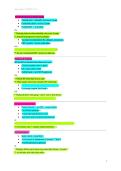
study guide E1 NUR257 A+CI
●
●
●
#1a.
*
**
●
●
#1b.
* "
**
●
●
●
#2a.
** Older adults need more frequent BP monitoring
●
● e
#2b.
* "Reduced thirst with aging—don’t wait to feel thirsty ."
** Drink fluids regularly—don’t wait for thirst
● Chinese descent + low BP → assess beliefs
● Use holistic principles
● Avoid imposing Western views
● Ask client about treatment preferences
#3
* Use holistic care + explore cultural preferenc es
Communication
● Speak clearly, respectfully
●
●
#4
* "Require follow-up if nurse uses terms like 'honey,' 'sweetie '"
** Avoid baby talk with older adult s
1
, study guide E1 NUR257 A+CI
● )
●
#5a.
* "Avoid stereotyping cultural food habits ."
** Cultural sensitivity is key—no judgmen t
● s
●
#5b.
* "Some cultures view touch as inappropriate, especially across genders."
**
Chronic Pancreatitis
●
●
●
#6
* "Enzymes necessary for digestion—without them, absorption impaired."
** Always take enzymes with meals/snacks
check practice exam for further breakdown
on info
#7a/7b.
* "Steatorrhea not normal—suggests pancreatic issues."
** s
●
●
#8a.
* "Check dentures—they affect intake. "
** Ensure dentures fit properly
● Educate about xerostomia (dry mouth)
● Avoid TV distractions during meals
#8b.
* "Teach about xerostomia and management."
**
2
●
●
●
#1a.
*
**
●
●
#1b.
* "
**
●
●
●
#2a.
** Older adults need more frequent BP monitoring
●
● e
#2b.
* "Reduced thirst with aging—don’t wait to feel thirsty ."
** Drink fluids regularly—don’t wait for thirst
● Chinese descent + low BP → assess beliefs
● Use holistic principles
● Avoid imposing Western views
● Ask client about treatment preferences
#3
* Use holistic care + explore cultural preferenc es
Communication
● Speak clearly, respectfully
●
●
#4
* "Require follow-up if nurse uses terms like 'honey,' 'sweetie '"
** Avoid baby talk with older adult s
1
, study guide E1 NUR257 A+CI
● )
●
#5a.
* "Avoid stereotyping cultural food habits ."
** Cultural sensitivity is key—no judgmen t
● s
●
#5b.
* "Some cultures view touch as inappropriate, especially across genders."
**
Chronic Pancreatitis
●
●
●
#6
* "Enzymes necessary for digestion—without them, absorption impaired."
** Always take enzymes with meals/snacks
check practice exam for further breakdown
on info
#7a/7b.
* "Steatorrhea not normal—suggests pancreatic issues."
** s
●
●
#8a.
* "Check dentures—they affect intake. "
** Ensure dentures fit properly
● Educate about xerostomia (dry mouth)
● Avoid TV distractions during meals
#8b.
* "Teach about xerostomia and management."
**
2


