

4 MAXE · 132 SRUN
★ ★
Portage Learning
P Nursing Education · Online Excellence
EST. 2001
A D V A N C I N G H E A LT H C A R E T H R O U G H E D U C AT I O N
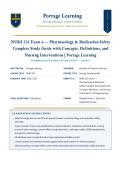
NURS 231 Exam 4 — Pharmacology & Medication Safety
Complete Study Guide with Concepts, Definitions, and
Nursing Interventions | Portage Learning
P H A R M ACO LO G Y & M E D I C AT I O N S A F E TY — E X A M 4
INSTITUTION Portage Learning PROGRAM Bachelor of Science in Nursing
COURSE CODE NURS 231 COURSE TITLE Nursing Fundamentals
ACADEMIC YEAR EXAM TITLE NURS 231 Exam 4 —
Pharmacology & Medication
Safety Complete Study Guide with
Concepts, Definitions, and Nursing
Interventions | Portage Learning
TOTAL QUESTIONS 53 Questions FORMAT Multiple Choice — Select the
Single Best Answer
EXAMINATION INSTRUCTIONS
▸ Select the single best answer for each question based on pharmacology and medication safety
principles.
▸ Topics covered include: drug classifications, pharmacokinetics, medication administration, nursing
process in pharmacology, adverse effects, drug interactions, medication safety, QSEN competencies,
and geriatric pharmacology.
▸ All definitions and concepts from the study material are testable content.
▸ Correct answers and detailed rationales appear below each question for review purposes.
▸ All pharmacology concepts reflect current evidence-based practice and medication safety standards.
, SECTION I — PHARMACOLOGY & MEDICATION SAFETY Questions 1 – 53
1. What is an organization that requires all personnel to report near misses and breakdowns
in care called?
A. Job Culture Organization
B. Safety Culture Organization
C. Quality Improvement Organization
D. Just Culture Organization
CORRECT ANSWER A — Job Culture Organization
RATIONALE A Job Culture Organization requires all personnel to report near misses and
breakdowns in care. This type of organization promotes a culture of transparency
and safety where reporting errors is encouraged to improve patient safety and
prevent future occurrences.
2. What is the first step the nurse takes to address medication safety?
A. Verify the patient's identity using two identifiers
B. Obtain knowledge of the medication, including evidence-based standards for
administration
C. Check the medication order for completeness
D. Assess the patient's allergies
CORRECT ANSWER B — Obtain knowledge of the medication, including evidence-based
standards for administration
RATIONALE The first step the nurse takes to address medication safety is to obtain knowledge
of the medication, including evidence-based standards for administration. This
ensures that the nurse understands the drug's indications, contraindications, side
effects, and proper administration techniques before giving it to the patient.
, 3. What is the purpose of the six competencies that are integrated into the national
curriculum standards for nursing?
A. To ensure all nurses pass the NCLEX exam
B. So that all nurses are accountable for integrating safety and quality responsibilities into
their daily work
C. To reduce the cost of nursing education
D. To increase the number of nursing students
CORRECT ANSWER B — So that all nurses are accountable for integrating safety and quality
responsibilities into their daily work
RATIONALE The purpose of the six competencies (from QSEN) integrated into the national
curriculum standards for nursing is so that all nurses are accountable for
integrating safety and quality responsibilities into their daily work. These
competencies prepare nurses to deliver high-quality, safe patient care.
4. Basing care decisions on knowledge of patient values and preferences is the definition of
which of the following?
A. Evidence-based practice
B. Patient-centered care
C. Quality improvement
D. Safety
CORRECT ANSWER B — Patient-centered care
RATIONALE Patient-centered care is defined as basing care decisions on knowledge of patient
values and preferences. This approach respects the patient's unique needs,
values, and preferences, and ensures that care is tailored to the individual.
★ ★
Portage Learning
P Nursing Education · Online Excellence
EST. 2001
A D V A N C I N G H E A LT H C A R E T H R O U G H E D U C AT I O N
NURS 231 Exam 4 — Pharmacology & Medication Safety
Complete Study Guide with Concepts, Definitions, and
Nursing Interventions | Portage Learning
P H A R M ACO LO G Y & M E D I C AT I O N S A F E TY — E X A M 4
INSTITUTION Portage Learning PROGRAM Bachelor of Science in Nursing
COURSE CODE NURS 231 COURSE TITLE Nursing Fundamentals
ACADEMIC YEAR EXAM TITLE NURS 231 Exam 4 —
Pharmacology & Medication
Safety Complete Study Guide with
Concepts, Definitions, and Nursing
Interventions | Portage Learning
TOTAL QUESTIONS 53 Questions FORMAT Multiple Choice — Select the
Single Best Answer
EXAMINATION INSTRUCTIONS
▸ Select the single best answer for each question based on pharmacology and medication safety
principles.
▸ Topics covered include: drug classifications, pharmacokinetics, medication administration, nursing
process in pharmacology, adverse effects, drug interactions, medication safety, QSEN competencies,
and geriatric pharmacology.
▸ All definitions and concepts from the study material are testable content.
▸ Correct answers and detailed rationales appear below each question for review purposes.
▸ All pharmacology concepts reflect current evidence-based practice and medication safety standards.
, SECTION I — PHARMACOLOGY & MEDICATION SAFETY Questions 1 – 53
1. What is an organization that requires all personnel to report near misses and breakdowns
in care called?
A. Job Culture Organization
B. Safety Culture Organization
C. Quality Improvement Organization
D. Just Culture Organization
CORRECT ANSWER A — Job Culture Organization
RATIONALE A Job Culture Organization requires all personnel to report near misses and
breakdowns in care. This type of organization promotes a culture of transparency
and safety where reporting errors is encouraged to improve patient safety and
prevent future occurrences.
2. What is the first step the nurse takes to address medication safety?
A. Verify the patient's identity using two identifiers
B. Obtain knowledge of the medication, including evidence-based standards for
administration
C. Check the medication order for completeness
D. Assess the patient's allergies
CORRECT ANSWER B — Obtain knowledge of the medication, including evidence-based
standards for administration
RATIONALE The first step the nurse takes to address medication safety is to obtain knowledge
of the medication, including evidence-based standards for administration. This
ensures that the nurse understands the drug's indications, contraindications, side
effects, and proper administration techniques before giving it to the patient.
, 3. What is the purpose of the six competencies that are integrated into the national
curriculum standards for nursing?
A. To ensure all nurses pass the NCLEX exam
B. So that all nurses are accountable for integrating safety and quality responsibilities into
their daily work
C. To reduce the cost of nursing education
D. To increase the number of nursing students
CORRECT ANSWER B — So that all nurses are accountable for integrating safety and quality
responsibilities into their daily work
RATIONALE The purpose of the six competencies (from QSEN) integrated into the national
curriculum standards for nursing is so that all nurses are accountable for
integrating safety and quality responsibilities into their daily work. These
competencies prepare nurses to deliver high-quality, safe patient care.
4. Basing care decisions on knowledge of patient values and preferences is the definition of
which of the following?
A. Evidence-based practice
B. Patient-centered care
C. Quality improvement
D. Safety
CORRECT ANSWER B — Patient-centered care
RATIONALE Patient-centered care is defined as basing care decisions on knowledge of patient
values and preferences. This approach respects the patient's unique needs,
values, and preferences, and ensures that care is tailored to the individual.


