

Written by students who passed Immediately available after payment Read online or as PDF Wrong document? Swap it for free 4.6 TrustPilot
logo-home
Document preview thumbnail
Preview 4 out of 85 pages
Exam (elaborations)

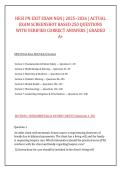
HESI PN EXIT EXAM NGN | 2025–2026 | ACTUAL EXAM SCREENSHOT BASED 250 QUESTIONS WITH VERIFIED CORRECT ANSWERS | GRADED A+

Document preview thumbnail
Preview 4 out of 85 pages

Are you preparing for the HESI PN Exit Exam with Next Generation NCLEX (NGN) style questions? This all-in-one study guide provides everything you need to pass with confidence. Featuring 250 practice questions with detailed rationales, this resource covers every critical topic tested on the actual HESI PN Exit Exam. What's Inside This Complete HESI PN NGN Study Guide: SECTION 1: FUNDAMENTALS & PATIENT SAFETY (30+ Questions) Patient Safety & Fall Prevention: Call bell within reach: Most important intervention for fall prevention Bed in lowest position: Prevents injury from falls Fall precautions: Call light, bed alarms, nonskid footwear Restraints: Last resort - physician order required - quick-release knot Documentation & Charting: Correcting charting errors: Draw one line through error, insert correct info, initial and date Do NOT obliterate or use correction fluid Catheter Care & Urinary: Female catheter insertion: Dorsal recumbent position - sterile gloves entire procedure - cleanse from inside out Catheter size: #18 French with 30 mL balloon is standard for adults Urine output: 30 mL/hour is concerning Cloudy urine with foul odor: Possible UTI - assess for frequency, urgency, dysuria Hospice & End-of-Life Care: Hospice focus: Comfort, dignity, emotional support - NOT curative Pain management: Around-the-clock administration better than PRN Dignity: Respect patient privacy and relationships Advance directives: Can be changed at any time while competent Medical Asepsis & Handwashing: Hands below elbows: During handwashing to promote microbe removal Medical asepsis: Clean technique - handwashing most important PPE donning order: Gown, mask, gloves NG Tube & Medication Administration: Confirm placement: Aspirate gastric contents and check pH Crushing medications: Consult pharmacist first - enteric-coated/sustained-release cannot be crushed Flush with sterile water: 15-30 mL before and after medications Patient Rights & Privacy: Right to refuse medication: Document and notify provider Privacy in long-term care: Residents retain right to intimate relationships Mandatory disclosure: Required in Kentucky, not HESI-specific SECTION 2: MEDICAL-SURGICAL NURSING (35+ Questions) Respiratory Conditions: COPD: Target SpO2 88-92% - oxygen at 2 L/min via nasal cannula High Fowler's position: Promotes lung expansion Chest tubes: Continuous bubbling = air leak - notify RN immediately Pneumonia: Fever, productive cough, crackles Tuberculosis: Airborne precautions - negative pressure room - N95 respirator Asthma: Albuterol - hold breath 10 seconds after inhaling Cardiovascular Conditions: Heart Failure: Sodium restriction (2 g/day) - crackles in lung bases - peripheral edema Left-sided failure: Pulmonary congestion - crackles Digoxin toxicity: Nausea, vomiting, visual disturbances (yellow-green halos) Warfarin monitoring: PT/INR - therapeutic range 2.0-3.0 Heparin: Monitor aPTT - hematuria indicates bleeding Hypertension: Medications must be taken consistently - don't stop when BP normal Endocrine Conditions: Diabetes: Hypoglycemia (52 mg/dL) → give 15 g fast-acting carbohydrate if alert Metformin: Monitor serum creatinine - hold before contrast dye procedures DKA: Hyperglycemia (450 mg/dL), nausea, vomiting, abdominal pain Hyperkalemia: Peaked T waves on ECG - life-threatening arrhythmia risk Hypoglycemia: Diaphoresis, confusion, tachycardia Neurological Conditions: Guillain-Barré Syndrome: Monitor for irregular heart rate (autonomic dysfunction) Stroke: Left-sided neglect - place items on unaffected (right) side Head Injury: Unequal pupils = increased ICP - report immediately Seizure: Protect head - do NOT restrain - do NOT place objects in mouth Spinal Cord Injury T6: Hypertension and severe headache = autonomic dysreflexia emergency GI/Hepatic/Renal Conditions: Cirrhosis: Ascites - monitor daily weight - sodium restriction Pancreatitis: Fever may indicate infection/necrosis Chronic Kidney Disease: Low-potassium diet - avoid bananas Peptic Ulcer Disease: Omeprazole on empty stomach Total Hip Replacement: Avoid side-lying on operative side Wound Care & Infections: Wound healing: Pink granulation tissue indicates healing Secondary intention: Moist wound healing environment MRSA: Contact precautions Burn injury: Decreased urine output = hypovolemia/AKI - report immediately SECTION 3: MATERNITY & NEWBORN (20+ Questions) Labor & Delivery: Fetal decelerations: Reposition client first intervention Prolapsed cord: Apply pressure to presenting part - relieve cord compression True labor: Contractions increase in intensity, frequency, duration Nonstress test (NST): Reactive = 2 accelerations of 15 bpm × 15 seconds in 20 minutes Pregnancy Complications: Preeclampsia: Headache and blurred vision = severe preeclampsia - report immediately Magnesium sulfate toxicity: Absent DTRs - antidote: calcium gluconate Abruptio placentae: Sudden severe abdominal pain + vaginal bleeding Placenta previa: Painless vaginal bleeding Rh-negative mother: Rh immune globulin within 72 hours of delivery Postpartum Care: Postpartum hemorrhage: Fundal massage first (uterine atony most common cause) Breast engorgement: Warm packs before feeding - cold packs after Mastitis: Continue breastfeeding - warm compresses before feeding Third-degree laceration: Ice packs for first 24 hours Episiotomy care: Ice packs reduce swelling and pain Newborn Care: Newborn resuscitation: Heart rate 100 bpm → tactile stimulation first SIDS prevention: Place baby on back to sleep - no soft bedding Phototherapy: Turn every 2 hours - keep eye patches on Hypoglycemia: LGA infants at risk - monitor blood glucose HIV-positive mother: Formula feed - do NOT breastfeed Apgar score 6 at 1 minute: Moderate distress - provide stimulation and oxygen SECTION 4: PEDIATRIC NURSING (20+ Questions) Pediatric Conditions: Developmental Dysplasia of Hip (DDH): Pale/cool toes in spica cast = compromised circulation - report immediately Asthma: Use spacer - inhale slowly and deeply - wait 1 minute between puffs Acute Otitis Media: Lethargy + stiff neck = possible meningitis - report immediately Sickle Cell Crisis: Pain management is priority Celiac Disease: Gluten-free diet - avoid wheat Nephrotic Syndrome: Monitor daily weight - sodium restriction Pyloric Stenosis: Projectile vomiting after feeding Acute Glomerulonephritis: Decreased urine output = acute kidney injury - report immediately Croup: Cool mist humidity - upright position Impetigo: Topical antibiotics - wash lesions gently Kawasaki Disease: Strawberry tongue characteristic finding Leukemia: Fever in immunocompromised child = infection - report immediately VP Shunt: Bulging fontanelle = increased ICP/shunt malfunction - report immediately Pediatric Emergencies: Febrile seizure: Turn child to side - no restraints - no oral objects Anaphylaxis (peanut allergy): Epinephrine IM first Severe dehydration: Capillary refill 3 seconds Hypoglycemia (child): 15 g fast-acting carbohydrate if alert SECTION 5: MENTAL HEALTH (20+ Questions) Psychiatric Disorders: Major Depressive Disorder: SSRIs take 2-4 weeks for effect - black box warning for suicidal ideation in young adults Bipolar Disorder: Lithium - monitor serum levels (0.6-1.2 mEq/L) - narrow therapeutic range Schizophrenia: Auditory hallucinations - acknowledge experience without reinforcing - don't argue Anxiety Disorder: Alprazolam (benzodiazepine) - side effect: sedation Dementia: Wandering - redirect to safe activity - no restraints Anorexia Nervosa: Monitor during and after meals PTSD: Provide calm, safe environment - encourage expression Borderline Personality Disorder: Set firm, consistent limits Panic Disorder: Deep breathing - stay with patient - simple, calm instructions Obsessive-Compulsive Disorder: Set limits on compulsive behaviors Substance Use & Withdrawal: Alcohol withdrawal: Confusion + tremors = withdrawal - chlordiazepoxide PRN Delirium Tremens (DTs): Medical emergency - severe withdrawal Suicidal Ideation: 1:1 observation - remove means of self-harm MAOI Antidepressant: Avoid tyramine-rich foods (aged cheese, cured meats) - hypertensive crisis risk Serotonin Syndrome: Combining SSRI with MAOI - life-threatening Medication Side Effects: SSRIs: Nausea, insomnia, sexual dysfunction Antipsychotics: NMS (muscular rigidity + fever) - report immediately Benzodiazepines: Sedation, dependence, withdrawal Mood stabilizers: Lithium toxicity: nausea, vomiting, coarse tremors SECTION 6: PHARMACOLOGY (15+ Questions) Cardiovascular Medications: Digoxin: Monitor for toxicity (nausea, vomiting, visual disturbances) Warfarin: Monitor PT/INR - therapeutic range 2.0-3.0 Enalapril: Assess BP before administration (ACE inhibitor) Metoprolol: Assess HR before administration (beta-blocker) Nitroglycerin sublingual: Place under tongue - let dissolve Respiratory Medications: Albuterol: Beta-2 agonist - bronchodilator - hold breath 10 seconds Prednisone: Do not stop abruptly - taper to prevent adrenal insufficiency Rifampin: Causes orange/red urine - reassure patient Endocrine Medications: Insulin: Rotate injection sites - roll vial (don't shake) Metformin: Monitor serum creatinine - hold before contrast dye Psychiatric Medications: Lithium: Narrow therapeutic range - monitor serum levels MAOIs: Avoid tyramine-rich foods - hypertensive crisis risk Phenytoin: Side effect: gingival hyperplasia Levodopa-Carbidopa: Side effect: dyskinesia Pain Management: Morphine: Monitor respiratory depression - antidote: Naloxone Allergic reaction to antibiotics: Stop medication - hives + difficulty breathing Antibiotics & Other Medications: Antibiotic allergy: Stop medication - difficulty breathing = anaphylaxis Tuberculosis medications: Rifampin causes orange/red urine SECTION 7: LEADERSHIP, DELEGATION & PRIORITIZATION (10+ Questions) Prioritization: ABCs first: Airway, Breathing, Circulation Change in level of consciousness: Priority finding - see first New onset chest pain: Priority - potential MI Acute vs chronic: Acute conditions take priority Maslow's hierarchy: Physiological needs first, then safety Delegation: Delegatable tasks to UAP: Bed bath, feeding assistance, vital signs, ambulation Non-delegatable tasks: Medication administration, assessment, wound care, enema administration Client Rights: Right to refuse medication: Document and notify provider Privacy and dignity: Respect client relationships in LTC Advance directives: Can be changed at any time Handoff Communication: SBAR format: Situation, Background, Assessment, Recommendation Include: Diagnosis, current status, pending tasks Restraints: Last resort: Use only when less restrictive measures fail Physician order required Never tie to side rails Quick-release knots Who This Study Guide Is For: HESI PN Exit Exam candidates Practical Nursing (PN/VN) students Next Generation NCLEX (NGN) test takers Nursing program exit exam preparation HESI specialty exam candidates Nursing students in final semester LPN/LVN program graduates Anyone needing HESI PN review Why Choose This Study Guide: 250 Realistic Practice Questions - Modeled after actual HESI PN Exit Exam and NGN style Detailed Rationales - Understand WHY each answer is correct Topic Organization - Study efficiently by subject area Evidence-Based Answers - Aligned with current nursing standards Updated Content - Current for exam cycle NGN-Style Format - Multiple choice with clear correct answers Comprehensive Coverage - All HESI PN domains included Frequently Tested Topics: Fundamentals and patient safety Medical-surgical nursing Maternity and newborn care Pediatric nursing Mental health nursing Pharmacology Leadership, delegation, and prioritization Next Generation NCLEX style questions Clinical judgment and prioritization Patient rights and ethics What Students Are Saying: "This guide was essential for passing my HESI PN Exit Exam on the first attempt! The detailed rationales helped me understand the 'why' behind each answer." - Jennifer R., PN Student "Comprehensive and perfectly organized. Every topic I needed was covered. Highly recommend for any PN student." - Michael T., PN Student "The practice questions were very similar to what I saw on the actual HESI PN Exit Exam. This guide saved me hours of study time." - Sarah M., PN Student Product Details: Format: Digital PDF Download Questions: 250 with detailed rationales Pages: Comprehensive coverage (over 85 pages) Last Updated: 2026

Content preview

HESI PN EXIT EXAM NGN | 2025–2026 | ACTUAL
EXAM SCREENSHOT BASED 250 QUESTIONS
WITH VERIFIED CORRECT ANSWERS | GRADED
A+


HESI PN Exit Exam NGN Table Of Content


Section 1: Fundamentals & Patient Safety — Questions 1–30
Section 2: MedicalSurgical Nursing — Questions 31–65
Section 3: Maternity & Newborn — Questions 66–85
Section 4: Pediatric Nursing — Questions 86–105
Section 5: Mental Health — Questions 106–125
Section 6: Pharmacology — Questions 126–140
Section 7: Leadership, Delegation & Prioritization — Questions 141–150


SECTION 1: FUNDAMENTALS & PATIENT SAFETY (Questions 1–30)


Question 1
An older client with metastatic breast cancer is experiencing shortness of
breath due to bilateral pneumonia. The client has a living will, and the family
is requesting hospice care. Which information should the practical nurse (PN)
reinforce with the client and family regarding hospice care?
A) Instructions for care should be included in the client's living will

,B) Hospice care can only be provided in hospital settings
C) Hospice care focuses on curing the disease
D) Care focuses on comfort, dignity, and emotional support


Correct Answer: D
Rationale: Hospice care emphasizes comfort measures rather than curative
treatment. It can be provided wherever the client resides, including home or
facility, and focuses on dignity and psychosocial support. While a living will
provides care preferences, it is not the same as hospice instructions.


Question 2
A client with a history of falls is admitted. What is the most important
intervention for the practical nurse (PN) to implement?
A) Place a call bell within reach
B) Administer a sedative at bedtime
C) Apply wrist restraints
D) Keep the bed in the highest position


Correct Answer: A
Rationale: Ensuring the call bell is within reach allows the client to call for
assistance, reducing the risk of falls. Sedatives can increase fall risk. Restraints
should be a last resort. The bed should be in the lowest position.

,Question 3
The practical nurse (PN) is charting vital signs on a handwritten flow sheet
and realizes that an error has been made. What should the PN do to rectify the
error?
A) Draw one line through the entry and insert the correct information
B) Chart the correct information in the next column
C) Obliterate the entry and insert the correct information
D) Notify the charge nurse that the entry needs to be revised


Correct Answer: A
Rationale: The correct method for correcting a charting error is to draw a
single line through the incorrect entry, write the correct information above or
next to it, and initial and date the correction. This maintains a clear record
while preserving the original documentation. Obliterating the entry is
unacceptable.


Question 4
A nurse is preparing to insert an indwelling urinary catheter for a female
client. Which of the following actions should the nurse take?
A) Use sterile gloves for the entire procedure
B) Open the catheter kit before washing hands
C) Place the client in a supine position with legs extended
D) Cleanse the meatus with antiseptic solution using a circular motion from
the outside in


Correct Answer: A

, Rationale: Sterile gloves must be worn for the entire catheter insertion
procedure to maintain sterility. Hand hygiene should precede opening the kit.
The client should be in dorsal recumbent or Sims' position. Cleansing should
be from the inside out (meatus outward).


Question 5
The practical nurse (PN) notices that a client's urine is pale yellow, with a
cloudy appearance, and has a foul odor. Which assessment should the PN
complete next?
A) Check the client's fluid intake for the past 8 hours
B) Ask the client about urinary frequency
C) Obtain a clean catch urine specimen
D) Notify the healthcare provider immediately


Correct Answer: B
Rationale: Cloudy urine with foul odor suggests possible urinary tract
infection. The PN should first assess for associated symptoms such as urinary
frequency, urgency, or dysuria before proceeding with further interventions.


Question 6
While caring for a client with GuillainBarré syndrome, which finding should
the practical nurse (PN) report to the charge nurse?
A) Lower leg weakness/cramping
B) Irregular heart rate


Document information

Uploaded on
July 31, 2026
Number of pages
85
Written in
2025/2026
Type
Exam (elaborations)
Contains
Questions & answers
$22.99

Wrong document? Swap it for free Within 14 days of purchase and before downloading, you can choose a different document. You can simply spend the amount again.
Written by students who passed
Immediately available after payment
Read online or as PDF

Seller avatar
Reputation scores are based on the amount of documents a seller has sold for a fee and the reviews they have received for those documents. There are three levels: Bronze, Silver and Gold. The better the reputation, the more your can rely on the quality of the sellers work.
PassPath
3.7
(12)
Sold
81
Followers
2
Items
1306
Last sold
3 days ago


Why students choose Stuvia

Created by fellow students, verified by reviews

Quality you can trust: written by students who passed their tests and reviewed by others who've used these notes.

Didn't get what you expected? Choose another document

No worries! You can instantly pick a different document that better fits what you're looking for.

Pay as you like, start learning right away

No subscription, no commitments. Pay the way you're used to via credit card and download your PDF document instantly.

Student with book image

“Bought, downloaded, and aced it. It really can be that simple.”

Alisha Student

Working on your references?

Create accurate citations in APA, MLA and Harvard with our free citation generator.

Working on your references?

Frequently asked questions
