

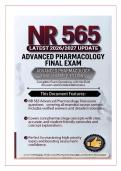
, NR 565 Advanced Pharmacology Final
Exam (2026/2027) Questions with
Answers & Detailed Rationales
Question 1
A 62-year-old patient with hypertension and diabetic kidney
disease is starting antihypertensive therapy. Which medication is
generally preferred because it may slow progression of kidney
disease?
A. Lisinopril
B. Amlodipine
C. Hydrochlorothiazide
D. Propranolol
Correct Answer: A
Rationale:
ACE inhibitors help lower blood pressure while reducing
intraglomerular pressure and albuminuria, making them
beneficial in many patients with diabetic kidney disease.
Question 2
A patient taking warfarin develops spontaneous nosebleeds and
an INR of 5.8. Which is the priority intervention?
A. Hold warfarin and notify the prescriber for management.
B. Administer another dose of warfarin.
,C. Encourage vigorous exercise.
D. Increase dietary sodium.
Correct Answer: A
Rationale:
A supratherapeutic INR with bleeding requires prompt
evaluation. Depending on severity, management may include
holding warfarin and administration of vitamin K or other
reversal therapies.
Question 3
Which diabetes medication is associated with cardiovascular and
renal benefits in appropriate patients?
A. Empagliflozin
B. Glyburide
C. Regular insulin
D. Acarbose
Correct Answer: A
Rationale:
SGLT2 inhibitors such as empagliflozin have demonstrated
cardiovascular and kidney benefits in selected patients with type
2 diabetes.
Question 4
, A patient prescribed atorvastatin should immediately report:
A. Muscle pain with dark-colored urine.
B. Mild constipation.
C. Dry mouth.
D. Mild fatigue after exercise.
Correct Answer: A
Rationale:
This combination may indicate rhabdomyolysis, a rare but
serious adverse effect requiring prompt evaluation.
Question 5
Which medication should not be combined with sildenafil
because of the risk of profound hypotension?
A. Nitroglycerin
B. Metformin
C. Acetaminophen
D. Famotidine
Correct Answer: A
Rationale:
Concurrent use of phosphodiesterase-5 inhibitors and nitrates is
contraindicated because it can cause severe hypotension.
Question 6
Exam (2026/2027) Questions with
Answers & Detailed Rationales
Question 1
A 62-year-old patient with hypertension and diabetic kidney
disease is starting antihypertensive therapy. Which medication is
generally preferred because it may slow progression of kidney
disease?
A. Lisinopril
B. Amlodipine
C. Hydrochlorothiazide
D. Propranolol
Correct Answer: A
Rationale:
ACE inhibitors help lower blood pressure while reducing
intraglomerular pressure and albuminuria, making them
beneficial in many patients with diabetic kidney disease.
Question 2
A patient taking warfarin develops spontaneous nosebleeds and
an INR of 5.8. Which is the priority intervention?
A. Hold warfarin and notify the prescriber for management.
B. Administer another dose of warfarin.
,C. Encourage vigorous exercise.
D. Increase dietary sodium.
Correct Answer: A
Rationale:
A supratherapeutic INR with bleeding requires prompt
evaluation. Depending on severity, management may include
holding warfarin and administration of vitamin K or other
reversal therapies.
Question 3
Which diabetes medication is associated with cardiovascular and
renal benefits in appropriate patients?
A. Empagliflozin
B. Glyburide
C. Regular insulin
D. Acarbose
Correct Answer: A
Rationale:
SGLT2 inhibitors such as empagliflozin have demonstrated
cardiovascular and kidney benefits in selected patients with type
2 diabetes.
Question 4
, A patient prescribed atorvastatin should immediately report:
A. Muscle pain with dark-colored urine.
B. Mild constipation.
C. Dry mouth.
D. Mild fatigue after exercise.
Correct Answer: A
Rationale:
This combination may indicate rhabdomyolysis, a rare but
serious adverse effect requiring prompt evaluation.
Question 5
Which medication should not be combined with sildenafil
because of the risk of profound hypotension?
A. Nitroglycerin
B. Metformin
C. Acetaminophen
D. Famotidine
Correct Answer: A
Rationale:
Concurrent use of phosphodiesterase-5 inhibitors and nitrates is
contraindicated because it can cause severe hypotension.
Question 6


