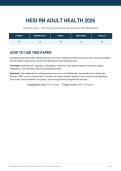
HESI RN ADULT HEALTH 2026
Practice Exam - 50 Original Questions with Answers and Rationales
CARDIAC RESPIRATORY NEURO ENDO/RENAL GI/MULTI
10 10 10 10 10
HOW TO USE THIS PAPER
Complete all 50 items before checking the key. For every missed item, identify the clinical cue, the priority problem,
and the safest nursing action. Review the rationale and then retest the topic.
Coverage: cardiovascular, respiratory, neurological, endocrine, renal, gastrointestinal, transfusion, sepsis,
medications, client teaching, and priority-setting scenarios.
Important: This independently created practice resource is not affiliated with, sponsored by, or endorsed by
Elsevier, HESI, or any nursing school. It contains no copied, recalled, leaked, or actual secure exam questions.
Use current course materials, local policy, and clinical guidance alongside this resource.
Suggested time: 65 minutes Target score: 80% or higher
Independent original adult-health nursing practice resource - educational use only Page 1
, CARDIOVASCULAR
1. A client reports crushing chest pressure and diaphoresis. Which action should the nurse take first?
A. Obtain a 12-lead ECG promptly
B. Offer a large meal
C. Encourage unassisted ambulation
D. Schedule routine teaching
2. Which finding in a client with heart failure requires the most immediate follow-up?
A. Mild fatigue after bathing
B. Preference for two pillows at baseline
C. Heart rate of 76/min
D. Weight gain of 2.3 kg (5 lb) in 3 days
3. A client taking digoxin reports nausea and yellow-green vision. What should the nurse do?
A. Double the next dose
B. Encourage potassium restriction
C. Give the dose with food
D. Withhold the dose and notify the provider
4. Which assessment is most important before administering metoprolol?
A. Skin turgor
B. Apical pulse and blood pressure
C. Pupil size
D. Bowel sounds
5. A client receiving heparin develops a platelet count drop from 220,000 to 88,000/mm3. What is the priority
action?
A. Continue the infusion
B. Stop heparin and notify the provider
C. Massage injection sites
D. Administer aspirin without an order
6. Which instruction is appropriate for a client with peripheral arterial disease?
A. Protect the feet and avoid direct heat
B. Apply tight compression without an order
C. Elevate the legs above the heart for pain relief
D. Cross the legs when sitting
7. A client with atrial fibrillation asks why anticoagulation is prescribed. Which response is best?
A. It cures the dysrhythmia
B. It strengthens cardiac contraction
C. It increases heart rate
D. It reduces the risk of embolic stroke
Independent original adult-health nursing practice resource - educational use only Page 2
Practice Exam - 50 Original Questions with Answers and Rationales
CARDIAC RESPIRATORY NEURO ENDO/RENAL GI/MULTI
10 10 10 10 10
HOW TO USE THIS PAPER
Complete all 50 items before checking the key. For every missed item, identify the clinical cue, the priority problem,
and the safest nursing action. Review the rationale and then retest the topic.
Coverage: cardiovascular, respiratory, neurological, endocrine, renal, gastrointestinal, transfusion, sepsis,
medications, client teaching, and priority-setting scenarios.
Important: This independently created practice resource is not affiliated with, sponsored by, or endorsed by
Elsevier, HESI, or any nursing school. It contains no copied, recalled, leaked, or actual secure exam questions.
Use current course materials, local policy, and clinical guidance alongside this resource.
Suggested time: 65 minutes Target score: 80% or higher
Independent original adult-health nursing practice resource - educational use only Page 1
, CARDIOVASCULAR
1. A client reports crushing chest pressure and diaphoresis. Which action should the nurse take first?
A. Obtain a 12-lead ECG promptly
B. Offer a large meal
C. Encourage unassisted ambulation
D. Schedule routine teaching
2. Which finding in a client with heart failure requires the most immediate follow-up?
A. Mild fatigue after bathing
B. Preference for two pillows at baseline
C. Heart rate of 76/min
D. Weight gain of 2.3 kg (5 lb) in 3 days
3. A client taking digoxin reports nausea and yellow-green vision. What should the nurse do?
A. Double the next dose
B. Encourage potassium restriction
C. Give the dose with food
D. Withhold the dose and notify the provider
4. Which assessment is most important before administering metoprolol?
A. Skin turgor
B. Apical pulse and blood pressure
C. Pupil size
D. Bowel sounds
5. A client receiving heparin develops a platelet count drop from 220,000 to 88,000/mm3. What is the priority
action?
A. Continue the infusion
B. Stop heparin and notify the provider
C. Massage injection sites
D. Administer aspirin without an order
6. Which instruction is appropriate for a client with peripheral arterial disease?
A. Protect the feet and avoid direct heat
B. Apply tight compression without an order
C. Elevate the legs above the heart for pain relief
D. Cross the legs when sitting
7. A client with atrial fibrillation asks why anticoagulation is prescribed. Which response is best?
A. It cures the dysrhythmia
B. It strengthens cardiac contraction
C. It increases heart rate
D. It reduces the risk of embolic stroke
Independent original adult-health nursing practice resource - educational use only Page 2