

CSD 155 FINAL EXAM VERIFIED STUDY GUIDE
4 stages of swallowing - Answers - oral prep, oral, pharyngeal, esophageal
Sulcus - Answers - - inside of lip and outside of gum
- groove
- interior of cheek and lip and exterior of the gum
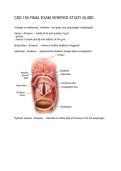
facial pillars - Answers - - where a healthy swallow is triggered
valleculae - Answers - - space/pocket between tongue base and epiglottis
Pyriform sinuses - Answers - -channels on either side of the larynx into the esophagus
,UES and LES - Answers - - upper and lower esophageal sphincter
- stay closed to stop unwanted stomach acid from arising
6 structures providing valving action for pressure differentials of swallowing - Answers -
- Lips
-Oral tongue/Alveolar ridge
- Velum/Pharyngeal wall
- Tongue base/Pharyngeal wall
- Larynx
-UES
Oral Prep Stage - Answers - - Eating is anticipated
- Food to mouth and bitten
- Food mixes with saliva
- Liquids sipped
Oral Phase - Answers - - Food collected into bolus
- Food between tongue and roof of mouth
- Tongue moves food back with a stripping wave to pharynx
- Styloglossus moves bolus back towards facial pillars
- Ends as bolus passes anterior facial pillars
What begins the Pharyngeal phase? - Answers - When the bolus reaches the area of
the facial arches, the swallow response is 'triggered'
Pharyngeal Phase - Answers - - Soft palate elevates, preventing bolus entering the
nasal cavity
- tongue and pharyngeal walls squeeze the bolus through the pharynx
, - Larynx closes
- Epiglottis moves down to protect airway
- Vocal Folds close and breathing stops
- Bolus is split and flows through pyriform sinus and joins at level of esophagus
Esophageal Phase - Answers - - Food passes through UES into esophagus
- Esophageal peristalsis moves bolus through esophagus
- LES relaxes and food enters stomach
- 8-20 seconds
Mastication - Answers - chewing
deglutition - Answers - swallowing
Dysphasia - Answers - difficulty swallowing (disorder)
Aspiration - Answers - food or liquid below the level of the glottis
Sealing food in the mouth (Oral Prep) - Answers - -Orbicularis closes lips
- Risorius and Buccinator hold cheeks to teeth
- Styloglossus elevates back of tongue
Moving food in oral cavity with the tongue (Oral Prep) - Answers - - All intrinsic lingual
muscles are at work
- Geniohyoid and palatoglossus are important as well
Moving food in oral cavity with jaw (Oral Prep) - Answers - - Medial pterygoid, masseter
and temporalis move jaw up
4 stages of swallowing - Answers - oral prep, oral, pharyngeal, esophageal
Sulcus - Answers - - inside of lip and outside of gum
- groove
- interior of cheek and lip and exterior of the gum
facial pillars - Answers - - where a healthy swallow is triggered
valleculae - Answers - - space/pocket between tongue base and epiglottis
Pyriform sinuses - Answers - -channels on either side of the larynx into the esophagus
,UES and LES - Answers - - upper and lower esophageal sphincter
- stay closed to stop unwanted stomach acid from arising
6 structures providing valving action for pressure differentials of swallowing - Answers -
- Lips
-Oral tongue/Alveolar ridge
- Velum/Pharyngeal wall
- Tongue base/Pharyngeal wall
- Larynx
-UES
Oral Prep Stage - Answers - - Eating is anticipated
- Food to mouth and bitten
- Food mixes with saliva
- Liquids sipped
Oral Phase - Answers - - Food collected into bolus
- Food between tongue and roof of mouth
- Tongue moves food back with a stripping wave to pharynx
- Styloglossus moves bolus back towards facial pillars
- Ends as bolus passes anterior facial pillars
What begins the Pharyngeal phase? - Answers - When the bolus reaches the area of
the facial arches, the swallow response is 'triggered'
Pharyngeal Phase - Answers - - Soft palate elevates, preventing bolus entering the
nasal cavity
- tongue and pharyngeal walls squeeze the bolus through the pharynx
, - Larynx closes
- Epiglottis moves down to protect airway
- Vocal Folds close and breathing stops
- Bolus is split and flows through pyriform sinus and joins at level of esophagus
Esophageal Phase - Answers - - Food passes through UES into esophagus
- Esophageal peristalsis moves bolus through esophagus
- LES relaxes and food enters stomach
- 8-20 seconds
Mastication - Answers - chewing
deglutition - Answers - swallowing
Dysphasia - Answers - difficulty swallowing (disorder)
Aspiration - Answers - food or liquid below the level of the glottis
Sealing food in the mouth (Oral Prep) - Answers - -Orbicularis closes lips
- Risorius and Buccinator hold cheeks to teeth
- Styloglossus elevates back of tongue
Moving food in oral cavity with the tongue (Oral Prep) - Answers - - All intrinsic lingual
muscles are at work
- Geniohyoid and palatoglossus are important as well
Moving food in oral cavity with jaw (Oral Prep) - Answers - - Medial pterygoid, masseter
and temporalis move jaw up


