

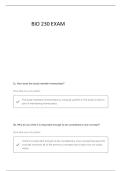
2c. How does the body maintain homeostasis?
Give this one a try later!
The body maintains homeostasis by using all systems in the body to have a
part in maintaining homeostasis.
3b. Why do you think it is important enough to be considered a core concept?
Give this one a try later!
I think it is important enough to be considered a core concept because this
concept connects all of the previous concepts and is also how our body
works.
,4d. How does your body eliminate water?
Give this one a try later!
Our bodies eliminate water from excretion from the kidneys to the ureters
to the urinary bladder out the urethra.
3e. Where does the glucose in your body come from?
Give this one a try later!
Glucose in your body comes from food that your intake.
2a. In what ways have you changed your thinking about the ideas we have studied?
Give this one a try later!
I now understand that the concentration depends on the tonicity of the
cell.
5f. How does strangulation and hyperventilation disrupt homeostasis?
Give this one a try later!
, Strangulation and hyperventilation both disrupt the balance of oxygen and
carbon dioxide in our body and accumulate carbon dioxide which disrupts
homeostasis.
2b. How would you explain to a fellow student what "Systems Biology" is about?
Give this one a try later!
Systems biology is about the processes that go on in our body in order to
maintain homeostasis.
8d. What happens at a molecular and physiological level when the level of solutes in
blood and extracellular fluids is lower (or higher) than those in the cells of the body?
Give this one a try later!
At a molecular and physiological level when solute levels in the blood and
extracellular fluids are lower than those in the cells the water will flow from
outside the cell into the cell.
11d. How is the structure of the small intestine related to its function?
Give this one a try later!
The structure of a small intestine (high surface area) is related to its
function because an intestine has a high surface in order to get maximum
absorption from food and biomolecules.
Give this one a try later!
The body maintains homeostasis by using all systems in the body to have a
part in maintaining homeostasis.
3b. Why do you think it is important enough to be considered a core concept?
Give this one a try later!
I think it is important enough to be considered a core concept because this
concept connects all of the previous concepts and is also how our body
works.
,4d. How does your body eliminate water?
Give this one a try later!
Our bodies eliminate water from excretion from the kidneys to the ureters
to the urinary bladder out the urethra.
3e. Where does the glucose in your body come from?
Give this one a try later!
Glucose in your body comes from food that your intake.
2a. In what ways have you changed your thinking about the ideas we have studied?
Give this one a try later!
I now understand that the concentration depends on the tonicity of the
cell.
5f. How does strangulation and hyperventilation disrupt homeostasis?
Give this one a try later!
, Strangulation and hyperventilation both disrupt the balance of oxygen and
carbon dioxide in our body and accumulate carbon dioxide which disrupts
homeostasis.
2b. How would you explain to a fellow student what "Systems Biology" is about?
Give this one a try later!
Systems biology is about the processes that go on in our body in order to
maintain homeostasis.
8d. What happens at a molecular and physiological level when the level of solutes in
blood and extracellular fluids is lower (or higher) than those in the cells of the body?
Give this one a try later!
At a molecular and physiological level when solute levels in the blood and
extracellular fluids are lower than those in the cells the water will flow from
outside the cell into the cell.
11d. How is the structure of the small intestine related to its function?
Give this one a try later!
The structure of a small intestine (high surface area) is related to its
function because an intestine has a high surface in order to get maximum
absorption from food and biomolecules.


