

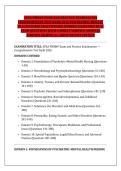
APEA PMHNP EXAM AND PRACTICE EXAMINATION
COMPREHENSIVE TEST BANK 2026 PSYCHIATRIC-MENTAL
HEALTH NURSE PRACTITIONER (PMHNP) EXAM PREP REAL
EXAM QUESTIONS WITH CORRECT VERIFIED ANSWERS
ALREADY GRADED A+ | MOST RECENT EDITION
EXAMINATION TITLE: APEA PMHNP Exam and Practice Examination —
Comprehensive Test Bank 2026
DOMAINS COVERED:
• Domain 1: Foundations of Psychiatric-Mental Health Nursing (Questions
1-50)
• Domain 2: Neurobiology and Psychopharmacology (Questions 51-100)
• Domain 3: Mood Disorders and Bipolar Spectrum (Questions 101-140)
• Domain 4: Anxiety, Trauma, and Stressor-Related Disorders (Questions
141-180)
• Domain 5: Psychotic Disorders and Schizophrenia (Questions 181-220)
• Domain 6: Neurocognitive, Neurodevelopmental, and Childhood
Disorders (Questions 221-260)
• Domain 7: Substance Use Disorders and Addictions (Questions 261-
300)
• Domain 8: Personality, Eating, Somatic, and Other Disorders (Questions
301-340)
• Domain 9: Psychotherapy, Therapeutic Modalities, and Professional
Issues (Questions 341-380)
• Domain 10: Special Populations, Legal/Ethical Issues, and Advanced
Practice (Questions 381-400)
DOMAIN 1: FOUNDATIONS OF PSYCHIATRIC-MENTAL HEALTH NURSING
,Questions 1-50
Question 1:
A 28-year-old patient with bipolar I disorder is prescribed lithium. Which
laboratory value is most important to monitor before and during treatment?
A) Liver enzymes
B) Thyroid function
C) Amylase level
D) Hemoglobin A1c
Rationale: Lithium can cause hypothyroidism. Baseline and periodic thyroid
function testing are required. Lithium also requires monitoring of renal
function and serum lithium levels.
Question 2:
A PMHNP evaluates a patient with generalized anxiety disorder who has been
taking alprazolam daily for 2 years. The patient wants to stop the medication.
What is the safest approach?
A) Stop immediately
B) Switch to an antipsychotic
C) Gradually taper the medication
D) Increase the dose before stopping
Rationale: Long-term benzodiazepine use can cause dependence and
withdrawal symptoms, including seizures. A gradual taper reduces
withdrawal risk.
Question 3:
A 7-year-old child is evaluated for ADHD. The parent reports excessive
activity, impulsivity, and inability to maintain attention at home and school for
more than 6 months. Which medication is considered first-line treatment?
A) Fluoxetine
B) Methylphenidate
,C) Lithium
D) Haloperidol
Rationale: Stimulants such as methylphenidate are first-line medications for
ADHD in children when appropriate. They improve attention and reduce
hyperactivity and impulsivity.
Question 4:
A 70-year-old patient develops sudden confusion, fluctuating attention, and
disorientation after hip surgery. The family reports the patient was
cognitively normal before hospitalization. What is the most likely diagnosis?
A) Major neurocognitive disorder
B) Delirium
C) Schizophrenia
D) Depression
Rationale: Delirium is characterized by acute onset, fluctuating cognition,
impaired attention, and altered awareness, often triggered by medical illness,
surgery, or medications.
Question 5:
A patient with schizophrenia is started on clozapine after multiple failed
antipsychotic trials. Which monitoring requirement is essential?
A) Weekly CBC monitoring initially
B) Monthly liver biopsy
C) Daily ECG monitoring
D) Routine urine drug screening
Rationale: Clozapine carries a risk of severe neutropenia/agranulocytosis.
Absolute neutrophil count (ANC) monitoring is required according to REMS
guidelines.
, Question 6:
A patient with PTSD begins trauma-focused therapy. Which psychotherapy
approach has strong evidence for PTSD treatment?
A) Cognitive processing therapy
B) Supportive therapy only
C) Psychoanalysis
D) Electroconvulsive therapy
Rationale: Trauma-focused psychotherapies, including cognitive processing
therapy and prolonged exposure therapy, are evidence-based first-line
treatments for PTSD.
Question 7:
A patient presents with excessive handwashing, fear of contamination, and
intrusive unwanted thoughts about germs. The patient spends several hours
daily performing rituals. Which diagnosis is most likely?
A) Obsessive-compulsive disorder
B) Illness anxiety disorder
C) Specific phobia
D) Generalized anxiety disorder
Rationale: OCD is characterized by obsessions (unwanted intrusive thoughts)
and compulsions (repetitive behaviors) that are time-consuming and cause
significant distress.
Question 8:
Which of the following is a core symptom of major depressive disorder
according to DSM-5 criteria?
A) Depressed mood most of the day, nearly every day
B) Grandiose beliefs
C) Pressured speech
D) Hallucinations
COMPREHENSIVE TEST BANK 2026 PSYCHIATRIC-MENTAL
HEALTH NURSE PRACTITIONER (PMHNP) EXAM PREP REAL
EXAM QUESTIONS WITH CORRECT VERIFIED ANSWERS
ALREADY GRADED A+ | MOST RECENT EDITION
EXAMINATION TITLE: APEA PMHNP Exam and Practice Examination —
Comprehensive Test Bank 2026
DOMAINS COVERED:
• Domain 1: Foundations of Psychiatric-Mental Health Nursing (Questions
1-50)
• Domain 2: Neurobiology and Psychopharmacology (Questions 51-100)
• Domain 3: Mood Disorders and Bipolar Spectrum (Questions 101-140)
• Domain 4: Anxiety, Trauma, and Stressor-Related Disorders (Questions
141-180)
• Domain 5: Psychotic Disorders and Schizophrenia (Questions 181-220)
• Domain 6: Neurocognitive, Neurodevelopmental, and Childhood
Disorders (Questions 221-260)
• Domain 7: Substance Use Disorders and Addictions (Questions 261-
300)
• Domain 8: Personality, Eating, Somatic, and Other Disorders (Questions
301-340)
• Domain 9: Psychotherapy, Therapeutic Modalities, and Professional
Issues (Questions 341-380)
• Domain 10: Special Populations, Legal/Ethical Issues, and Advanced
Practice (Questions 381-400)
DOMAIN 1: FOUNDATIONS OF PSYCHIATRIC-MENTAL HEALTH NURSING
,Questions 1-50
Question 1:
A 28-year-old patient with bipolar I disorder is prescribed lithium. Which
laboratory value is most important to monitor before and during treatment?
A) Liver enzymes
B) Thyroid function
C) Amylase level
D) Hemoglobin A1c
Rationale: Lithium can cause hypothyroidism. Baseline and periodic thyroid
function testing are required. Lithium also requires monitoring of renal
function and serum lithium levels.
Question 2:
A PMHNP evaluates a patient with generalized anxiety disorder who has been
taking alprazolam daily for 2 years. The patient wants to stop the medication.
What is the safest approach?
A) Stop immediately
B) Switch to an antipsychotic
C) Gradually taper the medication
D) Increase the dose before stopping
Rationale: Long-term benzodiazepine use can cause dependence and
withdrawal symptoms, including seizures. A gradual taper reduces
withdrawal risk.
Question 3:
A 7-year-old child is evaluated for ADHD. The parent reports excessive
activity, impulsivity, and inability to maintain attention at home and school for
more than 6 months. Which medication is considered first-line treatment?
A) Fluoxetine
B) Methylphenidate
,C) Lithium
D) Haloperidol
Rationale: Stimulants such as methylphenidate are first-line medications for
ADHD in children when appropriate. They improve attention and reduce
hyperactivity and impulsivity.
Question 4:
A 70-year-old patient develops sudden confusion, fluctuating attention, and
disorientation after hip surgery. The family reports the patient was
cognitively normal before hospitalization. What is the most likely diagnosis?
A) Major neurocognitive disorder
B) Delirium
C) Schizophrenia
D) Depression
Rationale: Delirium is characterized by acute onset, fluctuating cognition,
impaired attention, and altered awareness, often triggered by medical illness,
surgery, or medications.
Question 5:
A patient with schizophrenia is started on clozapine after multiple failed
antipsychotic trials. Which monitoring requirement is essential?
A) Weekly CBC monitoring initially
B) Monthly liver biopsy
C) Daily ECG monitoring
D) Routine urine drug screening
Rationale: Clozapine carries a risk of severe neutropenia/agranulocytosis.
Absolute neutrophil count (ANC) monitoring is required according to REMS
guidelines.
, Question 6:
A patient with PTSD begins trauma-focused therapy. Which psychotherapy
approach has strong evidence for PTSD treatment?
A) Cognitive processing therapy
B) Supportive therapy only
C) Psychoanalysis
D) Electroconvulsive therapy
Rationale: Trauma-focused psychotherapies, including cognitive processing
therapy and prolonged exposure therapy, are evidence-based first-line
treatments for PTSD.
Question 7:
A patient presents with excessive handwashing, fear of contamination, and
intrusive unwanted thoughts about germs. The patient spends several hours
daily performing rituals. Which diagnosis is most likely?
A) Obsessive-compulsive disorder
B) Illness anxiety disorder
C) Specific phobia
D) Generalized anxiety disorder
Rationale: OCD is characterized by obsessions (unwanted intrusive thoughts)
and compulsions (repetitive behaviors) that are time-consuming and cause
significant distress.
Question 8:
Which of the following is a core symptom of major depressive disorder
according to DSM-5 criteria?
A) Depressed mood most of the day, nearly every day
B) Grandiose beliefs
C) Pressured speech
D) Hallucinations


