

Written by students who passed Immediately available after payment Read online or as PDF Wrong document? Swap it for free 4.6 TrustPilot
logo-home
Document preview thumbnail
Preview 4 out of 58 pages
Exam (elaborations)

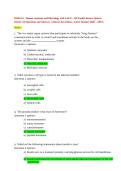
BIOL251/ BIOL 251 Human Anatomy & Physiology with Lab II – All Weekly Review Quizzes (Weeks 1–8) Questions & Answers | Latest .

Document preview thumbnail
Preview 4 out of 58 pages

BIOL251 - Human Anatomy and Physiology with Lab II – All Weekly Review Quizzes (Week 1-8) Questions and Answers_ (Answer Key below) | Latest | APU. W1 Review 1. The two major organ systems that participate in relatively "long distance" communication in order to control and coordinate actions in the body are the _______ system and the _______ system. Question 1 options: a) Skeletal; muscular b) Cardiovascular; endocrine c) Muscular; integumentary d) Nervous; endocrine e) Muscular; nervous 2. What secretory cell type is found in the adrenal medulla? Question 2 options: a) neuroglial cells b) oxyphil cells c) beta cells d) chromaffin cells e) follicle cells 3. The gonads produce what class of hormones? Question 3 options: a) neurotransmitters b) amine hormones c) catecholamines d) steroid hormones e) peptide hormones 4. Which of the following statements about insulin is true? Question 4 options: a) Insulin acts as a transport protein, carrying glucose across the cell membrane. b) Insulin facilitates the movement of intracellular glucose transporters to the cell membrane. c) Insulin stimulates the breakdown of stored glycogen into glucose. d) Insulin stimulates the kidneys to reabsorb glucose into the bloodstream.W1 Review e) Two of the above are true statements. 5. The function of the placental hormone human placental lactogen (hPL) is to ________. Question 5 options: a) prepare the breasts for lactation b) nourish the placenta c) regulate the menstrual cycle d) help the placenta to mature e) All of the above are true. 6. The alpha cells of the pancreatic islets produce and secrete _________. Question 6 options: a) insulin b) glucagon c) epinephrine d) alphagen e) All of the above 7. Hormones regulate certain target cell responses. These can include which of the following? Question 7 options: a) Metabolism b) Growth and development of tissue c) Fluid balance d) All of the above are correct. e) Sexual function 8. The parathyroid glands are small structures located on the posterior thyroid gland that produce parathyroid hormone (PTH), which regulates blood ________ levels. Question 8 options: a) potassiumW1 Review b) insulin c) adrenalin d) thyroid hormone e) calcium 9. Which general type of hormone can easily pass through the cell membrane and into the cytoplasm of the cell? Question 9 options: a) Lipid-soluble hormones b) Protein hormones c) Water-soluble hormones d) CNS hormones e) Pituitary hormones 10. The development of a goiter indicates that ________. Question 10 options: a) the anterior pituitary is abnormally enlarged b) there is hypertrophy of the thyroid's follicle cells c) there is an excessive accumulation of colloid in the thyroid follicles d) the anterior pituitary is secreting excessive growth hormone e) Both B and C are correct. 11. The hormones of the human body can be divided into which of the following major group(s)? Question 11 options: a) Sex hormones b) CNS hormones c) Hormones derived from amino acids d) Hormones derived from lipids e) C and D above are correct. 12. Stage one of GAS is called the alarm reaction. This is short-term stress, the fight-or-flight response, mediated by the hormones __________ and ___________from the adrenal medulla.W1 Review Question 12 options: a) Testosterone; estrogen b) Aldosterone; angiotensin c) Cortisol; hydrocortisone d) Epinephrine; norepinephrine e) Insulin; glucagon 13. The adrenal glands are wedges of glandular and neuroendocrine tissue adhering to the top of the _________. Question 13 options: a) liver b) thyroid gland c) spleen d) kidneys e) hypothalamus 14. How many hormones are produced by the posterior pituitary? Question 14 options: a) 2 b) 1 c) 6 d) 0 e) 3 15. Hormones produced and released from sex organs include which of the following? Question 15 options: a) estrogen and progesterone b) testosterone c) inhibin d) FSH and LH e) A, B, and C are all correctW1 Review 16. In observing epithelial cells under a microscope, the cells are arranged in a single layer and look tall and narrow, and the nucleus is located close to the basal side of the cell. The specimen is what type of epithelial tissue? Question 16 options: a) transitional b) stratified c) squamous d) columnar e) stratified 17. Simple ________ epithelium appears under a microscope like scales. They usually lie flat and horizontal. Question 17 options: a) squamous b) stratified c) columnar d) cuboidal e) junctional 18. What two types of macromolecules are the main components of myelin? Question 18 options: a) carbohydrates and lipids b) proteins and nucleic acids c) phospholipids and proteins d) carbohydrates and nucleic acids e) water and proteins 19. Which of the following cavities contains a component of the central nervous system? Question 19 options: a) thoracic b) peritonealW1 Review c) abdominal d) cranial e) pelvic 20. What are the bone forming cells that secrete organic matrix? Question 20 options: a) Osteoblasts b) Osteocytes c) Lacunae d) Osteoclasts e) Trabeculae 21. Which of the following bones is part of the Appendicular Skeleton? Question 21 options: a) Rib b) Sacrum c) Sternum d) Scapula e) Vertebra 22. In muscular hypertrophy, what happens to muscle fibers? Question 22 options: a) Muscle fibers deteriorate from lack of use b) Structural proteins are added and cell diameter increases c) New muscle cells are formed d) Muscle mass decreases e) Structural proteins are lost and cell diameter decreases 23. Varying degrees of contractive force in a skeletal muscle are generated through the process of what?W1 Review Question 23 options: a) Muscle twitch b) Tetanus c) Motor unit recruitment d) Motor unit suppression e) Contraction phase 24. Which of the following is NOT a difference between DNA and RNA? Question 24 options: a) They have completely different functions. b) RNA is single stranded and DNA is double stranded c) DNA contains alternating sugar-phosphate molecules whereas RNA does not contain sugars d) DNA contains thymine whereas RNA contains uracil e) DNA contains deoxyribose and RNA contains ribose 25. The cell membrane (also called the plasma membrane) contains which of the following molecules? Question 25 options: a) proteins b) cholesterol c) phospholipids d) glycoproteins e) All of the aboveW2: Review A 1. What is the typical lifespan of a leukocyte? Question 1 options: 1. The lifespan of a leukocyte typically is measured only in hours or days. 2. The lifespan of a leukocyte is approximately 120-150 days. 3. Because all leukocytes are unable to undergo mitosis (cell division), their lifespan is usually only a few seconds. 4. The lifespan of a leukocyte is extremely variable, measuring in hours to years or decades. 5. Many leukocytes can live indefinitely if they are in well-protected locations. 2. What is meant by the term anemia? Question 2 options: 1. Anemia exists when the platelet count is so low that blood does not clot as quickly as it should. 2. Anemia is defined as a deficiency in the number of red blood cells and/or hemoglobin. 3. Anemia always results from some very simple cause. 4. There are only approximately four or five causes of anemia. 5. Anemia is said to exist when the total white blood cell is too low. 3. Which of the following is/are true of the molecule named hemoglobin? Question 3 options: 1. It contains four folded chains of a protein named globin. 2. It functions as the nucleus in all mature erythrocytes. 3. It numbers approximately 1 to 2 million in each erythrocyte. 4. It is a very simple protein structure. 5. It can bind to only one molecule of oxygen. 4. The total life span of an erythrocyte: Question 4 options: 1. Is the same amount of time that it takes one RBC to cycle once through the blood stream. 2. Averages about 5-7 days.W2: Review A 3. Averages about 120 days. 4. Averages approximately 1-2 years. 5. None of the above. 5. Which of the following is/are correct in describing thrombosis: Question 5 options: 1. A condition characterized by excessive numbers of platelets that increases the risk for excessive clot formation, a condition known as thrombosis. 2. Thrombosis is a very common, always harmless condition that occurs in the body. 3. A thrombosis is always harmless because the thrombus which is formed always stays in a blood vessel precisely where it formed. 4. The blood stream contains several different anticoagulants that will result in the complete, normal breakdown of a thrombus. 5. Two of the above are correct. 6. Which of the following is/are important in the process named hemostasis by which the body seals a ruptured blood vessel and prevents further loss of blood? Question 6 options: 1. vascular spasm 2. formation of a platelet plug 3. coagulation 4. fibrinolysis 5. A, B, and C are all correct. 7. The term hematocrit is a measure of the percentage of red blood cells (RBCs) in a sample of blood. Which of the following statements is true? Question 7 options: 1. The normal hematocrit of a man averages about 41%. 2. The normal hematocrit of a woman averages about 46%. 3. The normal hematocrits of both men and women averages about 50%. 4. The normal hematocrit of a woman averages about 41%. 5. The normal hematocrit of a man averages about 50%.W2: Review A 8. The most common blood type of all Americans is which of the following? Question 8 options: 1. O+ 2. A+ 3. B+ 4. O- 5. AB- 9. About 7% of plasma is made up of proteins. The most abundant of these plasma proteins is: Question 9 options: 1. immunoglobulin 2. albumin 3. gamma globulins 4. alpha globulins 5. fibrinogen 10. Which of the following is/are true of red blood cells? Question 10 options: 1. Their anatomical name is also erythrocyte. 2. In their mature form, they do not contain a nucleus. 3. Immature erythrocytes that may still contain fragments of organelles are called reticulocytes. 4. They contain one molecule of hemoglobin. 5. All of the above are true. 11. All formed elements found in blood arise from which of the following: Question 11 options: 1. stem cells 2. albumin 3. erythrocytesW2: Review A 4. immunoglobulins 5. osteoblasts 12. Lymphocytes can be classified in the following group or groups: Question 12 options: 1. monocytes 2. B-cells 3. T-cells 4. natural killer (NK) cells 5. Answers B, C, and D are correct 13. What is the most common leukocyte in the human body? Question 13 options: 1. basophils 2. eosinophils 3. natural killer (NK) cells 4. neutrophils 5. lymphocytes 14. Which of the following is/are true about the amount of oxygen being carried by RBCs? Question 14 options: 1. Percent saturation of oxygen in the blood is normally monitored using a device known as a pulse oximeter. 2. The normal pulse oximeter readings range from 95--100%. 3. Lower pulse oximeter readings, e.g. less than 95%, are indicative of the condition named hypoxemia. 4. Many different diseases or conditions can result in hypoxemia. 5. All of the above are true. 15. Which of the following is/are important in the process named coagulation? Question 15 options:W2: Review A 1. Coagulation can only occur in the presence of two or three different "clotting factors." 2. Coagulation is a complicated cascade of reactions that result in the formation of a mesh of fibrin. 3. Coagulation is a very simple and straight-forward series of only two or three steps. 4. Neither an excess number of platelets nor having many too few platelets in the blood stream will cause any serious reaction. 5. A process which can reverse coagulation, named anticoagulation, can only occur when one or more medications are administered to the body. 16. The pH of a liquid is a measure of its acidity or alkalinity. The normal range of pH of blood is: Question 16 options: 1. 2.0 to 3.0 2. 3.55 to 4.55 3. 4.35 to 4.45 4. 5.0 to 6.0 5. 7.45 to 7.55 17. Which of the following is/are true of platelets? Question 17 options: 1. Platelets are sometimes referred to as thrombocytes. 2. Platelets are actually pieces of large cells called a megakaryocytes. 3. Platelets are very small, but very numerous, sometimes numbering 150,000 to 160,000 per microliter of blood. 4. Platelets are critical to hemostasis, the stoppage of blood flow following damage to a vessel. 5. All of the above are true. 18. Which of the following is/are true of platelets? Question 18 options: 1. They arise from cells called megakaryocytes. 2. They do not contain a nucleus.W2: Review A 3. They play an important part in the clotting of blood. 4. They are not cells. 5. All of the above are true. 19. The term formed elements in blood includes which of the following? Question 19 options: 1. albumin 2. plasma 3. hematocrit 4. white blood cells 5. All of the above are considered formed elements. 20. Which of the following is the primary function of red blood cells? Question 20 options: 1. To bind some ions and molecules in the blood which are not water-soluble. 2. To bind and carry away waste products from most cells of the body. 3. To help fight off infection as part of the immune system. 4. To carry oxygen from the lungs to all cells of the body; to carry some carbon dioxide from the cells back to the lungs. 5. To help in the process of hemostasis, the stoppage of blood flow following damage to a blood vessel.W2: Review B Question 1 (5 points) In case an American needs an emergency blood transfusion, blood with the following blood type(s) can be given without fear of agglutination? Question 1 options: a) O+ b) AB+ c) ABd) Blood with the same blood type as the person needing the transfusion. e) Either C or D can be given. Question 2 (5 points) Which of the following is true of leukocytes? Question 2 options: a) They are very similar in appearance and function as red blood cells. b) Leukocytes are smaller than and more numerous than red blood cells. c) Like red blood cells, mature leukocytes also lack a nucleus and other intracellular organelles. d) Leukocytes always remain in circulation throughout the body. e) The leukocyte is a major component of the body's defenses against disease. Question 3 (5 points) The blood type of a person's blood depends on which of the following factors? Question 3 options: a) Which of the three antigens, A, B, and/or O, are located on the surface of the erythrocytes. b) Which of two antigens, Rh+ or Rh-, are located on the surface of the erythrocytes. c) Which of the two antigens, A or B or both, are located on the surface of the erythrocytes. d) Whether or not the Rh antigen is found on the surface of the erythrocytes.W2: Review B e) The blood type depends on both C and D. Question 4 (5 points) Which of the following is the primary function of red blood cells? Question 4 options: a) To bind and carry away waste products from most cells of the body. b) To help fight off infection as part of the immune system. c) To help in the process of hemostasis, the stoppage of blood flow following damage to a blood vessel. d) To carry oxygen from the lungs to all cells of the body; to carry some carbon dioxide from the cells back to the lungs. e) To bind some ions and molecules in the blood which are not water-soluble. Question 5 (5 points) Which of the following is/are important in the process named hemostasis by which the body seals a ruptured blood vessel and prevents further loss of blood? Question 5 options: a) vascular spasm b) formation of a platelet plug c) coagulation d) fibrinolysis e) A, B, and C are all correct. Question 6 (5 points) About 7% of plasma is made up of proteins. The most abundant of these plasma proteins is: Question 6 options: a) fibrinogenW2: Review B b) albumin c) gamma globulins d) immunoglobulin e) alpha globulins Question 7 (5 points) Which of the following is/are important in the process named coagulation? Question 7 options: a) Coagulation is a very simple and straight-forward series of only two or three steps. b) Coagulation is a complicated cascade of reactions that result in the formation of a mesh of fibrin. c) A process which can reverse coagulation, named anticoagulation, can only occur when one or more medications are administered to the body. d) Neither an excess number of platelets nor having many too few platelets in the blood stream will cause any serious reaction. e) Coagulation can only occur in the presence of two or three different "clotting factors." Question 8 (5 points) All formed elements found in blood arise from which of the following: Question 8 options: a) stem cells b) immunoglobulins c) osteoblasts d) albumin e) erythrocytes Question 9 (5 points) The term hematocrit is a measure of the percentage of red blood cells (RBCs) in a sample of blood. Which of the following statements is true? Question 9 options:W2: Review B a) The normal hematocrit of a man averages about 41%. b) The normal hematocrit of a woman averages about 46%. c) The normal hematocrits of both men and women averages about 50%. d) The normal hematocrit of a woman averages about 41%. e) The normal hematocrit of a man averages about 50%. Question 10 (5 points) Lymphocytes can be classified in the following group or groups: Question 10 options: a) monocytes b) B-cells c) T-cells d) natural killer (NK) cells e) Answers B, C, and D are correct Question 11 (5 points) Which of the following is/are true of platelets? Question 11 options: a) Platelets are sometimes referred to as thrombocytes. b) Platelets are actually pieces of large cells called a megakaryocytes. c) Platelets are very small, but very numerous, sometimes numbering 150,000 to 160,000 per microliter of blood. d) Platelets are critical to hemostasis, the stoppage of blood flow following damage to a vessel. e) All of the above are true. Question 12 (5 points) What is the typical lifespan of a leukocyte? Question 12 options: a) The lifespan of a leukocyte is extremely variable, measuring in hours to yearsW2: Review B or decades. b) The lifespan of a leukocyte typically is measured only in hours or days. c) Many leukocytes can live indefinitely if they are in well-protected locations. d) Because all leukocytes are unable to undergo mitosis (cell division), their lifespan is usually only a few seconds. e) The lifespan of a leukocyte is approximately 120-150 days. Question 13 (5 points) What is meant by the term anemia? Question 13 options: a) Anemia is defined as a deficiency in the number of red blood cells and/or hemoglobin. b) There are only approximately four or five causes of anemia. c) Anemia always results from some very simple cause. d) Anemia is said to exist when the total white blood cell is too low. e) Anemia exists when the platelet count is so low that blood does not clot as quickly as it should. Question 14 (5 points) Which of the following is/are true of platelets? Question 14 options: a) They arise from cells called megakaryocytes. b) They do not contain a nucleus. c) They play an important part in the clotting of blood. d) They are not cells. e) All of the above are true. Question 15 (5 points) Which of the following is/are correct in describing thrombosis: Question 15 options:W2: Review B a) A condition characterized by excessive numbers of platelets that increases the risk for excessive clot formation, a condition known as thrombosis. b) Thrombosis is a very common, always harmless condition that occurs in the body. c) A thrombosis is always harmless because the thrombus which is formed always stays in a blood vessel precisely where it formed. d) The blood stream contains several different anticoagulants that will result in the complete, normal breakdown of a thrombus. e) Two of the above are correct. Question 16 (5 points) Which of the following is/are true of the molecule named hemoglobin? Question 16 options: a) It numbers approximately 1 to 2 million in each erythrocyte. b) It is a very simple protein structure. c) It contains four folded chains of a protein named globin. d) It can bind to only one molecule of oxygen. e) It functions as the nucleus in all mature erythrocytes. Question 17 (5 points) What is the most common leukocyte in the human body? Question 17 options: a) basophils b) eosinophils c) lymphocytes d) neutrophils e) natural killer (NK) cells Question 18 (5 points) The total life span of an erythrocyte: Question 18 options:W2: Review B a) Is the same amount of time that it takes one RBC to cycle once through the blood stream. b) Averages about 5-7 days. c) Averages about 120 days. d) Averages approximately 1-2 years. e) None of the above. Question 19 (5 points) The most common blood type of all Americans is which of the following? Question 19 options: a) O+ b) Oc) ABd) A+ e) B+ Question 20 (5 points) The pH of a liquid is a measure of its acidity or alkalinity. The normal range of pH of blood is: Question 20 options: a) 2.0 to 3.0 b) 3.55 to 4.55 c) 4.35 to 4.45 d) 5.0 to 6.0 e) 7.45 to 7.55Unit Review 1. Which of the following does not play a role in blood pressure? Question 1 options: a. Blood volume b. Blood vessel diameter c. Cardiac output d. Peripheral resistance e. All of the above play a role in blood pressure. 2. Which tunic of an artery is responsible for maintaining blood pressure? Question 2 options: a. Tunic intima b. Tunica media c. Tunica externa d. Tunica interna e. None of the above. 3. Cardiac output equals: Question 3 options: a. Blood leaving one ventricle during one beat of the heart. b. Blood flow through the entire vascular system c. Systolic pressure plus diastolic pressure d. Stroke volume e. Heart rate 4. The following is a list of vessels. Place them in the order that blood would go through entering the systemic circulation. 1. Left ventricle 2. Aorta 3. Vena cavae 4. Pulmonary trunk 5. Pulmonary veins 6. Right atrium 7. Right ventricle 8. Left atrium Question 4 options: a. 6, 7, 3, 5, 2, 1, 4, 8 b. 1, 7, 3, 8, 5, 6, 2, 4 c. 3, 5, 8, 4, 1, 2, 7, 6 d. 8,1,3, 6, 7, 5, 2, 4, e. 3, 6, 7, 4, 5, 8, 1, 2 5. Venous return is affected by all EXCEPT: Question 5 options: a. Skeletal and muscle activity b. Values lining the veins c. Thorax pressure changes d. Temperature changes in the bodyUnit Review e. All of the above affect venous return. 6. Capillaries that have a perforated lining are called__________. Question 6 options: a. Sinusoid capillaries b. Gap Capillaries c. Continuous capillaries d. Fenestrated capillaries e. Perforated capillaries 7. These control the blood flow through a capillary bed. Question 7 options: a. Vasorum b. Precapillary sphincters c. Thoroughfare channel d. Arterioles e. AV values 8. The amount of blood pumped by either ventricle in one minute is called. Question 8 options: a. Cardiac output b. Starling output c. Systolic volume d. Stroke volume e. End systolic volume 9. __________ is a condition where the heart is beating over 100 beats per minute. Question 9 options: a. Tachycardia b. Nodal Block c. Irregular Heart Beat (IHR) d. Arrhythmia e. Bradycardia 10. Capillaries that are lined with phagocytes are called _________. Question 10 options: a. Continuous capillaries b. Arterioles c. Fenestrated capillaries d. Venules e. Sinusoid capillariesUnit Review 11. The pulmonary arteries carry blood to the______. Question 11 options: a. Heart b. Aorta c. Systemic system d. Ventricles e. Lungs 12. What is the sequence of layers of the blood vessels (veins or arteries) from outside to the inside? Question 12 options: a. Tunica intima, tunica media, tunica externa b. Tunica externa, tunica intima, tunica media c. Tunica media, tunica externa, tunica intima d. Tunica externa, tunica media, tunica intima e. Tunica intima, tunica media, tunica externa 13. The exchange of substances between the blood vessels and the surrounding tissues can only happen in the ___________. Question 13 options: a. Arteries b. Capillaries c. Arterioles d. Veins e. Venules 14. Systolic pressure minus diastolic pressure is another term for: Question 14 options: a. Pulse pressure b. Cardiac output c. peripheral resistance d. Mean arterial pressure (MAP) e. Stroke volume 15. During vigorous exercise, one would expect: Question 15 options: a. Blood to be diverted from the brain b. Blood to be diverted to the kidneys c. Blood to be diverted to the muscles doing the workUnit Review d. The heart rate to become slow but more contractile. e. Two of the above are correct. 16. Part of the second line of defense includes: Question 16 options: a. Platlets b. Sebum on the skin c. Cilia d. Phagocytes e. Antibodies 17. Fever: Question 17 options: a. Slows the body's metabolic rate to conserve energy b. Is always considered dangerous c. Influences the liver to release large amounts of iron into the system d. Is the resetting of the body's temperature by chemicals. e. Two of the above are correct. 18. If a person is given antibodies after a rattlesnake bite, this is considered: Question 18 options: a. Active natural immunity b. Active artificial immunity c. Passive natural immunity d. Passive artificial immunity e. None of the above 19. Macrophages are derived from __________. Question 19 options: a. eosinophils b. basophils c. neutrophils d. monocytes e. lymphocytes 20. Which Immunoglobulin class is found attached to the surface of B cells? Question 20 options: a. IgG b. IgA c. IgD d. IgM e. IgEUnit Review 21. The body's nonspecific defense includes everything except: Question 21 options: a. Antibodies b. Inflammation c. Interferons d. Compliment system e. All of the above are nonspecific defenses. 22. The cells responsible for humoral immunity are the __________. Question 22 options: a. Helper T cells b. B cells c. Natural killer cells d. erythrocytes e. platelets 23. The only antibodies that can cross the placenta are the ___________. Question 23 options: a. IgG b. IgM a. IgA c. IgE d. IgD 24. The majority of the lymph returns to the blood system by way of the __________. Question 24 options: Both the superior and inferior vena cava a. Aorta b. Cisterna chili c. Thoracic duct d. Right lymphatic duct 25. The largest collection of lymphoid tissue in an adult is in the __________. Question 25 options: a. tonsils b. spleen c. Liver d. peyers patches e. thymusUnit Review 26. Antibodies: Question 26 options: a. Require haptens to function b. Make up part of the primary immune system c. Are made from T cells d. Are made from plasma cells e. None of the above 27. The white pulp area in the spleen contains large amounts of __________. Question 27 options: a. Red blood cells b. Platlets c. Foam cells d. Lymph e. Lymphocytes 28. Cancer cells and virus cells can be killed by Question 28 options: a. Natural Killer Cells b. Antibodies c. T lymphocytes d. Eosinophils e. Phagocytes 29. Looking inside the deep cortical region of a lymph node, mostly _________cells will be found. Question 29 options: a. T Cells b. eosinophils c. Natural Killer Cells d. A mixture of many cells e. B cells 30. The inflammatory response does not: Question 30 options: a. Replaces damaged tissue with healthy tissue b. Prevents the spread of disease to surrounding tissues c. Starts the repair process of the tissue d. Disposes of the cellular debris e. The inflammatory response does all of the above.Unit Review 31. The exchange of gases in internal and external respiration occurs due to _____________. Question 31 options: a. Simple diffusion b. Facilitated diffusion c. Osmosis d. Active transport e. None of the above 32. Under normal circumstances, bronchoconstriction is caused by ________________ and bronchodilation is caused by ________________. Question 32 options: a. Sympathetic nervous system; parasympathetic nervous system b. Parasympathetic nervous system; sympathetic nervous system c. Voluntary control; involuntary control d. Involuntary control; voluntary control e. None of the above 33. ____________ is the maximum amount of air one can exhale by force after a normal expiration. Question 33 options: a. Vital capacity b. Residual volume c. Tidal volume d. Inspiratory reserve volume e. Expiratory reserve volume 34. Which of the following are ways CO2 is transported in the blood? Question 34 options: a. As bicarbonate (HCO3–) b. As dissolved C02 in plasma c. As carbaminohemoglobin d. All of the above e. None of the above 35_________ percent of CO2 is transported to the lungs bound by hemoglobin. Question 35 options: a. 70 b. 5 c. 30Unit Review d. 20 e. 10 36. At a birthday party, a teen decides to inhale some of the helium from a nearby balloon using his mouth. Before the helium gas reaches his right and left lungs, through which order of structures will it flow? Question 36 options: a. Oral cavity to the right and left main bronchi to the trachea to the oropharynx b. Oral cavity to the oropharynx to the trachea to the right and left main bronchi c. Oral cavity to the trachea to the larynx to the right and left main bronchi d. Oral cavity to the trachea to the trachea to the nasopharynx to the right and left main bronchi e. Oral cavity to the nasopharynx to the trachea to the right and left main bronchi 37. How many molecules of oxygen can one molecule of hemoglobin carry? Question 37 options: a. 4 b. 2 c. 3 d. 1 e. 5 38. Which cell is responsible for picking up oxygen to transport to tissues throughout the body? Question 38 options: a. Monocytes b. Platelets c. Leukocytes d. Kupffer cells e. Erythrocytes 39. What would happen if the body allowed us to exhale all of the air out of our lungs? Question 39 options: a. Nothing, we could easily fill them up when we inhaled again b. The alveoli would collapse c. The trachea would collapse d. All of the above e. None of the above 40. The blood traveling to the lungs is generally described to be which of the following? Question 40 options: a. Oxygenated b. DeoxygenatedUnit Review c. Neither oxygenated or deoxygenated d. Both oxygenated and deoxygenated e. None of the terms above would ever be used to describe blood in the body.W4 - Review 1. What is the sequence of layers of the blood vessels (veins or arteries) from outside to the inside? Question 1 options: a. Tunica externa, tunica media, tunica intima b. Tunica intima, tunica media, tunica externa c. Tunica media, tunica externa, tunica intima d. Tunica intima, tunica media, tunica externa e. Tunica externa, tunica intima, tunica media 2. __________ is a condition where the heart is beating over 100 beats per minute. Question 2 options: a. Arrhythmia b. Irregular Heart Beat (IHR) c. Tachycardia d. Bradycardia e. Nodal Block 3. Which of the following does not play a role in blood pressure? Question 3 options: a. Blood volume b. Blood vessel diameter c. Cardiac output d. Peripheral resistance e. All of the above play a role in blood pressure. 4. Which tunic of an artery is responsible for maintaining blood pressure? Question 4 options: a. Tunic intima b. Tunica media c. Tunica externa d. Tunica interna e. None of the above. 5. The pulmonary arteries carry blood to the______. Question 5 options: a. Aorta b. Systemic systemW4 - Review c. Ventricles d. Heart e. Lungs 6. The exchange of substances between the blood vessels and the surrounding tissues can only happen in the ___________. Question 6 options: a. Capillaries b. Arterioles c. Venules d. Arteries e. Veins 7. The following is a list of vessels. Place them in the order that blood would go through entering the systemic circulation. 1. Left ventricle 2. Aorta 3. Vena cavae 4. Pulmonary trunk 5. Pulmonary veins 6. Right atrium 7. Right ventricle 8. Left atrium Question 7 options: a. 6, 7, 3, 5, 2, 1, 4, 8 b. 1, 7, 3, 8, 5, 6, 2, 4 c. 3, 6, 7, 4, 5, 8, 1, 2 d. 8,1,3, 6, 7, 5, 2, 4, e. 3, 5, 8, 4, 1, 2, 7, 6 8. The amount of blood pumped by either ventricle in one minute is called. Question 8 options: a. Systolic volume b. Starling output c. Cardiac output d. Stroke volume e. End systolic volume 9. During vigorous exercise, one would expect: Question 9 options: a. Blood to be diverted from the brain b. Blood to be diverted to the kidneys c. Blood to be diverted to the muscles doing the work d. The heart rate to become slow but more contractile.W4 - Review e. Two of the above are correct. 10. Capillaries that have a perforated lining are called__________. Question 10 options: a. Perforated capillaries b. Fenestrated capillaries c. Continuous capillaries d. Sinusoid capillaries e. Gap CapillariesW5 - Review 1. If a person is given antibodies after a rattlesnake bite, this is considered: Question 1 options: a) Active natural immunity b) Active artificial immunity c) Passive natural immunity d) Passive artificial immunity e) None of the above 2. Cancer cells and virus cells can be killed by Question 2 options: a) Eosinophils b) Antibodies c) Natural Killer Cells d) Phagocytes e) T lymphocytes 3. Macrophages are derived from __________. Question 3 options: a) eosinophils b) basophils c) monocytes d) neutrophils e) lymphocytes 4. Antibodies: Question 4 options: a) Require haptens to function b) Make up part of the primary immune system c) Are made from T cells d) Are made from plasma cells e) None of the above 5. The only antibodies that can cross the placenta are the ___________. Question 5 options: a) IgGW5 - Review b) a. IgA c) IgD d) IgE e) IgM 6. The white pulp area in the spleen contains large amounts of __________. Question 6 options: a) Lymph b) Lymphocytes c) Red blood cells d) Foam cells e) Platlets 7. The largest collection of lymphoid tissue in an adult is in the __________. Question 7 options: a) tonsils b) spleen c) Liver d) peyers patches e) thymus 8. Which Immunoglobulin class is found attached to the surface of B cells? Question 8 options: a) IgA b) IgE c) d. IgG d) IgM e) IgD 9. Fever: Question 9 options: a) Slows the body's metabolic rate to conserve energy b) Is always considered dangerous c) Influences the liver to release large amounts of iron into the systemW5 - Review d) Is the resetting of the body's temperature by chemicals. e) Two of the above are correct. 10. Part of the second line of defense includes: Question 10 options: a) Phagocytes b) Cilia c) Sebum on the skin d) Platlets e) AntibodiesW7- Review A 1. The arterial blood pathway entering each nephron and then exiting each nephron is as follows: Question 1 options: a. Afferent artery, glomerulus, peritubular artery, efferent artery b. Efferent artery, afferent artery, glomerulus, peritubular artery c. Peritubular artery, afferent artery, efferent artery d. Afferent artery, glomerular artery, efferent artery e. None of the above is true. 2. The volume of filtrate formed by both kidneys per minute is termed the ______________ . Question 2 options: a. uremic coefficient b. anuric coefficient c. glomerular filtration rate (GFR) d. filtration quantity e. None of the above 3. Up to _______ liters of liquid pass through the nephrons of the kidney each day. Question 3 options: a. 4 – 8 L b. 40 – 80 L c. L d. 1 – 2 L e. 20 – 40 L 4. What percentage of the glucose that is filtered out of the blood flowing into the nephrons is reabsorbed? Question 4 options: a. 50- 60% b. Nearly 100% c. 40-50 %W7- Review A d. 33 % e. 70-80% 5. The following statement(s) is/are true of the act of micturition: Question 5 options: a. Most often occurs spontaneously in adults. b. Is a very simple act not involving the nervous system. c. Involves coordination of nerve input from several different nerves and areas of the nervous system. d. B and C are true statements e. None of the above are correct 6. The normal GFR in an adult (male or female) is _________ ml/min. Question 6 options: a. 80 – 110 b. 5 – 10 c. 100 –180 d. 20 – 40 e. 80 – 140 7. Production of less than 50 mL/day of urine is called ________. Question 7 options: a. polyuria b. normal c. oliguria d. hyperuria e. anuria 8. Peristaltic contractions occur in the ________. Question 8 options: a. urethra b. urinary bladder c. ureters d. renal pelvisW7- Review A e. A, B, and C are correct 9. Renin is released in response to ________. Question 9 options: a. diuretics b. low red blood cell count c. decreased blood pressure d. ACE e. increased blood pressure 10. The urinary system has some of the following roles in the human body: Question 10 options: a. Ridding the body of wastes b. Regulation of blood pH c. Regulation of blood pressure d. Stimulate the production of red blood cells e. All of the above are true. 11. A normal urinalysis would include each of the following: Question 11 options: a. pH of 3 to 6 b. pale yellow to deep amber color c. odorless d. specific gravity of 1.003–1.032 e. B, C, and D are correct 12. One of the many functions of the kidneys is to regulate renin release from the weakjuxtaglomerular cells of the afferent arteriole. What then occurs? Question 12 options: a. Angiotensinogen is converted into angiotensin I. b. Angiotensin I is then converted into angiotensin II. c. Angiotensin II can stimulate the adrenal gland to secrete the hormone aldosterone.W7- Review A d. Sodium reabsorption is stimulated in the kidney e. All of the above processes occur. This can lead to increasing the blood pressure. 13. Diabetes insipidus or diabetes mellitus in very poor control would most likely be indicated by ________. Question 13 options: a. normal b. anuria c. polyuria d. oliguria e. None of the above 14. Mechanisms by which substances move across membranes for reabsorption or secretion include ____________. Question 14 options: a. Active transport b. Diffusion c. Facilitated diffusion d. Osmosis e. All of the above 15. The primary structure found within the medulla of the kidney is the ________. Question 15 options: a. ureter b. loop of Henle c. minor calyces d. nephron e. portal system 16. Which hormone does the kidney produce that stimulates red blood cell production? Question 16 options: a. erythropoietin (EPO)W7- Review A b. angiotensin c. vitamin D d. renin e. thrombopoeitin 17. Which of the following statements is/are true of the urinary bladder? Question 17 options: a. When it is stretched, the micturition reflex is stimulated. b. It collects urine from both kidneys. c. It is able to contain between 200 – 250 mL of urine before it becomes painful. d. Will often spontaneously contract and empty through the urethra if it contains e. A, B, and D are true. 18. The functional unit of the kidney is called the ________. Question 18 options: a. Bowman's capsule b. Loop of Henle c. renal corpuscle d. renal hilus e. nephron 19. A normal daily urine output should be: Question 19 options: a. 1 – 2 L b. 3 – 4 L c. 200 – 500 mL d. 500 – 800 mL e. 2 –3 L 20. The principle task of the nephron population is to balance the plasma to homeostatic set points and excrete potential toxins in the urine. They do this by: Question 20 options: a. Filtration of bloodW7- Review A b. Reabsorption c. Secretion d. A and B e. All of the above 21. Which of these beverages does not contain diuretic compounds? Question 21 options: a. Coca Cola b. milk c. alcohol d. tea e. coffee 22. Most of the liquid that passes through the nephrons in recovered in the ___________ . Question 22 options: a. proximal convulsed tubule b. loop of Henle c. distal convoluted tubule d. collecting ducts e. All of these together 23. The renal ________ is the entry and exit site for structures servicing the kidneys. Question 23 options: a. Pelvis b. Medulla c. Hilum d. Cortex e. None of the above is true. 24. A cross-sectional view of a kidney shows the outer _______ of the organ and the inner ______ of the organ. Question 24 options:W7- Review A a. Medulla, pelvis b. Cortex, collecting system c. Papilla, cortex d. Cortex, medulla e. Cortex, pelvis 25. Urine is produced by the kidneys because of fluid that flows through which of the following? Question 25 options: a. Bowman's capsule b. Proximal convoluted tubule c. Loop of Henle d. Distal convoluted tubule e. All of the above are involved in sequence.W7 Review Part B Question 1 (4 points) Urine that is produced in the kidney will follow the following pathway before it is expelled outward: Question 1 options: 1. Urethra, renal pelvis, ureter, urinary bladder 2. Renal pelvis, ureter, urinary bladder, urethra 3. Urinary bladder, renal pelvis, ureter 4. Urinary bladder, ureter, renal pelvis, urethra 5. None of the above is true Question 2 (4 points) If a person's kidneys are not functioning properly, that person may be in what is called renal failure. The symptoms of this condition include: Question 2 options: 1. weakness 2. lethargy 3. shortness of breath 4. loss of appetite 5. All of the above Question 3 (4 points) The "fine tuning" of water recovery or disposal occurs in ________. Question 3 options: 1. the proximal convoluted tubule 2. the collecting ducts 3. the ascending loop of Henle 4. the distal convoluted tubule 5. the descending loop of Henle Question 4 (4 points) Which of these hormones can has an effect on the kidneys? Question 4 options: 1. Aldosterone 2. Anti-diuretic hormone (ADH)W7 Review Part B 3. Epinephrine 4. Norepinephrine 5. All of the above Question 5 (4 points) Which of the following statement(s) is/are true of the kidney? Question 5 options: 1. Each kidney is approximately the same size as an adult's fist. 2. Is located posterior to the abdominal peritoneum. 3. Are well protected by ribs 10 – 12. 4. Is very poorly vascularized. 5. A, B, and C are correct. Question 6 (4 points) The arterial pathway for blood flowing into the kidney is as follows: Question 6 options: 1. Renal artery, segmental artery, afferent artery, efferent artery 2. Segmental artery, interlobar artery, afferent artery, efferent artery 3. Afferent artery, segmental artery, renal artery, interlobar artery, efferent artery 4. Efferent artery, segmental artery, interlobar artery, arcuate artery, afferent artery 5. Renal artery, segmental artery, interlobar artery, arcuate artery, cortical radiate artery, afferent artery Question 7 (4 points) ___________ is a less-often used, but proper term for urination or voiding. Question 7 options: 1. micturition 2. elimination 3. defecation 4. incontinence 5. None of the above Question 8 (4 points)W7 Review Part B Which hormone does the kidney produce that stimulates red blood cell production? Question 8 options: 1. thrombopoeitin 2. erythropoietin (EPO) 3. angiotensin 4. vitamin D 5. renin Question 9 (4 points) The volume of filtrate formed by both kidneys per minute is termed the ______________ . Question 9 options: 1. uremic coefficient 2. anuric coefficient 3. glomerular filtration rate (GFR) 4. filtration quantity 5. None of the above Question 10 (4 points) The primary structure found within the medulla of the kidney is the ________. Question 10 options: 1. loop of Henle 2. portal system 3. minor calyces 4. nephron 5. ureter Question 11 (4 points) A normal daily urine output should be: Question 11 options: 1. 1 – 2 L 2. 2 –3 LW7 Review Part B 3. 500 – 800 mL 4. 3 – 4 L 5. 200 – 500 mL Question 12 (4 points) The functional unit of the kidney is called the ________. Question 12 options: 1. nephron 2. renal corpuscle 3. renal hilus 4. Loop of Henle 5. Bowman's capsule Question 13 (4 points) Which of these beverages does not contain diuretic compounds? Question 13 options: 1. milk 2. coffee 3. tea 4. Coca Cola 5. alcohol Question 14 (4 points) Urine is produced by the kidneys because of fluid that flows through which of the following? Question 14 options: 1. Bowman's capsule 2. Proximal convoluted tubule 3. Loop of Henle 4. Distal convoluted tubule 5. All of the above are involved in sequence. Question 15 (4 points) Production of less than 50 mL/day of urine is called ________.W7 Review Part B Question 15 options: 1. polyuria 2. oliguria 3. normal 4. hyperuria 5. anuria Question 16 (4 points) Peristaltic contractions occur in the ________. Question 16 options: 1. urethra 2. urinary bladder 3. ureters 4. renal pelvis 5. A, B, and C are correct Question 17 (4 points) A cross-sectional view of a kidney shows the outer _______ of the organ and the inner ______ of the organ. Question 17 options: 1. Cortex, collecting system 2. Papilla, cortex 3. Cortex, pelvis 4. Cortex, medulla 5. Medulla, pelvis Question 18 (4 points) Most of the liquid that passes through the nephrons in recovered in the ___________ . Question 18 options: 1. proximal convulsed tubuleW7 Review Part B 2. loop of Henle 3. distal convoluted tubule 4. collecting ducts 5. All of these together Question 19 (4 points) A normal urinalysis would include each of the following: Question 19 options: 1. pH of 3 to 6 2. pale yellow to deep amber color 3. odorless 4. specific gravity of 1.003–1.032 5. B, C, and D are correct Question 20 (4 points) The urinary system has some of the following roles in the human body: Question 20 options: 1. Ridding the body of wastes 2. Regulation of blood pH 3. Regulation of blood pressure 4. Stimulate the production of red blood cells 5. All of the above are true. Question 21 (4 points) Diabetes insipidus or diabetes mellitus in very poor control would most likely be indicated by ________. Question 21 options: 1. normal 2. anuria 3. polyuria 4. oliguria 5. None of the aboveW7 Review Part B Question 22 (4 points) The arterial blood pathway entering each nephron and then exiting each nephron is as follows: Question 22 options: 1. Afferent artery, glomerulus, peritubular artery, efferent artery 2. Efferent artery, afferent artery, glomerulus, peritubular artery 3. Peritubular artery, afferent artery, efferent artery 4. Afferent artery, glomerular artery, efferent artery 5. None of the above is true. Question 23 (4 points) Mechanisms by which substances move across membranes for reabsorption or secretion include ____________. Question 23 options: 1. Active transport 2. Diffusion 3. Facilitated diffusion 4. Osmosis 5. All of the above Question 24 (4 points) The following statement(s) is/are true of the act of micturition: Question 24 options: 1. Most often occurs spontaneously in adults. 2. Is a very simple act not involving the nervous system. 3. Involves coordination of nerve input from several different nerves and areas of the nervous system. 4. B and C are true statements 5. None of the above are correct Question 25 (4 points)W7 Review Part B Up to _______ liters of liquid pass through the nephrons of the kidney each day. Question 25 options: 1. 4 – 8 L 2. L 3. 20 – 40 L 4. 1 – 2 L 5. 40 – 80 LW8 - Review Question 1 (10 points) What is the major cation found in the extracellular fluid? Question 1 options: a. Calcium b. Potassium c. Chloride d. Sodium Question 2 (10 points) Solute contributes to the movement of water between cells and the surrounding medium by what force? Question 2 options: 1. Osmotic pressure 2. Hydrostatic pressure 3. Random motion 4. Brownian movement Question 3 (10 points) Where is most of the body's calcium found? Question 3 options: a. Bone b. Extracellular fluids c. Plasma d. Teeth Question 4 (10 points) How are most electrolytes typically lost? Question 4 options: a. Respiration b. Renal Function c. Sweating d. Feces Question 5 (10 points) How soon after drinking a large glass of water will a person begin increasing their urine output? Question 5 options: a. 5 minutes b. 30 minutes c. 1 hour d. 3 hours Question 6 (10 points)W8 - Review What is the term for having a higher-than-normal concentration of potassium, usually due to an increased dietary intake of potassium? Question 6 options: a. Hypokalemia b. Hyperkalemia c. Hyponatremia d. Hypernatremia Question 7 (10 points) What is Interstitial fluid (IF)? Question 7 options: a. The fluid component of blood. b. The fluid that bathes all of the body's cells except for in the blood cells. c. The intracellular fluids found between membranes. d. The fluid in the cytosol of the cells. Question 8 (10 points) What is the term for having a lower-than-normal concentration of sodium, usually due to having excess water accumulation in the body which dilutes the sodium? Question 8 options: a. Hyponatremia b. Hypernatremia c. Hyperkalemia d. Hypokalemia Question 9 (10 points) What is the major cation found in intracellular fluid? Question 9 options: a. Bicarbonate b. Potassium c. Chloride d. Sodium Question 10 (10 points) The largest amount of water leaves the body through this route. Question 10 options: a. The GI tract. b. The kidneys via urine. c. The lungs through expiration. d. The skin as sweat.

Content preview

BIOL251 - Human Anatomy and Physiology with Lab II – All Weekly Review Quizzes
(Week 1-8) Questions and Answers_ (Answer Key below) | Latest Summer 2026 – APUS.

Week 1

1. The two major organ systems that participate in relatively "long distance"
communication in order to control and coordinate actions in the body are the
system and the system.
Question 1 options:

a) Skeletal; muscular
b) Cardiovascular; endocrine
c) Muscular; integumentary
d) Nervous; endocrine
e) Muscular; nervous

2. What secretory cell type is found in the adrenal medulla?
Question 2 options:

a) neuroglial cells
b) oxyphil cells
c) beta cells
d) chromaffin cells
e) follicle cells


3. The gonads produce what class of hormones?
Question 3 options:
a) neurotransmitters
b) amine hormones
c) catecholamines
d) steroid hormones
e) peptide hormones


4. Which of the following statements about insulin is true?
Question 4 options:
a) Insulin acts as a transport protein, carrying glucose across the cell membrane.

b) Insulin facilitates the movement of intracellular glucose transporters to the cell
membrane.

,c) Insulin stimulates the breakdown of stored glycogen into glucose.
d) Insulin stimulates the kidneys to reabsorb glucose into the bloodstream.

, e) Two of the above are true statements.


5. The function of the placental hormone human placental lactogen (hPL) is to
.
Question 5 options:

a) prepare the breasts for lactation
b) nourish the placenta
c) regulate the menstrual cycle
d) help the placenta to mature
e) All of the above are true.


6. The alpha cells of the pancreatic islets produce and secrete .
Question 6 options:

a) insulin
b) glucagon
c) epinephrine
d) alphagen
e) All of the above


7. Hormones regulate certain target cell responses. These can include which
of the following?
Question 7 options:

a) Metabolism
b) Growth and development of tissue
c) Fluid balance
d) All of the above are correct.
e) Sexual function


8. The parathyroid glands are small structures located on the posterior thyroid
gland that produce parathyroid hormone (PTH), which regulates blood levels.
Question 8 options:
a) potassium

, b) insulin
c) adrenalin
d) thyroid hormone
e) calcium
9. Which general type of hormone can easily pass through the cell
membrane and into the cytoplasm of the cell?
Question 9 options:

a) Lipid-soluble hormones
b) Protein hormones
c) Water-soluble hormones
d) CNS hormones
e) Pituitary hormones


10. The development of a goiter indicates that .
Question 10 options:

a) the anterior pituitary is abnormally enlarged
b) there is hypertrophy of the thyroid's follicle cells
c) there is an excessive accumulation of colloid in the thyroid follicles
d) the anterior pituitary is secreting excessive growth hormone
e) Both B and C are correct.


11. The hormones of the human body can be divided into which of the
following major group(s)?
Question 11 options:

a) Sex hormones
b) CNS hormones
c) Hormones derived from amino acids
d) Hormones derived from lipids
e) C and D above are correct.


12. Stage one of GAS is called the alarm reaction. This is short-term stress, the
fight-or-flight response, mediated by the hormones and
from the adrenal medulla.


Document information

Uploaded on
July 28, 2026
Number of pages
58
Written in
2024/2025
Type
Exam (elaborations)
Contains
Questions & answers
$38.49

Wrong document? Swap it for free Within 14 days of purchase and before downloading, you can choose a different document. You can simply spend the amount again.
Written by students who passed
Immediately available after payment
Read online or as PDF

Seller avatar
Reputation scores are based on the amount of documents a seller has sold for a fee and the reviews they have received for those documents. There are three levels: Bronze, Silver and Gold. The better the reputation, the more your can rely on the quality of the sellers work.
MindCraft
3.8
(47)
Sold
368
Followers
7
Items
2790
Last sold
3 hours ago


Why students choose Stuvia

Created by fellow students, verified by reviews

Quality you can trust: written by students who passed their tests and reviewed by others who've used these notes.

Didn't get what you expected? Choose another document

No worries! You can instantly pick a different document that better fits what you're looking for.

Pay as you like, start learning right away

No subscription, no commitments. Pay the way you're used to via credit card and download your PDF document instantly.

Student with book image

“Bought, downloaded, and aced it. It really can be that simple.”

Alisha Student

Working on your references?

Create accurate citations in APA, MLA and Harvard with our free citation generator.

Working on your references?

Frequently asked questions
