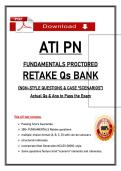
ATI PN
FUNDAMENTALS PROCTORED
RETAKE Qs BANK
(NGN-STYLE QUESTIONS & CASE “SCENARIOS”)
Actual Qs & Ans to Pass the Exam
This ATI test contains:
Passing Score Guarantee
300+ FUNDAMENTALS Retake questions
multiple-choice format (A, B, C, D) with correct answers
structured rationales.
incorporate Next Generation NCLEX (NGN)-style.
Some questions feature brief “scenario” elements and rationales.
,### 1. The practical nurse (PN) is changing a postoperative dressing for a client with a
horizontal lower abdominal incision. What method should the PN use to remove the
tape from the dressing?
- A. Pull the tape quickly in an upward direction.
- B. Pull the tape toward the wound while stabilizing the skin.
- C. Tear the tape away from the wound.
- D. Soak the tape before removal.
Correct Answer: B. Pull the tape toward the wound while stabilizing the skin.
Expert Rationale: Removing tape toward the wound while supporting the skin
minimizes trauma, reduces pain, and prevents stress on the incision line.
---
### 2. The practical nurse (PN) is administering scheduled morning medications to a
client who states, "I haven't seen that pill before. Are you sure it's correct?" Which
action should the PN take?
- A. Advise the client the medication is prescribed and administer it.
- B. Withhold the medication and recheck the prescription.
- C. Ignore the concern and continue administration.
- D. Tell the client not to worry about medication changes.
Correct Answer: B. Withhold the medication and recheck the prescription.
,Expert Rationale: The PN must prioritize client safety and autonomy. Rechecking the
medication prevents medication errors and upholds the client’s right to be informed.
---
### 3. An older client who is admitted to the hospital with dehydration and
electrolyte imbalance is confused and incontinent of urine. Which action provides the
best strategy for the practical nurse (PN) to implement for the client’s incontinence?
- A. Apply absorbent briefs at all times.
- B. Institute a scheduled toileting program.
- C. Restrict fluid intake.
- D. Insert an indwelling urinary catheter.
Correct Answer: B. Institute a scheduled toileting program.
Expert Rationale: A scheduled toileting program promotes continence, reduces skin
breakdown, and maintains client dignity in confused elderly clients.
### 4. Which action should the practical nurse (PN) follow when applying an
elasticized bandage to a client's leg?
- A. Secure the bandage tightly around the leg.
- B. Overlap turns of the bandage equally.
- C. Apply the bandage in a spiral with broad gaps.
- D. Leave a space between the bandage and the skin.
, Correct Answer: B. Overlap turns of the bandage equally.
Expert Rationale: Overlapping each turn of the bandage equally ensures uniform
pressure distribution and prevents circulatory compromise. Equal overlapping also
stabilizes the bandage, reduces irritation, and enhances therapeutic effectiveness.
---
### 5. A client who has a pressure-relieving mattress overlay is mobilized to a chair
and imprints of the client's buttocks, heels, and scapula are evident on the mattress
overlay. What action should the practical nurse implement?
- A. Document the findings as expected.
- B. Reposition the client more frequently.
- C. Remove the mattress overlay.
- D. Place additional pillows on the overlay.
Correct Answer: B. Reposition the client more frequently.
Expert Rationale: Imprints suggest prolonged pressure; frequent repositioning is
necessary to prevent pressure injuries, promote circulation, and maintain skin integrity.
---
### 6. The practical nurse (PN) obtains an elevated blood pressure reading for an
older male client who is alert. When the PN offers the client his morning blood
pressure medication, he refuses to take it. What action should the PN take?
FUNDAMENTALS PROCTORED
RETAKE Qs BANK
(NGN-STYLE QUESTIONS & CASE “SCENARIOS”)
Actual Qs & Ans to Pass the Exam
This ATI test contains:
Passing Score Guarantee
300+ FUNDAMENTALS Retake questions
multiple-choice format (A, B, C, D) with correct answers
structured rationales.
incorporate Next Generation NCLEX (NGN)-style.
Some questions feature brief “scenario” elements and rationales.
,### 1. The practical nurse (PN) is changing a postoperative dressing for a client with a
horizontal lower abdominal incision. What method should the PN use to remove the
tape from the dressing?
- A. Pull the tape quickly in an upward direction.
- B. Pull the tape toward the wound while stabilizing the skin.
- C. Tear the tape away from the wound.
- D. Soak the tape before removal.
Correct Answer: B. Pull the tape toward the wound while stabilizing the skin.
Expert Rationale: Removing tape toward the wound while supporting the skin
minimizes trauma, reduces pain, and prevents stress on the incision line.
---
### 2. The practical nurse (PN) is administering scheduled morning medications to a
client who states, "I haven't seen that pill before. Are you sure it's correct?" Which
action should the PN take?
- A. Advise the client the medication is prescribed and administer it.
- B. Withhold the medication and recheck the prescription.
- C. Ignore the concern and continue administration.
- D. Tell the client not to worry about medication changes.
Correct Answer: B. Withhold the medication and recheck the prescription.
,Expert Rationale: The PN must prioritize client safety and autonomy. Rechecking the
medication prevents medication errors and upholds the client’s right to be informed.
---
### 3. An older client who is admitted to the hospital with dehydration and
electrolyte imbalance is confused and incontinent of urine. Which action provides the
best strategy for the practical nurse (PN) to implement for the client’s incontinence?
- A. Apply absorbent briefs at all times.
- B. Institute a scheduled toileting program.
- C. Restrict fluid intake.
- D. Insert an indwelling urinary catheter.
Correct Answer: B. Institute a scheduled toileting program.
Expert Rationale: A scheduled toileting program promotes continence, reduces skin
breakdown, and maintains client dignity in confused elderly clients.
### 4. Which action should the practical nurse (PN) follow when applying an
elasticized bandage to a client's leg?
- A. Secure the bandage tightly around the leg.
- B. Overlap turns of the bandage equally.
- C. Apply the bandage in a spiral with broad gaps.
- D. Leave a space between the bandage and the skin.
, Correct Answer: B. Overlap turns of the bandage equally.
Expert Rationale: Overlapping each turn of the bandage equally ensures uniform
pressure distribution and prevents circulatory compromise. Equal overlapping also
stabilizes the bandage, reduces irritation, and enhances therapeutic effectiveness.
---
### 5. A client who has a pressure-relieving mattress overlay is mobilized to a chair
and imprints of the client's buttocks, heels, and scapula are evident on the mattress
overlay. What action should the practical nurse implement?
- A. Document the findings as expected.
- B. Reposition the client more frequently.
- C. Remove the mattress overlay.
- D. Place additional pillows on the overlay.
Correct Answer: B. Reposition the client more frequently.
Expert Rationale: Imprints suggest prolonged pressure; frequent repositioning is
necessary to prevent pressure injuries, promote circulation, and maintain skin integrity.
---
### 6. The practical nurse (PN) obtains an elevated blood pressure reading for an
older male client who is alert. When the PN offers the client his morning blood
pressure medication, he refuses to take it. What action should the PN take?