

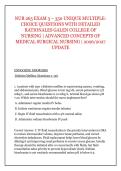
NUR 265 EXAM 3 – 350 UNIQUE MULTIPLE-
CHOICE QUESTIONS WITH DETAILED
RATIONALES GALEN COLLEGE OF
NURSING | ADVANCED CONCEPTS OF
MEDICAL SURGICAL NURSING | 2026/2027
UPDATE
ENDOCRINE DISORDERS
Diabetes Mellitus (Questions 1–30)
1. A patient with type 1 diabetes mellitus is experiencing nausea, vomiting,
and abdominal pain. Blood glucose is 620 mg/dL, serum potassium is 5.8
mEq/L, and serum bicarbonate is 10 mEq/L. Arterial blood gas shows pH
7.20. Which intervention should the nurse implement first?
A. Administer regular insulin IV bolus
B. Initiate continuous regular insulin infusion
C. Begin IV fluid resuscitation with 0.9% normal saline
D. Administer sodium bicarbonate IV push
Correct Answer: C. IV fluid resuscitation is the priority intervention in DKA
to restore intravascular volume, improve tissue perfusion, and correct
electrolyte imbalances. Fluid replacement helps lower blood glucose by
diluting it and improving renal perfusion to excrete excess glucose. Insulin
therapy should be initiated after or concurrently with fluids, but fluid
resuscitation takes priority to prevent hypovolemic shock. Sodium
bicarbonate is not routinely recommended unless pH is below 6.9.
,2. A patient with type 2 diabetes is prescribed metformin. Which laboratory
value should the nurse monitor closely?
A. Serum potassium
B. Serum creatinine
C. Serum sodium
D. Serum calcium
Correct Answer: B. Metformin is contraindicated in patients with renal
impairment because it is excreted by the kidneys and can accumulate,
increasing the risk of lactic acidosis. Serum creatinine should be monitored
before initiating therapy and annually thereafter. The prescribing
information recommends that metformin not be used in patients with
serum creatinine ≥1.5 mg/dL in males or ≥1.4 mg/dL in females.
3. A patient with diabetes reports waking up with headaches, diaphoresis,
and confusion. Blood glucose at 3:00 AM was 52 mg/dL, and fasting blood
glucose at 7:00 AM was 180 mg/dL. Which phenomenon is the patient
most likely experiencing?
A. Dawn phenomenon
B. Somogyi effect
C. Insulin resistance
D. Dumping syndrome
,Correct Answer: B. The Somogyi effect is characterized by nocturnal
hypoglycemia followed by rebound hyperglycemia due to counterregulatory
hormone release. The patient experiences hypoglycemia during the night
(3:00 AM glucose of 52 mg/dL) followed by elevated fasting glucose.
Treatment involves reducing the evening insulin dose or adding a bedtime
snack. Dawn phenomenon, in contrast, involves hyperglycemia throughout
the night without preceding hypoglycemia.
4. A patient with type 2 diabetes has an HbA1c of 9.8%. Which statement by
the patient indicates understanding of this laboratory value?
A. "This test measures my average blood sugar over the past 2 to 3
months."
B. "This test tells me what my blood sugar is right now."
C. "I need to check this test every week."
D. "A normal result is below 8%."
Correct Answer: A. HbA1c reflects average blood glucose levels over the
previous 2 to 3 months (the lifespan of red blood cells). The normal HbA1c
is below 5.7%; prediabetes is 5.7% to 6.4%; and diabetes is 6.5% or higher.
The American Diabetes Association recommends an HbA1c target of less
than 7% for most nonpregnant adults with diabetes. The test is typically
performed every 3 to 6 months, not weekly.
5. A patient with diabetic ketoacidosis has the following arterial blood gas
results: pH 7.15, PaCO2 28 mm Hg, HCO3 12 mEq/L. Which acidbase
imbalance does the nurse identify?
, A. Metabolic acidosis with respiratory compensation
B. Metabolic alkalosis with respiratory compensation
C. Respiratory acidosis with metabolic compensation
D. Respiratory alkalosis with metabolic compensation
Correct Answer: A. The patient has metabolic acidosis (low pH and low
HCO3) with respiratory compensation (low PaCO2 indicating
hyperventilation to blow off CO2). DKA causes metabolic acidosis due to
the accumulation of ketone bodies. The respiratory system compensates by
increasing the rate and depth of respirations (Kussmaul respirations) to
decrease PaCO2 and partially correct the pH.
6. A patient with diabetes is scheduled for surgery. The nurse understands
that the patient's insulin regimen will most likely be adjusted in which
manner?
A. Hold all insulin on the day of surgery
B. Administer full dose of longacting insulin
C. Administer a reduced dose of insulin with IV dextrose
D. Double the dose of insulin to prevent hyperglycemia
Correct Answer: C. For surgical patients with diabetes, a common approach
is to administer a reduced dose of intermediate or longacting insulin
(typically onehalf to twothirds of the usual dose) on the morning of surgery
and to provide IV dextrosecontaining fluids to prevent hypoglycemia.
Regular insulin may be given via sliding scale. Holding all insulin can lead
to hyperglycemia and complications, while full doses may cause
hypoglycemia during NPO status.
CHOICE QUESTIONS WITH DETAILED
RATIONALES GALEN COLLEGE OF
NURSING | ADVANCED CONCEPTS OF
MEDICAL SURGICAL NURSING | 2026/2027
UPDATE
ENDOCRINE DISORDERS
Diabetes Mellitus (Questions 1–30)
1. A patient with type 1 diabetes mellitus is experiencing nausea, vomiting,
and abdominal pain. Blood glucose is 620 mg/dL, serum potassium is 5.8
mEq/L, and serum bicarbonate is 10 mEq/L. Arterial blood gas shows pH
7.20. Which intervention should the nurse implement first?
A. Administer regular insulin IV bolus
B. Initiate continuous regular insulin infusion
C. Begin IV fluid resuscitation with 0.9% normal saline
D. Administer sodium bicarbonate IV push
Correct Answer: C. IV fluid resuscitation is the priority intervention in DKA
to restore intravascular volume, improve tissue perfusion, and correct
electrolyte imbalances. Fluid replacement helps lower blood glucose by
diluting it and improving renal perfusion to excrete excess glucose. Insulin
therapy should be initiated after or concurrently with fluids, but fluid
resuscitation takes priority to prevent hypovolemic shock. Sodium
bicarbonate is not routinely recommended unless pH is below 6.9.
,2. A patient with type 2 diabetes is prescribed metformin. Which laboratory
value should the nurse monitor closely?
A. Serum potassium
B. Serum creatinine
C. Serum sodium
D. Serum calcium
Correct Answer: B. Metformin is contraindicated in patients with renal
impairment because it is excreted by the kidneys and can accumulate,
increasing the risk of lactic acidosis. Serum creatinine should be monitored
before initiating therapy and annually thereafter. The prescribing
information recommends that metformin not be used in patients with
serum creatinine ≥1.5 mg/dL in males or ≥1.4 mg/dL in females.
3. A patient with diabetes reports waking up with headaches, diaphoresis,
and confusion. Blood glucose at 3:00 AM was 52 mg/dL, and fasting blood
glucose at 7:00 AM was 180 mg/dL. Which phenomenon is the patient
most likely experiencing?
A. Dawn phenomenon
B. Somogyi effect
C. Insulin resistance
D. Dumping syndrome
,Correct Answer: B. The Somogyi effect is characterized by nocturnal
hypoglycemia followed by rebound hyperglycemia due to counterregulatory
hormone release. The patient experiences hypoglycemia during the night
(3:00 AM glucose of 52 mg/dL) followed by elevated fasting glucose.
Treatment involves reducing the evening insulin dose or adding a bedtime
snack. Dawn phenomenon, in contrast, involves hyperglycemia throughout
the night without preceding hypoglycemia.
4. A patient with type 2 diabetes has an HbA1c of 9.8%. Which statement by
the patient indicates understanding of this laboratory value?
A. "This test measures my average blood sugar over the past 2 to 3
months."
B. "This test tells me what my blood sugar is right now."
C. "I need to check this test every week."
D. "A normal result is below 8%."
Correct Answer: A. HbA1c reflects average blood glucose levels over the
previous 2 to 3 months (the lifespan of red blood cells). The normal HbA1c
is below 5.7%; prediabetes is 5.7% to 6.4%; and diabetes is 6.5% or higher.
The American Diabetes Association recommends an HbA1c target of less
than 7% for most nonpregnant adults with diabetes. The test is typically
performed every 3 to 6 months, not weekly.
5. A patient with diabetic ketoacidosis has the following arterial blood gas
results: pH 7.15, PaCO2 28 mm Hg, HCO3 12 mEq/L. Which acidbase
imbalance does the nurse identify?
, A. Metabolic acidosis with respiratory compensation
B. Metabolic alkalosis with respiratory compensation
C. Respiratory acidosis with metabolic compensation
D. Respiratory alkalosis with metabolic compensation
Correct Answer: A. The patient has metabolic acidosis (low pH and low
HCO3) with respiratory compensation (low PaCO2 indicating
hyperventilation to blow off CO2). DKA causes metabolic acidosis due to
the accumulation of ketone bodies. The respiratory system compensates by
increasing the rate and depth of respirations (Kussmaul respirations) to
decrease PaCO2 and partially correct the pH.
6. A patient with diabetes is scheduled for surgery. The nurse understands
that the patient's insulin regimen will most likely be adjusted in which
manner?
A. Hold all insulin on the day of surgery
B. Administer full dose of longacting insulin
C. Administer a reduced dose of insulin with IV dextrose
D. Double the dose of insulin to prevent hyperglycemia
Correct Answer: C. For surgical patients with diabetes, a common approach
is to administer a reduced dose of intermediate or longacting insulin
(typically onehalf to twothirds of the usual dose) on the morning of surgery
and to provide IV dextrosecontaining fluids to prevent hypoglycemia.
Regular insulin may be given via sliding scale. Holding all insulin can lead
to hyperglycemia and complications, while full doses may cause
hypoglycemia during NPO status.


