

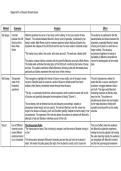
Stagecraft In a Streetcar Named Desire
Method Examples Analysis Effect
Set design Contrast Williams describes the set as a “two-story corner building” in the “poor section of New The audience is positioned to feel the
between the Old Orleans”. The contrast between Blanche’s former world of grandeur, symbolised by her claustrophobia and tension between the
South and the family’s estate, Belle Reeve, and the rundown apartment where Stella and Stanley live, characters, especially Blanche’s sense
New Urban represents the collapse of the Old South and the rise of a more modern, industrial society. of being out of place in a world she no
World longer controls. The decaying
"The kitchen has a table in the centre, with chairs around it. The walls are a faded white" environment heightens the sense of
inevitability in Blanche’s downfall and
The simple, rundown kitchen contrasts with the grand life Blanche once had at Belle Reeve. mirrors the disintegration of her mental
The faded walls symbolise the faded glory of the Old South, reinforcing the theme of decay state.
and loss. This spatial constriction reflects Blanche’s shrinking world and diminished power,
particularly as Stanley represents the brute force of New America.
Set Design Transparent This transparency highlights the theme of illusion versus reality, one of the play’s central The set’s transparency makes the
walls of the concerns. Blanche seeks to construct a world of illusion to shield herself from harsh reader feel like a voyeur, watching the
Kowlaski’s realities, while Stanley consistently breaks through these illusions. characters’ struggles between illusion
apartment and truth. This aligns with Blanche’s
"The sky...is a peculiarly tender blue, almost turquoise, which invests the scene with a kind increasing exposure as Stanley strips
of lyricism and gracefully attenuates the atmosphere of decay" (Scene 1). away her lies. The audience is
simultaneously drawn into and repelled
The set design, with its ethereal blue sky and decaying surroundings, creates an by her tragic delusions, feeling both
atmosphere where beauty and ruin coexist. This mirrors Blanche’s own life, where she sympathy and discomfort as her reality
clings to her illusions of beauty, youth, and Southern gentility, despite the harsh reality of her unravels.
circumstances. The openness of the set also allows the audience to witness both Blanche’s
attempts to hide and Stanley’s relentless pursuit of the truth.
Sound Use of Different The Varsouviana Polka This sound effect draws the audience
visceral sounds “The Varsouviana is heard. She is drinking to escape it and the sense of disaster closing in into Blanche’s subjective experience,
evoke different on her.” making her trauma palpable. By hearing
reactions/memor the same haunting melody, the audience
ies in characters The Varsouviana represents Blanche’s traumatic past and her guilt over her husband’s can empathize with Blanche’s torment
death. She heard the polka playing the night of her husband’s suicide, and it haunts her and feel her psychological breakdown.
, Stagecraft In a Streetcar Named Desire
throughout the play, resurfacing whenever she is reminded of her past failures and lost The increasing frequency of the polka
innocence. As the play progresses, the music becomes more distorted, signalling Blanche’s throughout the play mirrors Blanche's
increasing mental instability. escalating sense of desperation and the
impending collapse of her mental state.
The Locomotive
"The headlight of the locomotive glares into the room as it thunders past." The audience perceives the locomotive
sound as aggressive and overpowering,
The locomotive’s roar symbolises the unstoppable force of the present, represented by much like Stanley’s personality and the
Stanley and his crude masculinity. It intrudes on Blanche’s attempts to maintain her brute reality he represents. This sound
delusions of refinement and superiority. The sound mirrors the destruction of her fantasies effect highlights the physical and
by the reality of Stanley’s world. It is especially significant during the scene when Stanley emotional violence present in the play,
rapes Blanche—his predatory power is symbolized by the loud, invasive sound of the train, making Blanche’s ultimate downfall
which coincides with his brutal actions. seem both tragic and inevitable. It
amplifies the tension, emphasising that
The Blue Piano Blanche is being cornered by a modern
“The ‘blue piano’ expresses the spirit of the life which goes on here.” world she cannot navigate or escape
from.
The “blue piano” is often associated with the emotional undercurrents of New Orleans, the
working-class vitality, and the modern urban world that is overpowering Blanche’s more The repeated use of the “blue piano”
genteel, fragile persona. This jazz-like sound contrasts with Blanche's idealized notions of serves as a constant reminder of
Southern aristocracy and refinement, linking her gradual emotional disintegration with the Blanche's alienation from the world
noise of the city and the relentless present. Every time this music plays, it represents the around her and the harshness of
raw, gritty reality Blanche is trying to escape from. modern life. It creates a feeling of
unease and inevitability, symbolizing
that Blanche’s retreat into illusion cannot
last. For the audience, this sound helps
build a sense of pity for Blanche while
heightening the contrast between her
and the world of Stanley Kowalski.
Symbolic Objects are The paper lantern
Objects/Pro used as physical One of the most significant symbolic objects is the paper lantern that Blanche places over This prop emphasises the theme of
ps representations the bare lightbulb in the Kowalski apartment. Blanche uses the lantern to soften the harsh illusion versus reality, making readers or
of emotions or light, which symbolises her desire to mask reality and present an illusion. For Blanche, viewers sympathise with Blanche's
Method Examples Analysis Effect
Set design Contrast Williams describes the set as a “two-story corner building” in the “poor section of New The audience is positioned to feel the
between the Old Orleans”. The contrast between Blanche’s former world of grandeur, symbolised by her claustrophobia and tension between the
South and the family’s estate, Belle Reeve, and the rundown apartment where Stella and Stanley live, characters, especially Blanche’s sense
New Urban represents the collapse of the Old South and the rise of a more modern, industrial society. of being out of place in a world she no
World longer controls. The decaying
"The kitchen has a table in the centre, with chairs around it. The walls are a faded white" environment heightens the sense of
inevitability in Blanche’s downfall and
The simple, rundown kitchen contrasts with the grand life Blanche once had at Belle Reeve. mirrors the disintegration of her mental
The faded walls symbolise the faded glory of the Old South, reinforcing the theme of decay state.
and loss. This spatial constriction reflects Blanche’s shrinking world and diminished power,
particularly as Stanley represents the brute force of New America.
Set Design Transparent This transparency highlights the theme of illusion versus reality, one of the play’s central The set’s transparency makes the
walls of the concerns. Blanche seeks to construct a world of illusion to shield herself from harsh reader feel like a voyeur, watching the
Kowlaski’s realities, while Stanley consistently breaks through these illusions. characters’ struggles between illusion
apartment and truth. This aligns with Blanche’s
"The sky...is a peculiarly tender blue, almost turquoise, which invests the scene with a kind increasing exposure as Stanley strips
of lyricism and gracefully attenuates the atmosphere of decay" (Scene 1). away her lies. The audience is
simultaneously drawn into and repelled
The set design, with its ethereal blue sky and decaying surroundings, creates an by her tragic delusions, feeling both
atmosphere where beauty and ruin coexist. This mirrors Blanche’s own life, where she sympathy and discomfort as her reality
clings to her illusions of beauty, youth, and Southern gentility, despite the harsh reality of her unravels.
circumstances. The openness of the set also allows the audience to witness both Blanche’s
attempts to hide and Stanley’s relentless pursuit of the truth.
Sound Use of Different The Varsouviana Polka This sound effect draws the audience
visceral sounds “The Varsouviana is heard. She is drinking to escape it and the sense of disaster closing in into Blanche’s subjective experience,
evoke different on her.” making her trauma palpable. By hearing
reactions/memor the same haunting melody, the audience
ies in characters The Varsouviana represents Blanche’s traumatic past and her guilt over her husband’s can empathize with Blanche’s torment
death. She heard the polka playing the night of her husband’s suicide, and it haunts her and feel her psychological breakdown.
, Stagecraft In a Streetcar Named Desire
throughout the play, resurfacing whenever she is reminded of her past failures and lost The increasing frequency of the polka
innocence. As the play progresses, the music becomes more distorted, signalling Blanche’s throughout the play mirrors Blanche's
increasing mental instability. escalating sense of desperation and the
impending collapse of her mental state.
The Locomotive
"The headlight of the locomotive glares into the room as it thunders past." The audience perceives the locomotive
sound as aggressive and overpowering,
The locomotive’s roar symbolises the unstoppable force of the present, represented by much like Stanley’s personality and the
Stanley and his crude masculinity. It intrudes on Blanche’s attempts to maintain her brute reality he represents. This sound
delusions of refinement and superiority. The sound mirrors the destruction of her fantasies effect highlights the physical and
by the reality of Stanley’s world. It is especially significant during the scene when Stanley emotional violence present in the play,
rapes Blanche—his predatory power is symbolized by the loud, invasive sound of the train, making Blanche’s ultimate downfall
which coincides with his brutal actions. seem both tragic and inevitable. It
amplifies the tension, emphasising that
The Blue Piano Blanche is being cornered by a modern
“The ‘blue piano’ expresses the spirit of the life which goes on here.” world she cannot navigate or escape
from.
The “blue piano” is often associated with the emotional undercurrents of New Orleans, the
working-class vitality, and the modern urban world that is overpowering Blanche’s more The repeated use of the “blue piano”
genteel, fragile persona. This jazz-like sound contrasts with Blanche's idealized notions of serves as a constant reminder of
Southern aristocracy and refinement, linking her gradual emotional disintegration with the Blanche's alienation from the world
noise of the city and the relentless present. Every time this music plays, it represents the around her and the harshness of
raw, gritty reality Blanche is trying to escape from. modern life. It creates a feeling of
unease and inevitability, symbolizing
that Blanche’s retreat into illusion cannot
last. For the audience, this sound helps
build a sense of pity for Blanche while
heightening the contrast between her
and the world of Stanley Kowalski.
Symbolic Objects are The paper lantern
Objects/Pro used as physical One of the most significant symbolic objects is the paper lantern that Blanche places over This prop emphasises the theme of
ps representations the bare lightbulb in the Kowalski apartment. Blanche uses the lantern to soften the harsh illusion versus reality, making readers or
of emotions or light, which symbolises her desire to mask reality and present an illusion. For Blanche, viewers sympathise with Blanche's


