

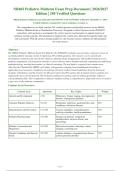
NR602 Pediatric Midterm Exam Prep Document | 2026/2027
Edition | 250 Verified Questions
NR602 Pediatric Midterm Exam 2026-2027 QUESTIONS AND ANSWERS ALREADY GRADED A+. 100%
Verified Solutions | Updated Per Latest Guidelines | Graded A+
This comprehensive test bank contains 250 verified questions and detailed answers for the NR602
Pediatric Midterm Exam at Chamberlain University. Designed to reflect the most recent 2026/2027
curriculum, each question is accompanied by correct answers and rationales to support mastery of
pediatric nursing concepts. The document is organized by content area, allowing for targeted study and
self-assessment. With all answers already graded A+, this resource ensures students are fully prepared
for exam success.
Abstract:
The NR602 Pediatric Midterm Exam Test Bank for the 2026/2027 academic year provides a rigorous review of
essential pediatric nursing content. Comprising 250 verified questions, this resource covers growth and
development, common acute and chronic illnesses, pharmacologic management, and health promotion across
pediatric populations. Each question includes a correct answer with a detailed rationale explaining the underlying
pathophysiology, nursing intervention, or clinical reasoning. The test bank is organized into content areas
reflecting the Chamberlain NR602 curriculum, with questions ranging from foundational knowledge to
application-level scenarios. Updated to incorporate the latest evidence-based guidelines from the American
Academy of Pediatrics and the Centers for Disease Control and Prevention, this document ensures students are
studying the most current material. The inclusion of distractor analysis and test-taking tips further enhances
critical thinking skills. This compilation is ideal for students seeking a comprehensive, high-yield review to achieve
a top score on the midterm examination.
Content Area Overview:
Content Area Questions Key Topics Weight
Growth and Development 1-50 Milestones, Tanner staging, developmental 20%
theories, anticipatory guidance
Common Pediatric Illnesses 51-110 Respiratory infections, gastroenteritis, skin 24%
conditions, infectious diseases
Immunizations and Prevention 111-140 Vaccine schedules, contraindications, 12%
catch-up schedules, health maintenance
Pediatric Pharmacology 141-180 Dosage calculations, medication 16%
administration, adverse effects, safe
prescribing
Pediatric Assessment and 181-220 Physical assessment, laboratory values, 16%
Diagnostics imaging, screening tests
Chronic Conditions and Special 221-250 Asthma, diabetes, congenital heart disease, 12%
Needs autism spectrum disorder
Page 1
,Q1. A 4-year-old with a history of recurrent otitis media presents with acute onset of fever, ear pain,
and purulent drainage from the left ear. Tympanic membrane is bulging and erythematous with
decreased mobility on pneumatic otoscopy. Which pathogen is most likely responsible for treatment
failure despite appropriate antibiotic therapy?
A. Streptococcus pneumoniae (penicillin-susceptible)
B. Haemophilus influenzae (beta-lactamase positive)
C. Moraxella catarrhalis (beta-lactamase positive)
D. Streptococcus pyogenes (Group A strep)
Correct Answer: B. Haemophilus influenzae (beta-lactamase positive)
Rationale: Haemophilus influenzae, especially beta-lactamase-producing strains, is a common cause of
acute otitis media and is often resistant to amoxicillin. Treatment failure with amoxicillin suggests
beta-lactamase production, making amoxicillin-clavulanate or a cephalosporin more appropriate. S.
pneumoniae (penicillin-susceptible) would respond to amoxicillin. M. catarrhalis also produces
beta-lactamase but is less common in recurrent cases. S. pyogenes is rare in otitis media.
Why Wrong:
A - Penicillin-susceptible S. pneumoniae is typically responsive to amoxicillin, making treatment
failure unlikely.
C - M. catarrhalis does produce beta-lactamase but is less prevalent in recurrent otitis media
compared to H. influenzae.
D - Group A strep is an uncommon cause of acute otitis media and is not typically associated with
treatment failure on amoxicillin.
Reference: Lehne, R.A. (2026). Pharmacology for Nursing Care, 12th Ed., Ch. 82; AAP Red Book
(2024-2027)
Q2. A 6-month-old infant presents with a 2-day history of vomiting and diarrhea. Stool is watery
and non-bloody. Physical exam shows sunken eyes, dry mucous membranes, and skin turgor returns
slowly. The infant is irritable but consolable. Based on the World Health Organization (WHO)
classification, what is the most appropriate initial management?
A. Intravenous normal saline bolus 20 mL/kg over 1 hour
B. Oral rehydration solution (ORS) 75 mL/kg over 4 hours with frequent small amounts
C. Intravenous dextrose 5% in half-normal saline at maintenance rate
D. Clear liquids (e.g., apple juice) ad libitum for 24 hours
Correct Answer: B. Oral rehydration solution (ORS) 75 mL/kg over 4 hours with frequent small
amounts
Rationale: According to WHO guidelines, some dehydration (sunken eyes, dry mucous membranes,
decreased skin turgor) is managed with ORS 75 mL/kg over 4 hours. This infant is irritable but
consolable, indicating some dehydration without shock. IV fluids are reserved for severe dehydration or
shock. Apple juice is high in sugar and low in electrolytes, which can worsen diarrhea.
Why Wrong:
A - IV bolus is indicated for severe dehydration or shock; this infant has some dehydration without
shock.
C - Maintenance IV fluids are not first-line; ORS is preferred for mild to moderate dehydration.
D - Clear liquids like apple juice lack appropriate electrolyte balance and can exacerbate osmotic
diarrhea.
Page 2
,Reference: WHO (2023). Guidelines for the treatment of diarrhoea; AAP (2024). Pediatric Nutrition
Handbook
Page 3
, Q3. A 9-year-old with a history of asthma presents with acute wheezing and dyspnea after playing
outdoors. Peak expiratory flow (PEF) is 50% of personal best. The child has already used albuterol
MDI 2 puffs 20 minutes ago with no improvement. Which of the following is the most appropriate
next step?
A. Administer albuterol 2.5 mg via nebulizer every 20 minutes for up to 1 hour
B. Start oral prednisone 2 mg/kg/day divided twice daily for 5 days
C. Add ipratropium bromide 0.5 mg via nebulizer with albuterol
D. Begin montelukast 10 mg orally daily
Correct Answer: C. Add ipratropium bromide 0.5 mg via nebulizer with albuterol
Rationale: In acute asthma exacerbation with moderate severity (PEF 40-69%) and poor response to
initial albuterol, adding ipratropium bromide (an anticholinergic) to repeated albuterol nebulizations is
recommended per NAEPP guidelines. Oral corticosteroids (option B) are indicated but not the immediate
next step; they are typically given after bronchodilator therapy. Montelukast is not used for acute
exacerbations.
Why Wrong:
A - Repeating albuterol alone is insufficient if there is no response after initial treatment;
ipratropium should be added.
B - Oral corticosteroids are important but should be administered after initiating intensified
bronchodilator therapy, not as the sole next step.
D - Montelukast is a controller medication for chronic asthma, not for acute exacerbation relief.
Reference: NAEPP (2022). Expert Panel Report 4: Guidelines for the Diagnosis and Management of
Asthma
Q4. A 13-year-old female presents with a 3-week history of fatigue, joint pain, and a malar rash.
Laboratory findings: ANA positive (1:640), anti-dsDNA positive, low complement C3 and C4, and
proteinuria 2+ on urinalysis. Which of the following is the most appropriate initial
immunosuppressive therapy to prevent renal progression?
A. Hydroxychloroquine 5 mg/kg/day
B. Mycophenolate mofetil 600 mg/m²/dose twice daily
C. Cyclophosphamide 500 mg IV monthly
D. Prednisone 1 mg/kg/day
Correct Answer: B. Mycophenolate mofetil 600 mg/m²/dose twice daily
Rationale: This patient has lupus nephritis (proteinuria, low complements, anti-dsDNA). Mycophenolate
mofetil is a first-line induction therapy for class III/IV lupus nephritis, often used with corticosteroids.
Hydroxychloroquine is adjunctive but not sufficient for active nephritis. Cyclophosphamide is reserved for
severe or refractory nephritis. Prednisone alone does not prevent progression; combination therapy is
required.
Why Wrong:
A - Hydroxychloroquine is used for mild SLE symptoms but does not treat active nephritis.
C - Cyclophosphamide is reserved for severe or refractory nephritis; MMF is preferred as initial
therapy due to better safety profile.
D - Corticosteroids alone are insufficient to prevent renal progression; they are used in combination
with immunosuppressants.
Reference: Hahn, B.H., et al. (2024). American College of Rheumatology Guidelines for the Management
of Lupus Nephritis
Page 4
Edition | 250 Verified Questions
NR602 Pediatric Midterm Exam 2026-2027 QUESTIONS AND ANSWERS ALREADY GRADED A+. 100%
Verified Solutions | Updated Per Latest Guidelines | Graded A+
This comprehensive test bank contains 250 verified questions and detailed answers for the NR602
Pediatric Midterm Exam at Chamberlain University. Designed to reflect the most recent 2026/2027
curriculum, each question is accompanied by correct answers and rationales to support mastery of
pediatric nursing concepts. The document is organized by content area, allowing for targeted study and
self-assessment. With all answers already graded A+, this resource ensures students are fully prepared
for exam success.
Abstract:
The NR602 Pediatric Midterm Exam Test Bank for the 2026/2027 academic year provides a rigorous review of
essential pediatric nursing content. Comprising 250 verified questions, this resource covers growth and
development, common acute and chronic illnesses, pharmacologic management, and health promotion across
pediatric populations. Each question includes a correct answer with a detailed rationale explaining the underlying
pathophysiology, nursing intervention, or clinical reasoning. The test bank is organized into content areas
reflecting the Chamberlain NR602 curriculum, with questions ranging from foundational knowledge to
application-level scenarios. Updated to incorporate the latest evidence-based guidelines from the American
Academy of Pediatrics and the Centers for Disease Control and Prevention, this document ensures students are
studying the most current material. The inclusion of distractor analysis and test-taking tips further enhances
critical thinking skills. This compilation is ideal for students seeking a comprehensive, high-yield review to achieve
a top score on the midterm examination.
Content Area Overview:
Content Area Questions Key Topics Weight
Growth and Development 1-50 Milestones, Tanner staging, developmental 20%
theories, anticipatory guidance
Common Pediatric Illnesses 51-110 Respiratory infections, gastroenteritis, skin 24%
conditions, infectious diseases
Immunizations and Prevention 111-140 Vaccine schedules, contraindications, 12%
catch-up schedules, health maintenance
Pediatric Pharmacology 141-180 Dosage calculations, medication 16%
administration, adverse effects, safe
prescribing
Pediatric Assessment and 181-220 Physical assessment, laboratory values, 16%
Diagnostics imaging, screening tests
Chronic Conditions and Special 221-250 Asthma, diabetes, congenital heart disease, 12%
Needs autism spectrum disorder
Page 1
,Q1. A 4-year-old with a history of recurrent otitis media presents with acute onset of fever, ear pain,
and purulent drainage from the left ear. Tympanic membrane is bulging and erythematous with
decreased mobility on pneumatic otoscopy. Which pathogen is most likely responsible for treatment
failure despite appropriate antibiotic therapy?
A. Streptococcus pneumoniae (penicillin-susceptible)
B. Haemophilus influenzae (beta-lactamase positive)
C. Moraxella catarrhalis (beta-lactamase positive)
D. Streptococcus pyogenes (Group A strep)
Correct Answer: B. Haemophilus influenzae (beta-lactamase positive)
Rationale: Haemophilus influenzae, especially beta-lactamase-producing strains, is a common cause of
acute otitis media and is often resistant to amoxicillin. Treatment failure with amoxicillin suggests
beta-lactamase production, making amoxicillin-clavulanate or a cephalosporin more appropriate. S.
pneumoniae (penicillin-susceptible) would respond to amoxicillin. M. catarrhalis also produces
beta-lactamase but is less common in recurrent cases. S. pyogenes is rare in otitis media.
Why Wrong:
A - Penicillin-susceptible S. pneumoniae is typically responsive to amoxicillin, making treatment
failure unlikely.
C - M. catarrhalis does produce beta-lactamase but is less prevalent in recurrent otitis media
compared to H. influenzae.
D - Group A strep is an uncommon cause of acute otitis media and is not typically associated with
treatment failure on amoxicillin.
Reference: Lehne, R.A. (2026). Pharmacology for Nursing Care, 12th Ed., Ch. 82; AAP Red Book
(2024-2027)
Q2. A 6-month-old infant presents with a 2-day history of vomiting and diarrhea. Stool is watery
and non-bloody. Physical exam shows sunken eyes, dry mucous membranes, and skin turgor returns
slowly. The infant is irritable but consolable. Based on the World Health Organization (WHO)
classification, what is the most appropriate initial management?
A. Intravenous normal saline bolus 20 mL/kg over 1 hour
B. Oral rehydration solution (ORS) 75 mL/kg over 4 hours with frequent small amounts
C. Intravenous dextrose 5% in half-normal saline at maintenance rate
D. Clear liquids (e.g., apple juice) ad libitum for 24 hours
Correct Answer: B. Oral rehydration solution (ORS) 75 mL/kg over 4 hours with frequent small
amounts
Rationale: According to WHO guidelines, some dehydration (sunken eyes, dry mucous membranes,
decreased skin turgor) is managed with ORS 75 mL/kg over 4 hours. This infant is irritable but
consolable, indicating some dehydration without shock. IV fluids are reserved for severe dehydration or
shock. Apple juice is high in sugar and low in electrolytes, which can worsen diarrhea.
Why Wrong:
A - IV bolus is indicated for severe dehydration or shock; this infant has some dehydration without
shock.
C - Maintenance IV fluids are not first-line; ORS is preferred for mild to moderate dehydration.
D - Clear liquids like apple juice lack appropriate electrolyte balance and can exacerbate osmotic
diarrhea.
Page 2
,Reference: WHO (2023). Guidelines for the treatment of diarrhoea; AAP (2024). Pediatric Nutrition
Handbook
Page 3
, Q3. A 9-year-old with a history of asthma presents with acute wheezing and dyspnea after playing
outdoors. Peak expiratory flow (PEF) is 50% of personal best. The child has already used albuterol
MDI 2 puffs 20 minutes ago with no improvement. Which of the following is the most appropriate
next step?
A. Administer albuterol 2.5 mg via nebulizer every 20 minutes for up to 1 hour
B. Start oral prednisone 2 mg/kg/day divided twice daily for 5 days
C. Add ipratropium bromide 0.5 mg via nebulizer with albuterol
D. Begin montelukast 10 mg orally daily
Correct Answer: C. Add ipratropium bromide 0.5 mg via nebulizer with albuterol
Rationale: In acute asthma exacerbation with moderate severity (PEF 40-69%) and poor response to
initial albuterol, adding ipratropium bromide (an anticholinergic) to repeated albuterol nebulizations is
recommended per NAEPP guidelines. Oral corticosteroids (option B) are indicated but not the immediate
next step; they are typically given after bronchodilator therapy. Montelukast is not used for acute
exacerbations.
Why Wrong:
A - Repeating albuterol alone is insufficient if there is no response after initial treatment;
ipratropium should be added.
B - Oral corticosteroids are important but should be administered after initiating intensified
bronchodilator therapy, not as the sole next step.
D - Montelukast is a controller medication for chronic asthma, not for acute exacerbation relief.
Reference: NAEPP (2022). Expert Panel Report 4: Guidelines for the Diagnosis and Management of
Asthma
Q4. A 13-year-old female presents with a 3-week history of fatigue, joint pain, and a malar rash.
Laboratory findings: ANA positive (1:640), anti-dsDNA positive, low complement C3 and C4, and
proteinuria 2+ on urinalysis. Which of the following is the most appropriate initial
immunosuppressive therapy to prevent renal progression?
A. Hydroxychloroquine 5 mg/kg/day
B. Mycophenolate mofetil 600 mg/m²/dose twice daily
C. Cyclophosphamide 500 mg IV monthly
D. Prednisone 1 mg/kg/day
Correct Answer: B. Mycophenolate mofetil 600 mg/m²/dose twice daily
Rationale: This patient has lupus nephritis (proteinuria, low complements, anti-dsDNA). Mycophenolate
mofetil is a first-line induction therapy for class III/IV lupus nephritis, often used with corticosteroids.
Hydroxychloroquine is adjunctive but not sufficient for active nephritis. Cyclophosphamide is reserved for
severe or refractory nephritis. Prednisone alone does not prevent progression; combination therapy is
required.
Why Wrong:
A - Hydroxychloroquine is used for mild SLE symptoms but does not treat active nephritis.
C - Cyclophosphamide is reserved for severe or refractory nephritis; MMF is preferred as initial
therapy due to better safety profile.
D - Corticosteroids alone are insufficient to prevent renal progression; they are used in combination
with immunosuppressants.
Reference: Hahn, B.H., et al. (2024). American College of Rheumatology Guidelines for the Management
of Lupus Nephritis
Page 4


