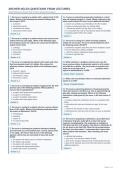
ARCHER NCLEX QUESTIONS FROM LECTURES
Study Reference & Answer Key • Source: quizlet.com/_bmpxxe
1. The nurse is caring for a patient with a sodium level of 122 24. A nurse is conducting preoperative teaching to a client
mEq/L. Which of the following assessment findings does who will undergo surgery in 1 week. Which response by the
she suspect? SATA client would prompt the nurse to give additional teaching?
a. confusion a. aspirin can possibly cause bleeding even after surgery
b. abdominal cramps b. aspirin can adversely affect my clotting ability.
c. increased urine output c. i should stop aspirin one day prior to my surgery
d. hypoactive bowel sounds d. it is important that i talk to my physician about the possibility
Answer: a, b
of stopping aspirin before the surgery.
Answer: c
2. The nurse is caring for a patient whose most recent serum
sodium level was 152 mEq/L. Which of the following signs 25. The nurse is caring for a client receiving morphine
and symptoms does she suspect are caused by the patient's sulfate for severe pain. The nurse should implement all of
sodium level? SATA the following actions EXCEPT:
a. Lethargy a. administer morphine only when the client complains of pain
b. Dry mucous membranes b. ensure naloxone is always available
c. Tachypnea c. check the client's respirations before giving morphine
d. Cyanosis d. provide a high fiber diet
Answer: a, b Answer: a
3. The nurse is evaluating her patient's lab results and notes 26. While working in a pediatric intensive care unit, the
that the potassium level is 5.5 mEq/L. She reviews the nurse receives orders to administer aspirin to a 12-month-
telemetry monitor, looking for which of the following signs? old child who is febrile. The nurse knows to question this
SATA order due to the high risk of __________ syndrome when
a. inverted T waves aspirin is administered to a child.
b. Widened QRS interval Answer: Reye's syndrome
c. Tall Peaked T waves
d. Prominent U waves 27. What is the only disease when we commonly administer
Answer: b, c aspirin to a child?
Answer: Kawasaki disease
4. The nurse is reviewing her patient assignment for the shift
and has each of the following patients. Which patient is
28. The nurse is answering phones in the general practice
most at risk for hypokalemia?
clinic and receives a call from a pt. who is experiencing leg
a. a patient with hyperemesis gravidarum pain after starting atorvastatin. Which of the following
b. a patient in renal failure instructions, when given by the nurse, is the best course of
c. a patient in diabetic ketoacidosis action?
d. a patient with third degree burns a. continue taking the medication as this is an expected side
Answer: a effect.
b. discontinue the med and schedule an appt. for the next
5. The nurse is caring for a patient who has a serum calcium week.
level of 13.2 mg/dL. Which of the following medication does c. stretch for 20 minutes or take a warm shower
she expect to administer? (SATA) d. discontinue the med and visit the clinic as soon as possible.
a. Phosphorous Answer: d
b. calcitonin
c. Vitamin D 29. The nurse is preparing to administer a prescribed dose
d. IV calcium gluconate of lactulose 20 grams orally QID to a client with portal-
Answer: a, b systemic encephalopathy. The medication is available at
3.33 grams per 5mL oral solution. She plans to administer 30
mL per dose to the client QID. When the nurse approaches
6. The nurse is reviewing her patient's laboratory findings the client, the client states "i understand that I cannot take
and notes that one of her patients has a serum calcium level other laxatives with lactulose." After checking, the nurse
of 7.2 mg/dL. She knows that of each of the following should:
patients, which ones are most likely to have this result?
(SATA) a. withhold the lactulose
b. give only 3 mL lactulose instead of 30mL
a. the patient with breast cancer and bone metastases
c. give 30 mL lactulose with juice and monitor blood ammonia
b. the patient with obesity
d. give 30 mL lactulose and correct the client that he may take
c. the patient with vitamin d toxicity
additional laxatives.
d. the patient with hypoparathyroidism
e. patient with chronic renal failure Answer: c
Answer: d, e
Page 1 of 4
Study Reference & Answer Key • Source: quizlet.com/_bmpxxe
1. The nurse is caring for a patient with a sodium level of 122 24. A nurse is conducting preoperative teaching to a client
mEq/L. Which of the following assessment findings does who will undergo surgery in 1 week. Which response by the
she suspect? SATA client would prompt the nurse to give additional teaching?
a. confusion a. aspirin can possibly cause bleeding even after surgery
b. abdominal cramps b. aspirin can adversely affect my clotting ability.
c. increased urine output c. i should stop aspirin one day prior to my surgery
d. hypoactive bowel sounds d. it is important that i talk to my physician about the possibility
Answer: a, b
of stopping aspirin before the surgery.
Answer: c
2. The nurse is caring for a patient whose most recent serum
sodium level was 152 mEq/L. Which of the following signs 25. The nurse is caring for a client receiving morphine
and symptoms does she suspect are caused by the patient's sulfate for severe pain. The nurse should implement all of
sodium level? SATA the following actions EXCEPT:
a. Lethargy a. administer morphine only when the client complains of pain
b. Dry mucous membranes b. ensure naloxone is always available
c. Tachypnea c. check the client's respirations before giving morphine
d. Cyanosis d. provide a high fiber diet
Answer: a, b Answer: a
3. The nurse is evaluating her patient's lab results and notes 26. While working in a pediatric intensive care unit, the
that the potassium level is 5.5 mEq/L. She reviews the nurse receives orders to administer aspirin to a 12-month-
telemetry monitor, looking for which of the following signs? old child who is febrile. The nurse knows to question this
SATA order due to the high risk of __________ syndrome when
a. inverted T waves aspirin is administered to a child.
b. Widened QRS interval Answer: Reye's syndrome
c. Tall Peaked T waves
d. Prominent U waves 27. What is the only disease when we commonly administer
Answer: b, c aspirin to a child?
Answer: Kawasaki disease
4. The nurse is reviewing her patient assignment for the shift
and has each of the following patients. Which patient is
28. The nurse is answering phones in the general practice
most at risk for hypokalemia?
clinic and receives a call from a pt. who is experiencing leg
a. a patient with hyperemesis gravidarum pain after starting atorvastatin. Which of the following
b. a patient in renal failure instructions, when given by the nurse, is the best course of
c. a patient in diabetic ketoacidosis action?
d. a patient with third degree burns a. continue taking the medication as this is an expected side
Answer: a effect.
b. discontinue the med and schedule an appt. for the next
5. The nurse is caring for a patient who has a serum calcium week.
level of 13.2 mg/dL. Which of the following medication does c. stretch for 20 minutes or take a warm shower
she expect to administer? (SATA) d. discontinue the med and visit the clinic as soon as possible.
a. Phosphorous Answer: d
b. calcitonin
c. Vitamin D 29. The nurse is preparing to administer a prescribed dose
d. IV calcium gluconate of lactulose 20 grams orally QID to a client with portal-
Answer: a, b systemic encephalopathy. The medication is available at
3.33 grams per 5mL oral solution. She plans to administer 30
mL per dose to the client QID. When the nurse approaches
6. The nurse is reviewing her patient's laboratory findings the client, the client states "i understand that I cannot take
and notes that one of her patients has a serum calcium level other laxatives with lactulose." After checking, the nurse
of 7.2 mg/dL. She knows that of each of the following should:
patients, which ones are most likely to have this result?
(SATA) a. withhold the lactulose
b. give only 3 mL lactulose instead of 30mL
a. the patient with breast cancer and bone metastases
c. give 30 mL lactulose with juice and monitor blood ammonia
b. the patient with obesity
d. give 30 mL lactulose and correct the client that he may take
c. the patient with vitamin d toxicity
additional laxatives.
d. the patient with hypoparathyroidism
e. patient with chronic renal failure Answer: c
Answer: d, e
Page 1 of 4