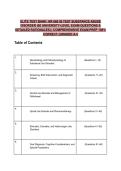
ELITE TEST BANK: NR 668 IQ TEST SUBSTANCE ABUSE
DISORDER (60 UNIVERSITY-LEVEL EXAM QUESTIONS &
DETAILED RATIONALES) | COMPREHENSIVE EXAM PREP 100%
CORRECT (GRADED A+)
Table of Contents
1.
Neurobiology and Pathophysiology of (Questions 1–10)
Substance Use Disorders
2.
Screening, Brief Intervention, and Diagnostic (Questions 11–20)
Criteria
3.
Alcohol Use Disorder and Management of (Questions 21–30)
Withdrawal
4.
Opioid Use Disorder and Pharmacotherapy (Questions 31–40)
5.
Stimulant, Cannabis, and Hallucinogen Use (Questions 41–50)
Disorders
6.
Dual Diagnosis, Cognitive Considerations, and (Questions 51–60)
Special Populations
,1. Neurobiology and Pathophysiology of Substance Use
Disorders
Question 1
Which primary neurocircuitry reward center of the brain is implicated in mediating the reinforcing
effects and euphoria associated with nearly all substances of abuse?
● A. Prefrontal cortex
● B. Mesolimbic dopamine pathway
● C. Nigrostriatal pathway
● D. Ventrolateral preoptic nucleus
● Correct Answer: B. Mesolimbic dopamine pathway
● Rationale: The mesolimbic dopamine pathway—originating in the ventral tegmental
area (VTA) and projecting to the nucleus accumbens—is the primary reward circuit
involved in the mediation of reinforcement, motivation, and the pleasurable effects of
psychoactive substances.
Question 2
Chronic and repetitive substance exposure leads to neuroadaptations in the brain, including
down-regulation of postsynaptic receptors. What clinical manifestation is most directly
associated with this neuroadaptation?
● A. Hyper-alertness
● B. Drug tolerance requiring higher doses to achieve the same effect
● C. Immediate permanent cessation of cravings
● D. Enhanced cognitive performance
● Correct Answer: B. Drug tolerance requiring higher doses to achieve the same effect
● Rationale: With chronic exposure, the brain attempts to maintain homeostasis by
down-regulating receptor sensitivity or reducing neurotransmitter production, which
clinically presents as tolerance—requiring larger amounts of the substance to feel the
initial effect.
Question 3
Which neurotransmitter system is primarily modulated during acute alcohol intoxication,
resulting in central nervous system depression, sedation, and anxiolysis?
● A. Dopamine
● B. Serotonin
, ● C. Gamma-aminobutyric acid (GABA)
● D. Norepinephrine
● Correct Answer: C. Gamma-aminobutyric acid (GABA)
● Rationale: Alcohol is a potent positive allosteric modulator of GABA-A receptors,
enhancing inhibitory neurotransmission, which leads to CNS depression, relaxation, and
reduced anxiety.
Question 4
During acute drug withdrawal, a rebound hyper-excitability state frequently occurs in the central
nervous system. Which neurotransmitter system is typically overactive during acute alcohol and
sedative-hypnotic withdrawal?
● A. Glutamate
● B. Acetylcholine
● C. Endogenous opioids
● D. Melatonin
● Correct Answer: A. Glutamate
● Rationale: Chronic inhibition by substances like alcohol leads to an up-regulation of
excitatory NMDA glutamate receptors. Upon abrupt cessation, uninhibited glutamate
activity triggers excitotoxicity, tremors, seizures, and autonomic instability.
Question 5
What neurobiological change is primarily responsible for the long-lasting vulnerability to relapse
even after years of sustained abstinence?
● A. Permanent depletion of peripheral blood cells
● B. Long-term structural and functional plasticity changes in the prefrontal cortex and
memory circuits (e.g., amygdala and hippocampus)
● C. Irreversible destruction of cerebellar Purkinje cells
● D. Permanent shut-down of pituitary hormone synthesis
● Correct Answer: B. Long-term structural and functional plasticity changes in the
prefrontal cortex and memory circuits (e.g., amygdala and hippocampus)
● Rationale: Addiction causes enduring alterations in gene expression and synaptic
plasticity within memory and decision-making centers (such as the prefrontal cortex,
hippocampus, and amygdala), triggering intense cravings when triggered by
environmental cues.
Question 6
Which brain region is heavily involved in executive functioning, impulse control, and
decision-making, and is typically compromised in individuals struggling with substance use
disorders?
DISORDER (60 UNIVERSITY-LEVEL EXAM QUESTIONS &
DETAILED RATIONALES) | COMPREHENSIVE EXAM PREP 100%
CORRECT (GRADED A+)
Table of Contents
1.
Neurobiology and Pathophysiology of (Questions 1–10)
Substance Use Disorders
2.
Screening, Brief Intervention, and Diagnostic (Questions 11–20)
Criteria
3.
Alcohol Use Disorder and Management of (Questions 21–30)
Withdrawal
4.
Opioid Use Disorder and Pharmacotherapy (Questions 31–40)
5.
Stimulant, Cannabis, and Hallucinogen Use (Questions 41–50)
Disorders
6.
Dual Diagnosis, Cognitive Considerations, and (Questions 51–60)
Special Populations
,1. Neurobiology and Pathophysiology of Substance Use
Disorders
Question 1
Which primary neurocircuitry reward center of the brain is implicated in mediating the reinforcing
effects and euphoria associated with nearly all substances of abuse?
● A. Prefrontal cortex
● B. Mesolimbic dopamine pathway
● C. Nigrostriatal pathway
● D. Ventrolateral preoptic nucleus
● Correct Answer: B. Mesolimbic dopamine pathway
● Rationale: The mesolimbic dopamine pathway—originating in the ventral tegmental
area (VTA) and projecting to the nucleus accumbens—is the primary reward circuit
involved in the mediation of reinforcement, motivation, and the pleasurable effects of
psychoactive substances.
Question 2
Chronic and repetitive substance exposure leads to neuroadaptations in the brain, including
down-regulation of postsynaptic receptors. What clinical manifestation is most directly
associated with this neuroadaptation?
● A. Hyper-alertness
● B. Drug tolerance requiring higher doses to achieve the same effect
● C. Immediate permanent cessation of cravings
● D. Enhanced cognitive performance
● Correct Answer: B. Drug tolerance requiring higher doses to achieve the same effect
● Rationale: With chronic exposure, the brain attempts to maintain homeostasis by
down-regulating receptor sensitivity or reducing neurotransmitter production, which
clinically presents as tolerance—requiring larger amounts of the substance to feel the
initial effect.
Question 3
Which neurotransmitter system is primarily modulated during acute alcohol intoxication,
resulting in central nervous system depression, sedation, and anxiolysis?
● A. Dopamine
● B. Serotonin
, ● C. Gamma-aminobutyric acid (GABA)
● D. Norepinephrine
● Correct Answer: C. Gamma-aminobutyric acid (GABA)
● Rationale: Alcohol is a potent positive allosteric modulator of GABA-A receptors,
enhancing inhibitory neurotransmission, which leads to CNS depression, relaxation, and
reduced anxiety.
Question 4
During acute drug withdrawal, a rebound hyper-excitability state frequently occurs in the central
nervous system. Which neurotransmitter system is typically overactive during acute alcohol and
sedative-hypnotic withdrawal?
● A. Glutamate
● B. Acetylcholine
● C. Endogenous opioids
● D. Melatonin
● Correct Answer: A. Glutamate
● Rationale: Chronic inhibition by substances like alcohol leads to an up-regulation of
excitatory NMDA glutamate receptors. Upon abrupt cessation, uninhibited glutamate
activity triggers excitotoxicity, tremors, seizures, and autonomic instability.
Question 5
What neurobiological change is primarily responsible for the long-lasting vulnerability to relapse
even after years of sustained abstinence?
● A. Permanent depletion of peripheral blood cells
● B. Long-term structural and functional plasticity changes in the prefrontal cortex and
memory circuits (e.g., amygdala and hippocampus)
● C. Irreversible destruction of cerebellar Purkinje cells
● D. Permanent shut-down of pituitary hormone synthesis
● Correct Answer: B. Long-term structural and functional plasticity changes in the
prefrontal cortex and memory circuits (e.g., amygdala and hippocampus)
● Rationale: Addiction causes enduring alterations in gene expression and synaptic
plasticity within memory and decision-making centers (such as the prefrontal cortex,
hippocampus, and amygdala), triggering intense cravings when triggered by
environmental cues.
Question 6
Which brain region is heavily involved in executive functioning, impulse control, and
decision-making, and is typically compromised in individuals struggling with substance use
disorders?