?
ED
OV
PR
_AP
IA
UV
ST
, TABLE OF CONTENTS
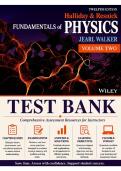
Test Bank: Fundamentals of Physics, Extended, 12th Edition
ST
(Volume 2)
Authors: David Halliday, Robert Resnick, Jearl Walker
UV
Chapter 21. Coulomb's Law
Chapter 22. Electric Fields
Chapter 23. Gauss' Law
Chapter 24. Electric Potential
IA
Chapter 25. Capacitance
Chapter 26. Current and Resistance
Chapter 27. Circuits
_
Chapter 28. Magnetic Fields
Chapter 29. Magnetic Fields Due to Currents
AP
Chapter 30. Induction and Inductance
Chapter 31. Electromagnetic Oscillations and Alternating Current
Chapter 32. Maxwell's Equations; Magnetism of Matter
Chapter 33. Electromagnetic Waves
PR
Chapter 34. Images
Chapter 35. Interference
Chapter 36. Diffraction
Chapter 37. Relativity
OV
Chapter 38. Photons and Matter Waves
Chapter 39. More About Matter Waves
Chapter 40. All About Atoms
Chapter 41. Conduction of Electricity in Solids
ED
Chapter 42. Nuclear Physics
Chapter 43. Energy from the Nucleus
Chapter 44. Quarks, Leptons, and the Big Bang
?
, Fundamentals of Physics, 12e (Halliday)
Chapter 21 Coulomb's Law
ST
1) A neutral metal ball is suspended by a string. A positively charged insulating rod is placed
near the ball, which is observed to be attracted to the rod. This is because:
A) the ball becomes positively charged by induction
B) the ball becomes negatively charged by induction
C) the number of electrons in the ball is more than the number in the rod
UV
D) the string is not a perfect insulator
E) there is a rearrangement of the electrons in the ball
Answer: E
Diff: 1
Section: 21.1
Learning Objective: LO 21.1.0
I
2) The units of 1/4πε0 are:
A_
A) N2/C2
B) N ∙ m/C
C) N2 ∙ m2/C2
D) N ∙ m2/C2
E) m2/C2
AP
Answer: D
Diff: 1
Section: 21.1
Learning Objective: LO 21.1.0
3) The charge on a glass rod which has been rubbed with silk is called positive:
PR
A) by arbitrary convention
B) so that the proton charge will be positive
C) to conform to the conventions adopted for G and m in Newton's law of gravitation
D) because like charges repel
E) because glass is an insulator
OV
Answer: A
Diff: 1
Section: 21.1
Learning Objective: LO 21.1.1
ED
?
1
, 4) A charged insulator can be discharged by passing it just above a flame. This is because the
flame:
A) warms it
ST
B) dries it
C) contains carbon dioxide
D) contains ions
E) contains more rapidly moving atoms
Answer: D
UV
Diff: 1
Section: 21.1
Learning Objective: LO 21.1.1
5) An electrical insulator is a material:
A) containing no electrons
B) through which electrons do not flow easily
I
C) which has more electrons than protons on its surface
A_
D) which cannot be a pure chemical element
E) which must be a crystal
Answer: B
Diff: 1
Section: 21.1
Learning Objective: LO 21.1.2
AP
6) A conductor is distinguished from an insulator with the same number of atoms by the number
of:
A) nearly free atoms
B) electrons
C) nearly free electrons
PR
D) protons
E) molecules
Answer: C
Diff: 1
Section: 21.1
OV
Learning Objective: LO 21.1.2
7) When a hard rubber rod is given a negative charge by rubbing it with wool:
A) positive charges are transferred from rod to wool
B) negative charges are transferred from rod to wool
C) positive charges are transferred from wool to rod
D) negative charges are transferred from wool to rod
ED
E) negative charges are created and stored on the rod
Answer: D
Diff: 1
Section: 21.1
Learning Objective: LO 21.1.4
?
2
ED
OV
PR
_AP
IA
UV
ST
, TABLE OF CONTENTS
Test Bank: Fundamentals of Physics, Extended, 12th Edition
ST
(Volume 2)
Authors: David Halliday, Robert Resnick, Jearl Walker
UV
Chapter 21. Coulomb's Law
Chapter 22. Electric Fields
Chapter 23. Gauss' Law
Chapter 24. Electric Potential
IA
Chapter 25. Capacitance
Chapter 26. Current and Resistance
Chapter 27. Circuits
_
Chapter 28. Magnetic Fields
Chapter 29. Magnetic Fields Due to Currents
AP
Chapter 30. Induction and Inductance
Chapter 31. Electromagnetic Oscillations and Alternating Current
Chapter 32. Maxwell's Equations; Magnetism of Matter
Chapter 33. Electromagnetic Waves
PR
Chapter 34. Images
Chapter 35. Interference
Chapter 36. Diffraction
Chapter 37. Relativity
OV
Chapter 38. Photons and Matter Waves
Chapter 39. More About Matter Waves
Chapter 40. All About Atoms
Chapter 41. Conduction of Electricity in Solids
ED
Chapter 42. Nuclear Physics
Chapter 43. Energy from the Nucleus
Chapter 44. Quarks, Leptons, and the Big Bang
?
, Fundamentals of Physics, 12e (Halliday)
Chapter 21 Coulomb's Law
ST
1) A neutral metal ball is suspended by a string. A positively charged insulating rod is placed
near the ball, which is observed to be attracted to the rod. This is because:
A) the ball becomes positively charged by induction
B) the ball becomes negatively charged by induction
C) the number of electrons in the ball is more than the number in the rod
UV
D) the string is not a perfect insulator
E) there is a rearrangement of the electrons in the ball
Answer: E
Diff: 1
Section: 21.1
Learning Objective: LO 21.1.0
I
2) The units of 1/4πε0 are:
A_
A) N2/C2
B) N ∙ m/C
C) N2 ∙ m2/C2
D) N ∙ m2/C2
E) m2/C2
AP
Answer: D
Diff: 1
Section: 21.1
Learning Objective: LO 21.1.0
3) The charge on a glass rod which has been rubbed with silk is called positive:
PR
A) by arbitrary convention
B) so that the proton charge will be positive
C) to conform to the conventions adopted for G and m in Newton's law of gravitation
D) because like charges repel
E) because glass is an insulator
OV
Answer: A
Diff: 1
Section: 21.1
Learning Objective: LO 21.1.1
ED
?
1
, 4) A charged insulator can be discharged by passing it just above a flame. This is because the
flame:
A) warms it
ST
B) dries it
C) contains carbon dioxide
D) contains ions
E) contains more rapidly moving atoms
Answer: D
UV
Diff: 1
Section: 21.1
Learning Objective: LO 21.1.1
5) An electrical insulator is a material:
A) containing no electrons
B) through which electrons do not flow easily
I
C) which has more electrons than protons on its surface
A_
D) which cannot be a pure chemical element
E) which must be a crystal
Answer: B
Diff: 1
Section: 21.1
Learning Objective: LO 21.1.2
AP
6) A conductor is distinguished from an insulator with the same number of atoms by the number
of:
A) nearly free atoms
B) electrons
C) nearly free electrons
PR
D) protons
E) molecules
Answer: C
Diff: 1
Section: 21.1
OV
Learning Objective: LO 21.1.2
7) When a hard rubber rod is given a negative charge by rubbing it with wool:
A) positive charges are transferred from rod to wool
B) negative charges are transferred from rod to wool
C) positive charges are transferred from wool to rod
D) negative charges are transferred from wool to rod
ED
E) negative charges are created and stored on the rod
Answer: D
Diff: 1
Section: 21.1
Learning Objective: LO 21.1.4
?
2