

NUl 176/l NU176l Examl 1–l (NEWl 2026/l
2027l Update)l Geriatricl Nursingl Reviewl |l
Questionsl &l Answersl |l Gradel A|l 100%l
Correctl (Verifiedl Solutions)-l Galen
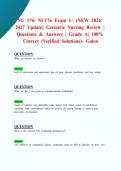
QUESTION
Whatl arel barriersl tol exercise?
Answer:
lackl ofl motivationl andl enjoyment,l fearl ofl pain,l chronicl conditions,l andl lowl energy
QUESTION
Whatl arel thel 3l keyl partsl tol transformationall leadership?
Answer:
visionl ofl realisticl andl obtainablel goalsl sharedl withl others,l sensel ofl mindfulnessl
regardingl workl environment,l abilityl tol involvel thel groupl leadingl tol creativel andl
innovativel environment
QUESTION
Whatl isl thel Laissezl Fairl Leadershipl (permissive)?
Answer:
veryl effectivel orl completelyl chaotic,l employeesl mustl bel ablel tol functionl onl theirl own.
,QUESTION
Whatl arel chronicl conditionsl thatl affectl sleep?
Answer:
Sleepl apneal occursl whenl airwayl isl partiallyl obstructed,l commonl symptoml isl fatiguel
andl treatedl withl CPAP.l Insomnial occursl whenl therel isl difficultyl fallingl orl remainingl
asleep,l isl notl al normall partl ofl aging.l Otherl commonl reasonsl forl sleepl disruption:l
nocturnall urination,l GERD,l COPD,l HF,l depression,l anxiety,l Medicationl sidel effect
QUESTION
Whatl arel thel physiologicall theoriesl ofl aging?
Answer:
1)l geneticl factorsl -l thel agingl ofl yourl bodyl isl isl inherited.
2)l wearl andl tearl -l bodyl partsl wearl outl andl becomel lessl effective.
3)l nutrientsl -l qualityl ofl agingl dependsl onl nutritionall intakel throughoutl life.
QUESTION
Whatl arel thel psychologicall theoriesl ofl aging?
Answer:
1)l developmentall -l Eriksonsl 8l stages,l integrityl vs.l despair.
2)l subculturel -l definesl oldl peoplel asl theirl ownl subculturel withl culturall norms.
3)l continuityl -l peoplel changel physiologicallyl withl agel butl basicl personalityl staysl thel
same.
QUESTION
Agel relatedl changesl inl thel cardiovascularl system?
, Answer:
bloodl volumel decreasesl bcl decreasedl totall bodyl water,l increasedl murmurs,l slowerl
diastolicl filling,l moderatel increasel inl systolicl andl diastolicl BP,l valvesl thickenl andl
becomel rigid,l conductionl andl impulsesl slow,l contractionl weakerl sol bloodl volumel andl
outputl declines,l arteriesl lessl elastic,l capillaryl wallsl thickenl andl slowl nutrientl exchangel
andl wastl productsl betweenl bloodl andl tissue,l bonel marrowl activityl decreases=l decreasedl
RBC,l Hct,l Hgb
QUESTION
Agel relatedl changesl inl thel respiratoryl system?
Answer:
lungl elasticl recoill decreases,l numberl ofl functioningl alveolil decreases,l alveolus-capillaryl
membranel thickensl reducingl surfacel arel forl gasl exchange,l ribl cagel becomesl rigidl asl
cartilagel calcifies,l lessl abilityl tol handlel secretions,l thoracicl spinel shortensl stoopedl
posturel decreasesl activel lungl space,l abdominall musclesl weakenl decreasingl inspire/expirel
effort,l diaphragml doesl notl lossl mass
QUESTION
Agel relatedl changesl inl thel GIl system?
Answer:
tastesl budl atrophyl andl lossl ofl teeth,l decreasedl esophageall motility;l increasedl GERD,l
increasedl gastricl pH,l atrophyl ofl intestinall mucosal andl pancreas,l decreasedl liverl sizel
andl bloodl flow
QUESTION
Agel relatedl changesl inl thel GUl system?
2027l Update)l Geriatricl Nursingl Reviewl |l
Questionsl &l Answersl |l Gradel A|l 100%l
Correctl (Verifiedl Solutions)-l Galen
QUESTION
Whatl arel barriersl tol exercise?
Answer:
lackl ofl motivationl andl enjoyment,l fearl ofl pain,l chronicl conditions,l andl lowl energy
QUESTION
Whatl arel thel 3l keyl partsl tol transformationall leadership?
Answer:
visionl ofl realisticl andl obtainablel goalsl sharedl withl others,l sensel ofl mindfulnessl
regardingl workl environment,l abilityl tol involvel thel groupl leadingl tol creativel andl
innovativel environment
QUESTION
Whatl isl thel Laissezl Fairl Leadershipl (permissive)?
Answer:
veryl effectivel orl completelyl chaotic,l employeesl mustl bel ablel tol functionl onl theirl own.
,QUESTION
Whatl arel chronicl conditionsl thatl affectl sleep?
Answer:
Sleepl apneal occursl whenl airwayl isl partiallyl obstructed,l commonl symptoml isl fatiguel
andl treatedl withl CPAP.l Insomnial occursl whenl therel isl difficultyl fallingl orl remainingl
asleep,l isl notl al normall partl ofl aging.l Otherl commonl reasonsl forl sleepl disruption:l
nocturnall urination,l GERD,l COPD,l HF,l depression,l anxiety,l Medicationl sidel effect
QUESTION
Whatl arel thel physiologicall theoriesl ofl aging?
Answer:
1)l geneticl factorsl -l thel agingl ofl yourl bodyl isl isl inherited.
2)l wearl andl tearl -l bodyl partsl wearl outl andl becomel lessl effective.
3)l nutrientsl -l qualityl ofl agingl dependsl onl nutritionall intakel throughoutl life.
QUESTION
Whatl arel thel psychologicall theoriesl ofl aging?
Answer:
1)l developmentall -l Eriksonsl 8l stages,l integrityl vs.l despair.
2)l subculturel -l definesl oldl peoplel asl theirl ownl subculturel withl culturall norms.
3)l continuityl -l peoplel changel physiologicallyl withl agel butl basicl personalityl staysl thel
same.
QUESTION
Agel relatedl changesl inl thel cardiovascularl system?
, Answer:
bloodl volumel decreasesl bcl decreasedl totall bodyl water,l increasedl murmurs,l slowerl
diastolicl filling,l moderatel increasel inl systolicl andl diastolicl BP,l valvesl thickenl andl
becomel rigid,l conductionl andl impulsesl slow,l contractionl weakerl sol bloodl volumel andl
outputl declines,l arteriesl lessl elastic,l capillaryl wallsl thickenl andl slowl nutrientl exchangel
andl wastl productsl betweenl bloodl andl tissue,l bonel marrowl activityl decreases=l decreasedl
RBC,l Hct,l Hgb
QUESTION
Agel relatedl changesl inl thel respiratoryl system?
Answer:
lungl elasticl recoill decreases,l numberl ofl functioningl alveolil decreases,l alveolus-capillaryl
membranel thickensl reducingl surfacel arel forl gasl exchange,l ribl cagel becomesl rigidl asl
cartilagel calcifies,l lessl abilityl tol handlel secretions,l thoracicl spinel shortensl stoopedl
posturel decreasesl activel lungl space,l abdominall musclesl weakenl decreasingl inspire/expirel
effort,l diaphragml doesl notl lossl mass
QUESTION
Agel relatedl changesl inl thel GIl system?
Answer:
tastesl budl atrophyl andl lossl ofl teeth,l decreasedl esophageall motility;l increasedl GERD,l
increasedl gastricl pH,l atrophyl ofl intestinall mucosal andl pancreas,l decreasedl liverl sizel
andl bloodl flow
QUESTION
Agel relatedl changesl inl thel GUl system?


