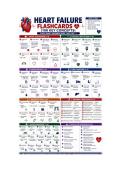
, HEART FAILURE FLASHCARDS
100 Key Concepts
Front = Question | Back = Answer
Perfect for Active Recall & Spaced Repetition
CATEGORY 1: BASICS & DEFINITIONS (1-15)
Q1: What is the definition of heart failure?
A: A clinical syndrome characterized by structural or functional
impairment of ventricular filling or ejection of blood, leading to
typical symptoms (dyspnea, fatigue, edema) and signs (elevated
JVP, pulmonary crackles, peripheral edema) at rest or during
exertion.
───────────────────────────────────────────
─────────────────────────────────────
Q2: What EF defines HFrEF (systolic HF)?
A: EF ≤ 40%. Characterized by reduced contractility and typically
dilated ventricle.
───────────────────────────────────────────
─────────────────────────────────────
Q3: What EF defines HFpEF (diastolic HF)?
A: EF ≥ 50%. Characterized by stiff, non-compliant ventricle with
impaired relaxation but preserved contractility.
───────────────────────────────────────────
─────────────────────────────────────
Q4: What is HFmrEF?
A: Heart failure with mildly reduced ejection fraction — EF 41-
49%. Has features of both HFrEF and HFpEF.
, ───────────────────────────────────────────
─────────────────────────────────────
Q5: What is HFimpEF?
A: Heart failure with improved ejection fraction — previously
HFrEF (EF ≤ 40%) that has improved to > 40% on guideline-
directed medical therapy (GDMT).
───────────────────────────────────────────
─────────────────────────────────────
Q6: What are the 4 NYHA functional classes?
A: Class I: No symptoms with ordinary activity. Class II:
Symptoms with ordinary activity; comfortable at rest. Class III:
Symptoms with minimal activity; comfortable only at rest. Class
IV: Symptoms at rest; any activity worsens symptoms.
───────────────────────────────────────────
─────────────────────────────────────
Q7: What are the 4 ACC/AHA stages of HF?
A: Stage A: At risk, no structural disease. Stage B: Structural
disease, no symptoms. Stage C: Structural disease with current or
prior symptoms. Stage D: Refractory HF requiring specialized
interventions.
───────────────────────────────────────────
─────────────────────────────────────
Q8: What is the most common cause of HFrEF?
A: Ischemic heart disease / prior myocardial infarction (~60-70%
of cases).
───────────────────────────────────────────
─────────────────────────────────────
Q9: What is the most common cause of HFpEF?
100 Key Concepts
Front = Question | Back = Answer
Perfect for Active Recall & Spaced Repetition
CATEGORY 1: BASICS & DEFINITIONS (1-15)
Q1: What is the definition of heart failure?
A: A clinical syndrome characterized by structural or functional
impairment of ventricular filling or ejection of blood, leading to
typical symptoms (dyspnea, fatigue, edema) and signs (elevated
JVP, pulmonary crackles, peripheral edema) at rest or during
exertion.
───────────────────────────────────────────
─────────────────────────────────────
Q2: What EF defines HFrEF (systolic HF)?
A: EF ≤ 40%. Characterized by reduced contractility and typically
dilated ventricle.
───────────────────────────────────────────
─────────────────────────────────────
Q3: What EF defines HFpEF (diastolic HF)?
A: EF ≥ 50%. Characterized by stiff, non-compliant ventricle with
impaired relaxation but preserved contractility.
───────────────────────────────────────────
─────────────────────────────────────
Q4: What is HFmrEF?
A: Heart failure with mildly reduced ejection fraction — EF 41-
49%. Has features of both HFrEF and HFpEF.
, ───────────────────────────────────────────
─────────────────────────────────────
Q5: What is HFimpEF?
A: Heart failure with improved ejection fraction — previously
HFrEF (EF ≤ 40%) that has improved to > 40% on guideline-
directed medical therapy (GDMT).
───────────────────────────────────────────
─────────────────────────────────────
Q6: What are the 4 NYHA functional classes?
A: Class I: No symptoms with ordinary activity. Class II:
Symptoms with ordinary activity; comfortable at rest. Class III:
Symptoms with minimal activity; comfortable only at rest. Class
IV: Symptoms at rest; any activity worsens symptoms.
───────────────────────────────────────────
─────────────────────────────────────
Q7: What are the 4 ACC/AHA stages of HF?
A: Stage A: At risk, no structural disease. Stage B: Structural
disease, no symptoms. Stage C: Structural disease with current or
prior symptoms. Stage D: Refractory HF requiring specialized
interventions.
───────────────────────────────────────────
─────────────────────────────────────
Q8: What is the most common cause of HFrEF?
A: Ischemic heart disease / prior myocardial infarction (~60-70%
of cases).
───────────────────────────────────────────
─────────────────────────────────────
Q9: What is the most common cause of HFpEF?