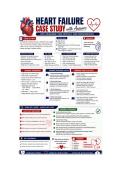
, COMPREHENSIVE HEART FAILURE
CASE STUDIES WITH ANSWERS
A Multi-Perspective Clinical Learning Resource
Combining Nursing, Medical, and Palliative Care Perspectives
Compiled from Multiple Authoritative Sources:
• University of Maryland Next Gen NCLEX Test Bank
• The Prince Charles Hospital HeartLung Institute
• Beloit Health System Hospice Care
• American College of Cardiology (ACC)
• PubMed Central — Peer-Reviewed Clinical Case Studies
,TABLE OF CONTENTS
1. Case Study 1: Acute Decompensated Heart Failure — Nursing Focus
2. Case Study 2: New-Onset Heart Failure — Diagnostic Workup & Treatment
3. Case Study 3: Advanced CHF & Hospice Eligibility — Palliative Care Focus
4. Case Study 4: Acute Heart Failure Syndrome — Best Practices
5. Case Study 5: Systolic Heart Failure — Acute Stabilization & Chronic
Management
6. Case Study 6: Optimization of Therapy in Established Cardiac Failure
7. Appendix A: Key Clinical Pearls & Teaching Points
8. Appendix B: Medication Reference Guide for Heart Failure
9. Appendix C: NYHA Functional Classification
, CASE STUDY 1: ACUTE DECOMPENSATED HEART FAILURE —
NURSING FOCUS
Source: University of Maryland Next Gen NCLEX Test Bank Project (2023)
Case Summary
A 68-year-old male client presents to an outpatient clinic with exacerbation of
right and left-sided heart failure. The provider stops digoxin, orders an
ACEI/ARB combination drug but does not discontinue the ACEI. Orders fluid
restriction and daily weights. The client returns home on a new regimen;
symptoms resolve temporarily. Two weeks later, the client develops urgent
symptoms of heart failure. The learner should recognize signs/symptoms of heart
failure, red flags for emergent care, interpret lab data and intervene, detect errors
in medication orders, and educate the client about changes to the treatment plan.
Learning Objectives
10. Recognize signs and symptoms of heart failure
11. Interpret lab data and intervene as appropriate
12. Identify signs and symptoms of worsening condition
13. Educate the client about medications and treatment plan
14. Recognize red flags that indicate a need for emergent care
Initial Presentation — Day 1, 1000
A 68-year-old male client presents for a routine clinic appointment. He reports
'tiring easily when out shopping or for walks.' He has been staying home reading
and watching television. He reports difficulty sleeping, awakens with shortness of
breath in the middle of the night. He reports an 8-pound weight gain over the
past two weeks since his last appointment. States normal appetite. Denies chest
pain and back pain. States he is 'anxious' about his condition. No known allergies.
Current medications: enalapril 20 mg BID PO, hydrochlorothiazide 25 mg BID
PO, digoxin 0.125 mg daily PO.
Assessment Findings
• Alert & oriented x4, appears slightly anxious
• HR regular @ 102 bpm
• 4+ pitting pedal and pretibial edema
• RR unlabored, crackles in bases bilaterally
• Abdomen soft, non-tender, bowel sounds active
• Skin warm, dry & intact
• Frequent urination, small amounts of clear yellow urine
Vital Signs
Parameter Value
CASE STUDIES WITH ANSWERS
A Multi-Perspective Clinical Learning Resource
Combining Nursing, Medical, and Palliative Care Perspectives
Compiled from Multiple Authoritative Sources:
• University of Maryland Next Gen NCLEX Test Bank
• The Prince Charles Hospital HeartLung Institute
• Beloit Health System Hospice Care
• American College of Cardiology (ACC)
• PubMed Central — Peer-Reviewed Clinical Case Studies
,TABLE OF CONTENTS
1. Case Study 1: Acute Decompensated Heart Failure — Nursing Focus
2. Case Study 2: New-Onset Heart Failure — Diagnostic Workup & Treatment
3. Case Study 3: Advanced CHF & Hospice Eligibility — Palliative Care Focus
4. Case Study 4: Acute Heart Failure Syndrome — Best Practices
5. Case Study 5: Systolic Heart Failure — Acute Stabilization & Chronic
Management
6. Case Study 6: Optimization of Therapy in Established Cardiac Failure
7. Appendix A: Key Clinical Pearls & Teaching Points
8. Appendix B: Medication Reference Guide for Heart Failure
9. Appendix C: NYHA Functional Classification
, CASE STUDY 1: ACUTE DECOMPENSATED HEART FAILURE —
NURSING FOCUS
Source: University of Maryland Next Gen NCLEX Test Bank Project (2023)
Case Summary
A 68-year-old male client presents to an outpatient clinic with exacerbation of
right and left-sided heart failure. The provider stops digoxin, orders an
ACEI/ARB combination drug but does not discontinue the ACEI. Orders fluid
restriction and daily weights. The client returns home on a new regimen;
symptoms resolve temporarily. Two weeks later, the client develops urgent
symptoms of heart failure. The learner should recognize signs/symptoms of heart
failure, red flags for emergent care, interpret lab data and intervene, detect errors
in medication orders, and educate the client about changes to the treatment plan.
Learning Objectives
10. Recognize signs and symptoms of heart failure
11. Interpret lab data and intervene as appropriate
12. Identify signs and symptoms of worsening condition
13. Educate the client about medications and treatment plan
14. Recognize red flags that indicate a need for emergent care
Initial Presentation — Day 1, 1000
A 68-year-old male client presents for a routine clinic appointment. He reports
'tiring easily when out shopping or for walks.' He has been staying home reading
and watching television. He reports difficulty sleeping, awakens with shortness of
breath in the middle of the night. He reports an 8-pound weight gain over the
past two weeks since his last appointment. States normal appetite. Denies chest
pain and back pain. States he is 'anxious' about his condition. No known allergies.
Current medications: enalapril 20 mg BID PO, hydrochlorothiazide 25 mg BID
PO, digoxin 0.125 mg daily PO.
Assessment Findings
• Alert & oriented x4, appears slightly anxious
• HR regular @ 102 bpm
• 4+ pitting pedal and pretibial edema
• RR unlabored, crackles in bases bilaterally
• Abdomen soft, non-tender, bowel sounds active
• Skin warm, dry & intact
• Frequent urination, small amounts of clear yellow urine
Vital Signs
Parameter Value