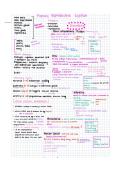
, Prostate cells change → mutations in DNA
(androgens + estrogens) fuel abnormal cell
Normally, parasympathetic nerves trigger blood growth.
Precancerous stage (PIN – prostatic
flow into penile tissue → erection.
intraepithelial neoplasia):
cells lining the ducts look abnormal.
↓ Parasympathetic tone (nerve signals are
These can progress into adenocarcinoma (the
weak), OR main type of prostate cancer)
Blood vessels can’t dilate properly → less
blood flow.
This prevents the penis from filling and
staying rigid. Starts in germ cells – these are the cells that normally turn into sperm.
Mutation happens – the germ cell doesn’t grow into normal sperm.
Cells keep multiplying –
Tumor forms – testicle enlarges, tissue may become stiff or fibrous.
Can spread – especially nonseminomas, to nearby lymph nodes or organs.
Progression stages:
Carcinoma in situ: cancer cells stay in place inside the testicle.
Invasive carcinoma: cancer breaks out and spreads.
Benign prostatic hyperplasia (BPH) is nonmalignant overgrowth of prostate tissue.
(androgens + estrogens) fuel abnormal cell
Normally, parasympathetic nerves trigger blood growth.
Precancerous stage (PIN – prostatic
flow into penile tissue → erection.
intraepithelial neoplasia):
cells lining the ducts look abnormal.
↓ Parasympathetic tone (nerve signals are
These can progress into adenocarcinoma (the
weak), OR main type of prostate cancer)
Blood vessels can’t dilate properly → less
blood flow.
This prevents the penis from filling and
staying rigid. Starts in germ cells – these are the cells that normally turn into sperm.
Mutation happens – the germ cell doesn’t grow into normal sperm.
Cells keep multiplying –
Tumor forms – testicle enlarges, tissue may become stiff or fibrous.
Can spread – especially nonseminomas, to nearby lymph nodes or organs.
Progression stages:
Carcinoma in situ: cancer cells stay in place inside the testicle.
Invasive carcinoma: cancer breaks out and spreads.
Benign prostatic hyperplasia (BPH) is nonmalignant overgrowth of prostate tissue.