

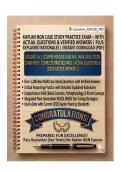
,KAPLAN NGN CASE STUDY PRACTICE EXAM
Complete Practice Examination with Correct Answers &
Detailed Rationales
Exam Type: Comprehensive Nursing Assessment
Total Questions: 250
Domain: Next Generation NCLEX (NGN) Case Studies
Format: Case Studies, Unfolding Scenarios, Bow-Tie, Matrix, Cloze (Drop-Down),
Ordered Response, Select All That Apply
Target: NCLEX-RN®, Kaplan Integrated Exams, & Nursing School Final Exam
Preparation
INSTRUCTIONS TO CANDIDATE
Read each case study carefully. Each case is followed by multiple questions testing
clinical judgment across the NCSBN Clinical Judgment Measurement Model
(CJMM): Recognize Cues → Analyze Cues → Prioritize Hypotheses → Generate
Solutions → Take Action → Evaluate Outcomes.
For questions marked (Select All That Apply) , select all correct options. For Ordered
Response questions, arrange the options in the correct sequence. Each question
includes a detailed, expert-verified rationale explaining the underlying clinical judgment
principles, prioritization frameworks, and the rationale for excluding distractors.
SECTION 1: MEDICAL-SURGICAL CASE STUDIES (Questions
1–80)
, CASE STUDY 1: SEPSIS AND SEPTIC SHOCK
Patient Overview: Mr. Thompson is a 68-year-old male admitted with confusion, fever,
and hypotension. History of diabetes mellitus type 2 and chronic kidney disease stage 3.
Current medications include metformin 1000 mg BID, lisinopril 10 mg daily, and
atorvastatin 20 mg daily.
Initial Assessment:
• Vital Signs: BP 88/52 mmHg, HR 118 bpm, RR 24/min, Temp 39.2°C (102.6°F), SpO₂ 91%
on room air
• Physical Exam: Lethargic, confused to time and place, warm and flushed skin, capillary
refill 4 seconds
• Labs: WBC 18,500/mm³, Lactate 4.2 mmol/L, Creatinine 2.1 mg/dL, Glucose 245 mg/dL
• Urine Output: 20 mL over 2 hours
Question 1
Which assessment finding requires immediate intervention?
A. Blood glucose 245 mg/dL
B. Temperature 39.2°C (102.6°F)
C. Heart rate 118 bpm
D. Urine output 20 mL over 2 hours
Correct Answer: D. Urine output 20 mL over 2 hours
Rationale: Oliguria (<0.5 mL/kg/hr) suggests acute kidney injury or hypoperfusion of
vital organs, requiring immediate action. While fever, tachycardia, and hyperglycemia
are concerning, urine output directly reflects end-organ perfusion and is a more critical
indicator of hemodynamic instability. In sepsis, decreased urine output indicates
inadequate renal perfusion and the need for immediate fluid resuscitation.
, Question 2
The provider orders IV fluids. Which type is most appropriate initially?
A. 0.45% saline
B. 5% dextrose in water
C. Lactated Ringer's
D. 0.9% normal saline
Correct Answer: D. 0.9% normal saline
Rationale: Isotonic crystalloid (0.9% normal saline) is first-line for
hypovolemia/hypotension in sepsis. Lactated Ringer's is acceptable but caution is
needed in CKD/hyperkalemia. Hypotonic fluids (0.45% saline) and dextrose solutions can
worsen hypotension and do not adequately expand intravascular volume.
Question 3
After administering 1 L of normal saline, the patient's BP is 90/60 mmHg and HR is 105
bpm. What is the nurse's next action?
A. Administer a second liter of normal saline
B. Notify the healthcare provider
C. Begin vasopressor therapy
D. Reassess in 15 minutes
Correct Answer: B. Notify the healthcare provider
Rationale: Persistent hypotension (MAP <65 mmHg) after fluid resuscitation
indicates fluid-refractory septic shock. The healthcare provider should be notified
Complete Practice Examination with Correct Answers &
Detailed Rationales
Exam Type: Comprehensive Nursing Assessment
Total Questions: 250
Domain: Next Generation NCLEX (NGN) Case Studies
Format: Case Studies, Unfolding Scenarios, Bow-Tie, Matrix, Cloze (Drop-Down),
Ordered Response, Select All That Apply
Target: NCLEX-RN®, Kaplan Integrated Exams, & Nursing School Final Exam
Preparation
INSTRUCTIONS TO CANDIDATE
Read each case study carefully. Each case is followed by multiple questions testing
clinical judgment across the NCSBN Clinical Judgment Measurement Model
(CJMM): Recognize Cues → Analyze Cues → Prioritize Hypotheses → Generate
Solutions → Take Action → Evaluate Outcomes.
For questions marked (Select All That Apply) , select all correct options. For Ordered
Response questions, arrange the options in the correct sequence. Each question
includes a detailed, expert-verified rationale explaining the underlying clinical judgment
principles, prioritization frameworks, and the rationale for excluding distractors.
SECTION 1: MEDICAL-SURGICAL CASE STUDIES (Questions
1–80)
, CASE STUDY 1: SEPSIS AND SEPTIC SHOCK
Patient Overview: Mr. Thompson is a 68-year-old male admitted with confusion, fever,
and hypotension. History of diabetes mellitus type 2 and chronic kidney disease stage 3.
Current medications include metformin 1000 mg BID, lisinopril 10 mg daily, and
atorvastatin 20 mg daily.
Initial Assessment:
• Vital Signs: BP 88/52 mmHg, HR 118 bpm, RR 24/min, Temp 39.2°C (102.6°F), SpO₂ 91%
on room air
• Physical Exam: Lethargic, confused to time and place, warm and flushed skin, capillary
refill 4 seconds
• Labs: WBC 18,500/mm³, Lactate 4.2 mmol/L, Creatinine 2.1 mg/dL, Glucose 245 mg/dL
• Urine Output: 20 mL over 2 hours
Question 1
Which assessment finding requires immediate intervention?
A. Blood glucose 245 mg/dL
B. Temperature 39.2°C (102.6°F)
C. Heart rate 118 bpm
D. Urine output 20 mL over 2 hours
Correct Answer: D. Urine output 20 mL over 2 hours
Rationale: Oliguria (<0.5 mL/kg/hr) suggests acute kidney injury or hypoperfusion of
vital organs, requiring immediate action. While fever, tachycardia, and hyperglycemia
are concerning, urine output directly reflects end-organ perfusion and is a more critical
indicator of hemodynamic instability. In sepsis, decreased urine output indicates
inadequate renal perfusion and the need for immediate fluid resuscitation.
, Question 2
The provider orders IV fluids. Which type is most appropriate initially?
A. 0.45% saline
B. 5% dextrose in water
C. Lactated Ringer's
D. 0.9% normal saline
Correct Answer: D. 0.9% normal saline
Rationale: Isotonic crystalloid (0.9% normal saline) is first-line for
hypovolemia/hypotension in sepsis. Lactated Ringer's is acceptable but caution is
needed in CKD/hyperkalemia. Hypotonic fluids (0.45% saline) and dextrose solutions can
worsen hypotension and do not adequately expand intravascular volume.
Question 3
After administering 1 L of normal saline, the patient's BP is 90/60 mmHg and HR is 105
bpm. What is the nurse's next action?
A. Administer a second liter of normal saline
B. Notify the healthcare provider
C. Begin vasopressor therapy
D. Reassess in 15 minutes
Correct Answer: B. Notify the healthcare provider
Rationale: Persistent hypotension (MAP <65 mmHg) after fluid resuscitation
indicates fluid-refractory septic shock. The healthcare provider should be notified


