

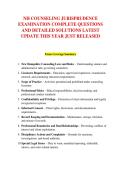
NH COUNSELING JURISPRUDENCE
EXAMINATION COMPLETE QUESTIONS
AND DETAILED SOLUTIONS LATEST
UPDATE THIS YEAR JUST RELEASED
Exam Coverage Summary
1. New Hampshire Counseling Laws and Rules – Understanding statutes and
administrative rules governing counselors.
2. Licensure Requirements – Education, supervised experience, examination,
renewal, and continuing education requirements.
3. Scope of Practice – Activities permitted and prohibited under counseling
licensure.
4. Professional Ethics – Ethical responsibilities, decision-making, and
professional conduct standards.
5. Confidentiality and Privilege – Protection of client information and legally
recognized exceptions.
6. Informed Consent – Client rights, disclosures, and documentation
requirements.
7. Record Keeping and Documentation – Maintenance, storage, retention,
and release of records.
8. Professional Boundaries and Dual Relationships – Preventing conflicts of
interest and client exploitation.
9. Disciplinary Actions and Complaints – Grounds for sanctions,
investigations, and board authority.
10.Special Legal Issues – Duty to warn, mandated reporting, telehealth,
minors, and court-related matters.
,1.
Which statement best describes the primary purpose of New Hampshire counseling
licensure laws in regulating professional counselors?
A. To increase counselor income opportunities statewide
B. To protect the public through professional standards and accountability
C. To eliminate competition among mental health professionals
D. To guarantee employment for licensed counselors
Answer: B
Rationale: Licensing laws primarily exist to protect the public by ensuring
counselors meet minimum competency, education, and ethical standards.
2.
A licensed counselor in New Hampshire must generally practice only within areas
where the counselor possesses appropriate education, training, and demonstrated
competence.
A. True
B. False
C. Only when working with minors
D. Only when ordered by an employer
Answer: A
Rationale: Practicing within professional competence is a fundamental legal and
ethical requirement.
3.
,Which action would most likely constitute practicing outside a counselor's
professional scope of competence?
A. Consulting with a supervisor regarding a difficult case
B. Referring a client for specialized treatment when necessary
C. Providing specialized trauma interventions without appropriate training
D. Documenting treatment goals in the clinical record
Answer: C
Rationale: Counselors must possess adequate training before providing
specialized clinical services.
4.
The New Hampshire counseling regulatory framework generally authorizes the
licensing board to investigate complaints against licensees for alleged misconduct.
A. True
B. False
C. Only after court approval
D. Only for criminal offenses
Answer: A
Rationale: Licensing boards possess authority to investigate complaints and
enforce professional standards.
5.
When obtaining informed consent from a new counseling client, which information
should generally be disclosed before treatment begins?
, A. The counselor's preferred political opinions
B. Counseling procedures, risks, benefits, and limitations of confidentiality
C. Future court outcomes involving the client
D. Personal financial information about the counselor
Answer: B
Rationale: Informed consent requires disclosure of treatment information and
confidentiality limitations.
6.
A counselor receives a subpoena requesting client records. What is generally the
most appropriate initial response?
A. Immediately send all records without review
B. Ignore the subpoena completely
C. Review legal obligations and confidentiality requirements before releasing
records
D. Destroy the records
Answer: C
Rationale: Counselors must evaluate legal requirements while protecting client
confidentiality.
7.
Which situation most clearly represents a potential dual relationship that could
impair professional judgment?
A. Providing counseling services during scheduled sessions
B. Maintaining treatment notes in a secure file
EXAMINATION COMPLETE QUESTIONS
AND DETAILED SOLUTIONS LATEST
UPDATE THIS YEAR JUST RELEASED
Exam Coverage Summary
1. New Hampshire Counseling Laws and Rules – Understanding statutes and
administrative rules governing counselors.
2. Licensure Requirements – Education, supervised experience, examination,
renewal, and continuing education requirements.
3. Scope of Practice – Activities permitted and prohibited under counseling
licensure.
4. Professional Ethics – Ethical responsibilities, decision-making, and
professional conduct standards.
5. Confidentiality and Privilege – Protection of client information and legally
recognized exceptions.
6. Informed Consent – Client rights, disclosures, and documentation
requirements.
7. Record Keeping and Documentation – Maintenance, storage, retention,
and release of records.
8. Professional Boundaries and Dual Relationships – Preventing conflicts of
interest and client exploitation.
9. Disciplinary Actions and Complaints – Grounds for sanctions,
investigations, and board authority.
10.Special Legal Issues – Duty to warn, mandated reporting, telehealth,
minors, and court-related matters.
,1.
Which statement best describes the primary purpose of New Hampshire counseling
licensure laws in regulating professional counselors?
A. To increase counselor income opportunities statewide
B. To protect the public through professional standards and accountability
C. To eliminate competition among mental health professionals
D. To guarantee employment for licensed counselors
Answer: B
Rationale: Licensing laws primarily exist to protect the public by ensuring
counselors meet minimum competency, education, and ethical standards.
2.
A licensed counselor in New Hampshire must generally practice only within areas
where the counselor possesses appropriate education, training, and demonstrated
competence.
A. True
B. False
C. Only when working with minors
D. Only when ordered by an employer
Answer: A
Rationale: Practicing within professional competence is a fundamental legal and
ethical requirement.
3.
,Which action would most likely constitute practicing outside a counselor's
professional scope of competence?
A. Consulting with a supervisor regarding a difficult case
B. Referring a client for specialized treatment when necessary
C. Providing specialized trauma interventions without appropriate training
D. Documenting treatment goals in the clinical record
Answer: C
Rationale: Counselors must possess adequate training before providing
specialized clinical services.
4.
The New Hampshire counseling regulatory framework generally authorizes the
licensing board to investigate complaints against licensees for alleged misconduct.
A. True
B. False
C. Only after court approval
D. Only for criminal offenses
Answer: A
Rationale: Licensing boards possess authority to investigate complaints and
enforce professional standards.
5.
When obtaining informed consent from a new counseling client, which information
should generally be disclosed before treatment begins?
, A. The counselor's preferred political opinions
B. Counseling procedures, risks, benefits, and limitations of confidentiality
C. Future court outcomes involving the client
D. Personal financial information about the counselor
Answer: B
Rationale: Informed consent requires disclosure of treatment information and
confidentiality limitations.
6.
A counselor receives a subpoena requesting client records. What is generally the
most appropriate initial response?
A. Immediately send all records without review
B. Ignore the subpoena completely
C. Review legal obligations and confidentiality requirements before releasing
records
D. Destroy the records
Answer: C
Rationale: Counselors must evaluate legal requirements while protecting client
confidentiality.
7.
Which situation most clearly represents a potential dual relationship that could
impair professional judgment?
A. Providing counseling services during scheduled sessions
B. Maintaining treatment notes in a secure file


