NURS 8022 Advanced Pathophysiology Exam 3 | 130
Practice Questions & Answers Complete Exam Study
Guide – Latest 2026/2027 | 100% Verified
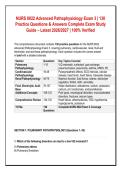
This comprehensive document contains 130 practice questions for the NURS 8022
Advanced Pathophysiology Exam 3, covering pulmonary, cardiovascular, renal, fluid and
electrolyte, and acid-base pathophysiology. Each question includes the correct answer
in bold with a detailed rationale.
Section Questions Key Topics Covered
Pulmonary 1-15 V/Q mismatch, surfactant, gas exchange,
Pathophysiology pneumoconiosis, pneumonia, asthma, ARDS, PE
Cardiovascular 16-48 Parasympathetic effects, ECG intervals, valvular
Pathophysiology disease, heart block, heart failure, Kawasaki disease
Renal Pathophysiology 49-75 Nephron function, fluid forces, edema, electrolyte
regulation, RAAS, ADH, osmolality
Fluid, Electrolyte, Acid- 76-107 Water distribution, aldosterone, sodium, potassium,
Base calcium, pH, bicarbonate, acidosis/alkalosis
Additional Concepts 108-123 Pain types, neurological disorders, musculoskeletal
disorders, fractures, seizure types
Comprehensive Review 124-130 Heart failure, atherosclerosis, VSD, hypothermia,
hyperglycemia, potassium
TOTAL 130 Complete NURS 8022 Exam 3 Coverage
Questions
SECTION 1: PULMONARY PATHOPHYSIOLOGY (Questions 1–30)
1. Which of the following disorders can lead to a low V/Q mismatch?
A) Pulmonary edema
B) Pulmonary Embolism
,C) Pulmonary Hypertension
D) Hypercapnia
Answer: A
Low V/Q mismatch occurs when ventilation is decreased relative to perfusion. Pulmonary
edema causes fluid accumulation in the alveoli, impairing ventilation while perfusion
remains intact, leading to a low V/Q ratio. Pulmonary embolism causes a high V/Q
mismatch (normal ventilation with decreased perfusion) .
2. What are two functions of surfactant in the lungs?
A) Keeps alveoli open and free of fluid; decreases surface tension
B) Increases surface tension and promotes alveolar collapse
C) Promotes fluid accumulation in the alveoli
D) Increases alveolar wall thickness
Answer: A
Surfactant decreases surface tension by blocking water and hydrogen ion binding, keeping
alveoli open and free of fluid. This prevents alveolar collapse during expiration and reduces
the work of breathing .
3. Gas exchange occurs in which of the following areas?
A) Bronchioles, alveolar ducts, and alveoli
B) Trachea and bronchi
C) Terminal bronchioles only
D) Nasopharynx and larynx
Answer: A
Gas exchange occurs in the respiratory bronchioles, alveolar ducts, and pulmonary alveoli.
These structures are where oxygen diffuses into the blood and carbon dioxide diffuses out.
The conducting airways (trachea, bronchi, terminal bronchioles) do not participate in gas
exchange .
4. Gas exchange airways are served by which circulation?
,A) Cardiac circulation
B) Venous circulation
C) Pulmonary circulation
D) Systemic circulation
Answer: C
The pulmonary circulation serves the gas exchange airways, facilitating gas exchange,
delivering nutrients to lung tissue, acting as a blood reservoir for the left ventricle, and
functioning as a filtering system .
5. Bronchi and other lung structures are served by which circulation?
A) Cardiac circulation
B) Systemic circulation
C) Pulmonary circulation
D) Venous circulation
Answer: B
The systemic circulation (bronchial circulation) serves the bronchi and other lung structures,
providing oxygenated blood to support the metabolic needs of the lung tissue itself. The
pulmonary circulation serves gas exchange .
6. A person has pneumoconiosis. What information would the nurse find in the
history?
A) Inhaled inorganic dust particles, resulting in a change in the lungs
B) Fractured ribs, causing paradoxical movement of the chest
C) Ruptured visceral pleura, allowing air into the pleural space
D) Bronchial inflammation with abnormal dilation of the bronchi
Answer: A
Pneumoconiosis is caused by inhalation of inorganic dust particles (such as coal dust, silica,
or asbestos), leading to pulmonary fibrosis and changes in lung structure. It is an
occupational lung disease .
, 7. A person has pneumococcal pneumonia. Which pathophysiologic process has
occurred?
A) Continual bronchial inflammation causes bronchial edema and increases mucous glands
B) Abnormal permanent enlargement of the acini with destruction of alveolar walls
C) Inflammatory cytokines cause alveolar edema, creating a medium for
microorganisms that leads to consolidation
D) Airway obstruction increasing resistance to airflow
Answer: C
In pneumococcal pneumonia, inflammatory cytokines cause alveolar edema, which creates
a medium for microorganisms. This leads to consolidation—the filling of alveoli with fluid,
inflammatory cells, and exudate—impairing gas exchange .
8. What two functions of surfactant were discussed in the pulmonary lecture?
A) Keeps alveoli open and free of fluid; decreases surface tension
B) Increases surface tension and promotes alveolar collapse
C) Promotes fluid accumulation in the alveoli
D) Increases alveolar wall thickness
Answer: A
Surfactant is a phospholipid produced by Type II alveolar cells. Its two main functions are:
(1) decreasing surface tension by blocking water and hydrogen ion binding, and (2) keeping
the alveoli open and free of fluid, preventing alveolar collapse .
9. Which nerve innervates the diaphragm?
A) Vagus nerve
B) Intercostal nerve
C) Phrenic nerve
D) Accessory nerve
Answer: C
The phrenic nerve (C3-C5) innervates the diaphragm, the primary muscle of respiration.
Injury to this nerve can result in diaphragmatic paralysis and respiratory compromise .
Practice Questions & Answers Complete Exam Study
Guide – Latest 2026/2027 | 100% Verified
This comprehensive document contains 130 practice questions for the NURS 8022
Advanced Pathophysiology Exam 3, covering pulmonary, cardiovascular, renal, fluid and
electrolyte, and acid-base pathophysiology. Each question includes the correct answer
in bold with a detailed rationale.
Section Questions Key Topics Covered
Pulmonary 1-15 V/Q mismatch, surfactant, gas exchange,
Pathophysiology pneumoconiosis, pneumonia, asthma, ARDS, PE
Cardiovascular 16-48 Parasympathetic effects, ECG intervals, valvular
Pathophysiology disease, heart block, heart failure, Kawasaki disease
Renal Pathophysiology 49-75 Nephron function, fluid forces, edema, electrolyte
regulation, RAAS, ADH, osmolality
Fluid, Electrolyte, Acid- 76-107 Water distribution, aldosterone, sodium, potassium,
Base calcium, pH, bicarbonate, acidosis/alkalosis
Additional Concepts 108-123 Pain types, neurological disorders, musculoskeletal
disorders, fractures, seizure types
Comprehensive Review 124-130 Heart failure, atherosclerosis, VSD, hypothermia,
hyperglycemia, potassium
TOTAL 130 Complete NURS 8022 Exam 3 Coverage
Questions
SECTION 1: PULMONARY PATHOPHYSIOLOGY (Questions 1–30)
1. Which of the following disorders can lead to a low V/Q mismatch?
A) Pulmonary edema
B) Pulmonary Embolism
,C) Pulmonary Hypertension
D) Hypercapnia
Answer: A
Low V/Q mismatch occurs when ventilation is decreased relative to perfusion. Pulmonary
edema causes fluid accumulation in the alveoli, impairing ventilation while perfusion
remains intact, leading to a low V/Q ratio. Pulmonary embolism causes a high V/Q
mismatch (normal ventilation with decreased perfusion) .
2. What are two functions of surfactant in the lungs?
A) Keeps alveoli open and free of fluid; decreases surface tension
B) Increases surface tension and promotes alveolar collapse
C) Promotes fluid accumulation in the alveoli
D) Increases alveolar wall thickness
Answer: A
Surfactant decreases surface tension by blocking water and hydrogen ion binding, keeping
alveoli open and free of fluid. This prevents alveolar collapse during expiration and reduces
the work of breathing .
3. Gas exchange occurs in which of the following areas?
A) Bronchioles, alveolar ducts, and alveoli
B) Trachea and bronchi
C) Terminal bronchioles only
D) Nasopharynx and larynx
Answer: A
Gas exchange occurs in the respiratory bronchioles, alveolar ducts, and pulmonary alveoli.
These structures are where oxygen diffuses into the blood and carbon dioxide diffuses out.
The conducting airways (trachea, bronchi, terminal bronchioles) do not participate in gas
exchange .
4. Gas exchange airways are served by which circulation?
,A) Cardiac circulation
B) Venous circulation
C) Pulmonary circulation
D) Systemic circulation
Answer: C
The pulmonary circulation serves the gas exchange airways, facilitating gas exchange,
delivering nutrients to lung tissue, acting as a blood reservoir for the left ventricle, and
functioning as a filtering system .
5. Bronchi and other lung structures are served by which circulation?
A) Cardiac circulation
B) Systemic circulation
C) Pulmonary circulation
D) Venous circulation
Answer: B
The systemic circulation (bronchial circulation) serves the bronchi and other lung structures,
providing oxygenated blood to support the metabolic needs of the lung tissue itself. The
pulmonary circulation serves gas exchange .
6. A person has pneumoconiosis. What information would the nurse find in the
history?
A) Inhaled inorganic dust particles, resulting in a change in the lungs
B) Fractured ribs, causing paradoxical movement of the chest
C) Ruptured visceral pleura, allowing air into the pleural space
D) Bronchial inflammation with abnormal dilation of the bronchi
Answer: A
Pneumoconiosis is caused by inhalation of inorganic dust particles (such as coal dust, silica,
or asbestos), leading to pulmonary fibrosis and changes in lung structure. It is an
occupational lung disease .
, 7. A person has pneumococcal pneumonia. Which pathophysiologic process has
occurred?
A) Continual bronchial inflammation causes bronchial edema and increases mucous glands
B) Abnormal permanent enlargement of the acini with destruction of alveolar walls
C) Inflammatory cytokines cause alveolar edema, creating a medium for
microorganisms that leads to consolidation
D) Airway obstruction increasing resistance to airflow
Answer: C
In pneumococcal pneumonia, inflammatory cytokines cause alveolar edema, which creates
a medium for microorganisms. This leads to consolidation—the filling of alveoli with fluid,
inflammatory cells, and exudate—impairing gas exchange .
8. What two functions of surfactant were discussed in the pulmonary lecture?
A) Keeps alveoli open and free of fluid; decreases surface tension
B) Increases surface tension and promotes alveolar collapse
C) Promotes fluid accumulation in the alveoli
D) Increases alveolar wall thickness
Answer: A
Surfactant is a phospholipid produced by Type II alveolar cells. Its two main functions are:
(1) decreasing surface tension by blocking water and hydrogen ion binding, and (2) keeping
the alveoli open and free of fluid, preventing alveolar collapse .
9. Which nerve innervates the diaphragm?
A) Vagus nerve
B) Intercostal nerve
C) Phrenic nerve
D) Accessory nerve
Answer: C
The phrenic nerve (C3-C5) innervates the diaphragm, the primary muscle of respiration.
Injury to this nerve can result in diaphragmatic paralysis and respiratory compromise .