

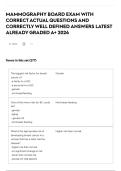
MAMMOGRAPHY BOARD EXAM WITH
CORRECT ACTUAL QUESTIONS AND
CORRECTLY WELL DEFINED ANSWERS LATEST
ALREADY GRADED A+ 2026
Save
Terms in this set (277)
The biggest risk factor for breast Gender
cancer is?
-a family hx of BC
-a personal hx of BC
-gender
-not breastfeeding
One of the minor risks for BC could Not breast feeding
be?
-gender
-aging
- genetic RF
-not breast feeding
What is the appropriate risk of Higher risk than normal
developing breast cancer in a
woman that has a sister has the
disease?
-higher risk than normal
-no significant change in risk
-lower than normal risk
-NONE OF THE ABOVE
,A woman with the greatest risk of ABOVE age 50
developing BC is?
-age 30 or below
-above age 50
-between ages 30-40
-above age 20 but below age 30
Symptoms of a possible breast Nipple discharge
disease that WILL NOT be
demonstrated on the Mammogram
may include
-nipple discharge
-skin thickening
-circumscribed tumors
-sellate lesions
Symptoms of VERY EARLY DCIS NONE OF THE ABOVE
may include?
-skin thickening
-nipple discharge
-macrocalcifications
-NONE of the above
, Skin thickening can be malignant Sarcoidosis
but could also be caused by
nonmalignant factors such as?
-esophageal metastases
-bronchial cancer
-Hodkins disease
-sarcoidosis
Risk factors associated with taking INCREASED risk for BC
hormone replacement therapy OR
HRT include?
-early menopause
-late menopause
-increased risks for birth defects
-increased risk for BC
The ACS recommends that New masses or lumps in the breast should be
checked by a health care provider
- women older than 40 yrs
SHOULD have a yearly MRI
- women younger than 40yrs
should have a screening
Mammogram EVERY year
-new masses or lumps in the breast
should be checked by the health
care provider
-women 20-39 should have CBE
EVERY year
CORRECT ACTUAL QUESTIONS AND
CORRECTLY WELL DEFINED ANSWERS LATEST
ALREADY GRADED A+ 2026
Save
Terms in this set (277)
The biggest risk factor for breast Gender
cancer is?
-a family hx of BC
-a personal hx of BC
-gender
-not breastfeeding
One of the minor risks for BC could Not breast feeding
be?
-gender
-aging
- genetic RF
-not breast feeding
What is the appropriate risk of Higher risk than normal
developing breast cancer in a
woman that has a sister has the
disease?
-higher risk than normal
-no significant change in risk
-lower than normal risk
-NONE OF THE ABOVE
,A woman with the greatest risk of ABOVE age 50
developing BC is?
-age 30 or below
-above age 50
-between ages 30-40
-above age 20 but below age 30
Symptoms of a possible breast Nipple discharge
disease that WILL NOT be
demonstrated on the Mammogram
may include
-nipple discharge
-skin thickening
-circumscribed tumors
-sellate lesions
Symptoms of VERY EARLY DCIS NONE OF THE ABOVE
may include?
-skin thickening
-nipple discharge
-macrocalcifications
-NONE of the above
, Skin thickening can be malignant Sarcoidosis
but could also be caused by
nonmalignant factors such as?
-esophageal metastases
-bronchial cancer
-Hodkins disease
-sarcoidosis
Risk factors associated with taking INCREASED risk for BC
hormone replacement therapy OR
HRT include?
-early menopause
-late menopause
-increased risks for birth defects
-increased risk for BC
The ACS recommends that New masses or lumps in the breast should be
checked by a health care provider
- women older than 40 yrs
SHOULD have a yearly MRI
- women younger than 40yrs
should have a screening
Mammogram EVERY year
-new masses or lumps in the breast
should be checked by the health
care provider
-women 20-39 should have CBE
EVERY year


