

Rasmussen Pathophysiology Exam 1 -
Modules 1, 2, 3 Questions and Answers with
Verified Solutions | Latest Updated 2026
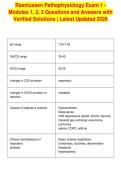
pH range 7.35-7.45
PaCO2 range 35-45
HCO3 range 22-26
changes in CO2 excretion respiratory
changes in HCO3 excretion or metabolic
retention
Causes of respiratory acidosis Hypoventilation
Sleep apnea
CNS depressants (opioid, alcohol, benzos)
Impaired gas exchange: pneumonia,
pulmonary
edema, COPD, asthma
Clinical manifestations of Rapid, shallow respirations
respiratory Drowsiness, dizziness, disorientation
acidosis Headache
Hyperkalemia
,Causes of respiratory alkalosis Prolonged hyperventilation is most
common
Clinical manifestations of Seizures
respiratory Tachycardia
alkalosis Numb/tingling extremities
Lethargy
Confusion
Causes of metabolic acidosis Severe diarrhea
Renal Failure
Shock
Cardiac arrest
Diabetic ketoacidosis
Changes in potassium levels
Watch for seizure activity
Clinical Manifestations of Hyperkalemia
metabolic Hypotension
acidosis Shock
Coma
Causes of metabolic alkalosis Excessive vomiting
Excessive NG suction (stomach pump)
Clinical manifestations of Tremors/muscle cramps
metabolic Tingling fingers/toes
alkalosis Vomiting/nausea
Restlessness followed by lethargy
Potassium range and main 3.5-5.0 mEq/L
function Electrical conduction in heart
, Causes of hyperkalemia Renal Failure
Addison's disease
Insulin deficiency
Metabolic acidosis
Massive trauma
NSAIDS (ibuprofen, aspirin)
Signs/symptoms of hyperkalemia Muscle cramps
Paresthesia (tingling/numb)
Bradycardia
EKG changes
Cardiac arrest/arrhythmias
Causes of hypokalemia Vomit/diarrhea
Laxative/diuretic use
Malnutrition
Alkalosis
Excess insulin
Signs and symptoms of Hyporeflexia
hypokalemia Hypotension
Cardiac arrhythmias
Cardiac arrest
Sodium range and main function 135-145 mEq/L
Water balance - regulated by kidneys and
aldosterone
Causes of hypernatremia Excessive sodium intake
Inadequate water intake
Excessive water loss/sweating
Cushing's syndrome
Modules 1, 2, 3 Questions and Answers with
Verified Solutions | Latest Updated 2026
pH range 7.35-7.45
PaCO2 range 35-45
HCO3 range 22-26
changes in CO2 excretion respiratory
changes in HCO3 excretion or metabolic
retention
Causes of respiratory acidosis Hypoventilation
Sleep apnea
CNS depressants (opioid, alcohol, benzos)
Impaired gas exchange: pneumonia,
pulmonary
edema, COPD, asthma
Clinical manifestations of Rapid, shallow respirations
respiratory Drowsiness, dizziness, disorientation
acidosis Headache
Hyperkalemia
,Causes of respiratory alkalosis Prolonged hyperventilation is most
common
Clinical manifestations of Seizures
respiratory Tachycardia
alkalosis Numb/tingling extremities
Lethargy
Confusion
Causes of metabolic acidosis Severe diarrhea
Renal Failure
Shock
Cardiac arrest
Diabetic ketoacidosis
Changes in potassium levels
Watch for seizure activity
Clinical Manifestations of Hyperkalemia
metabolic Hypotension
acidosis Shock
Coma
Causes of metabolic alkalosis Excessive vomiting
Excessive NG suction (stomach pump)
Clinical manifestations of Tremors/muscle cramps
metabolic Tingling fingers/toes
alkalosis Vomiting/nausea
Restlessness followed by lethargy
Potassium range and main 3.5-5.0 mEq/L
function Electrical conduction in heart
, Causes of hyperkalemia Renal Failure
Addison's disease
Insulin deficiency
Metabolic acidosis
Massive trauma
NSAIDS (ibuprofen, aspirin)
Signs/symptoms of hyperkalemia Muscle cramps
Paresthesia (tingling/numb)
Bradycardia
EKG changes
Cardiac arrest/arrhythmias
Causes of hypokalemia Vomit/diarrhea
Laxative/diuretic use
Malnutrition
Alkalosis
Excess insulin
Signs and symptoms of Hyporeflexia
hypokalemia Hypotension
Cardiac arrhythmias
Cardiac arrest
Sodium range and main function 135-145 mEq/L
Water balance - regulated by kidneys and
aldosterone
Causes of hypernatremia Excessive sodium intake
Inadequate water intake
Excessive water loss/sweating
Cushing's syndrome


