

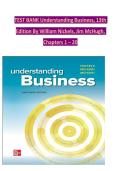
TEST BANK Understanding Business, 13th
Edition By William Nickels, Jim McHugh,
Chapters 1 – 20
,TABLE OF CONTENTS
CHAPTER 1: Taking Risks and Making Profits within the Dynamic Business Environment
CHAPTER 2: Understanding Economics and How It Affects Business
CHAPTER 3: Doing Business in Global Markets
CHAPTER 4: Demanding Ethical and Socially Responsible Behavior
CHAPTER 5: How to Form a Business
CHAPTER 6: Entrepreneurship and Starting a Small Business
CHAPTER 7: Management and Leadership
CHAPTER 8: Structuring Organizations for Today’s Challenges
CHAPTER 9: Production and Operations Management
CHAPTER 10: Motivating Employees
CHAPTER 11: Human Resource Management: Finding and Keeping the Best Employees
CHAPTER 12: Dealing with Employee–Management Issues
CHAPTER 13: Marketing: Helping Buyers Buy
CHAPTER 14: Developing and Pricing Goods and Services
CHAPTER 15: Distributing Products
CHAPTER 16: Using Effective Promotions
CHAPTER 17: Understanding Accounting and Financial Information
CHAPTER 18: Financial Management
CHAPTER 19: Using Securities Markets for Financing and Investing Opportunities
CHAPTER 20: Money, Financial Institutions, and the Federal Reserve
,Answers are at the end of Each chapter
Chapter 1
Student name:
1) Describe three ways that governments can foster entrepreneurship and encourage
the creation of wealth
2) Describe how businesses can use technology to be more responsive to customers.
3) Competition among businesses has never been greater. Identify and describe two
ways that businesses can become more competitive.
4) What is demography? Identify two demographic trends in the United States and
discuss how they will impactUnited States businesses.
5) Describe what we mean by greening and thinking green. List five ways that people and
businesses are participating in the green movement. List business opportunities that may
emerge from this movement.
6) Trace the evolution of American business. Identify the key trends, and discuss the
implications these trends have for the future.
, 7) An mentity mthat mseeks mto mearn ma mprofit mby mproviding ma mgood mor mservice mis mknown mas
ma(n)
A) industry.
B) corporation.
C) business.
D) service.
8) is mthe mamount ma mbusiness mearns mafter mdeducting mwhat mit mspends mfor
msalaries mand mother mexpenses.
A) Profit
B) Revenue
C) Interest
D) Dividends
9) A mbusiness mincurs ma m if mits mcosts mand mexpenses mexceed mits mrevenues.
A) loss
B) liability
C) debit
D) dividend
10) is mthe mchance ma mbusiness mowner mwill mlose mthe mtime mand mmoney
minvested min ma mbusiness mthat mproves mto mbe munprofitable.
A) Depreciation
B) Risk
C) Opportunity
D) Redundancy
11) The mtotal mamount mof mmoney mthat mbusinesses mtake min mby mselling mgoods mand mservices mis
mcalled
Edition By William Nickels, Jim McHugh,
Chapters 1 – 20
,TABLE OF CONTENTS
CHAPTER 1: Taking Risks and Making Profits within the Dynamic Business Environment
CHAPTER 2: Understanding Economics and How It Affects Business
CHAPTER 3: Doing Business in Global Markets
CHAPTER 4: Demanding Ethical and Socially Responsible Behavior
CHAPTER 5: How to Form a Business
CHAPTER 6: Entrepreneurship and Starting a Small Business
CHAPTER 7: Management and Leadership
CHAPTER 8: Structuring Organizations for Today’s Challenges
CHAPTER 9: Production and Operations Management
CHAPTER 10: Motivating Employees
CHAPTER 11: Human Resource Management: Finding and Keeping the Best Employees
CHAPTER 12: Dealing with Employee–Management Issues
CHAPTER 13: Marketing: Helping Buyers Buy
CHAPTER 14: Developing and Pricing Goods and Services
CHAPTER 15: Distributing Products
CHAPTER 16: Using Effective Promotions
CHAPTER 17: Understanding Accounting and Financial Information
CHAPTER 18: Financial Management
CHAPTER 19: Using Securities Markets for Financing and Investing Opportunities
CHAPTER 20: Money, Financial Institutions, and the Federal Reserve
,Answers are at the end of Each chapter
Chapter 1
Student name:
1) Describe three ways that governments can foster entrepreneurship and encourage
the creation of wealth
2) Describe how businesses can use technology to be more responsive to customers.
3) Competition among businesses has never been greater. Identify and describe two
ways that businesses can become more competitive.
4) What is demography? Identify two demographic trends in the United States and
discuss how they will impactUnited States businesses.
5) Describe what we mean by greening and thinking green. List five ways that people and
businesses are participating in the green movement. List business opportunities that may
emerge from this movement.
6) Trace the evolution of American business. Identify the key trends, and discuss the
implications these trends have for the future.
, 7) An mentity mthat mseeks mto mearn ma mprofit mby mproviding ma mgood mor mservice mis mknown mas
ma(n)
A) industry.
B) corporation.
C) business.
D) service.
8) is mthe mamount ma mbusiness mearns mafter mdeducting mwhat mit mspends mfor
msalaries mand mother mexpenses.
A) Profit
B) Revenue
C) Interest
D) Dividends
9) A mbusiness mincurs ma m if mits mcosts mand mexpenses mexceed mits mrevenues.
A) loss
B) liability
C) debit
D) dividend
10) is mthe mchance ma mbusiness mowner mwill mlose mthe mtime mand mmoney
minvested min ma mbusiness mthat mproves mto mbe munprofitable.
A) Depreciation
B) Risk
C) Opportunity
D) Redundancy
11) The mtotal mamount mof mmoney mthat mbusinesses mtake min mby mselling mgoods mand mservices mis
mcalled


