

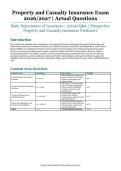
Property and Casualty Insurance Exam
2026/2027 | Actual Questions
State Department of Insurance | Actual Q&A | Prospective
Property and Casualty Insurance Producers
Introduction
This original 150-question study examination covers General Property and Casualty Concepts; Personal Auto and
Homeowners Insurance; Commercial Property and Liability Insurance; and Ethics, State Regulations, and Producer
Responsibilities. It is designed to reinforce state producer-licensing objectives involving risk management, policy
structure, personal and commercial coverages, exclusions, claims, and ethical sales practices. These are original
educational questions—not official, recalled, or state-endorsed licensing examination items. Because no state was
specified, regulatory questions emphasize widely used NAIC model principles and require verification against the
candidate’s current state insurance code, examination outline, approved licensing text, policy forms, and administrative
rules.
Content Area Overview
Content Area Questions Key Topics Weight
Risk management, hazards and
General Property and Casualty perils, contract law, indemnity,
1–30 (30) 20%
Concepts valuation, subrogation, and
policy structure
PAP Parts A–D, covered autos,
physical damage, homeowners
Personal Auto and Homeowners
31–75 (45) forms, property and liability 30%
Insurance
coverages, exclusions, and
endorsements
Commercial property, CGL,
Commercial Property and business auto, workers’
76–120 (45) 30%
Liability Insurance compensation, valuation, limits,
and endorsements
Licensing, authority, fiduciary
Ethics, State Regulations, and duties, privacy, unfair trade and
121–150 (30) 20%
Producer Responsibilities claim practices, records, and
consumer protection
Total 150 Four blueprint domains 100%
Property and Casualty Insurance Exam 2026/2027
,Domain: General Property and Casualty Concepts
1. Which situation is a pure risk?
A. A home may be damaged by fire, producing loss or no loss but no gain
B. Buying stock for appreciation
C. Opening a new business
D. Wagering on a game
Answer: A
Rationale: Pure risk presents only loss or no loss and is the type most commonly insurable. [1,2,3,4,5,6]
2. Which situation is a speculative risk?
A. A building may burn
B. Purchasing shares that may rise or fall in value
C. A driver may cause an accident
D. A worker may be injured
Answer: B
Rationale: Speculative risk offers possible gain, loss, or no change and is generally not covered by ordinary insurance.
[1,2,3,4,5,6]
3. What is a peril?
A. A condition increasing loss probability
B. The amount retained by the insured
C. The direct cause of loss, such as fire, wind, or collision
D. The value of property
Answer: C
Rationale: A peril is the event that causes damage; a hazard affects the likelihood or severity of that event. [1,2,3,4,5,6]
4. Which is a physical hazard?
A. Intentional claim inflation
B. Carelessness because insurance exists
C. A lawful policy endorsement
D. Frayed electrical wiring in a warehouse
Answer: D
Rationale: A physical condition increases the chance or severity of loss. [1,2,3,4,5,6]
5. Which behavior illustrates moral hazard?
A. An applicant intentionally conceals prior fires to obtain coverage
B. A roof is old and brittle
C. An insured becomes less careful after buying insurance
D. A storm damages a fence
Answer: A
Rationale: Moral hazard involves dishonesty or character that increases the possibility of intentional or fraudulent
loss. [1,2,3,4,5,6]
6. Which behavior illustrates morale hazard?
A. An arsonist burns a building
B. An insured leaves a car unlocked because insurance will pay for theft
C. A cracked sidewalk exists
D. An insurer cancels a policy
Answer: B
Rationale: Morale hazard is indifference or carelessness created by the presence of insurance, not deliberate fraud.
[1,2,3,4,5,6]
7. What is a loss exposure?
A. The claim check only
B. The premium audit
C. A condition or situation in which loss is possible regardless of whether a loss has occurred
D. An insurer’s investment return
Answer: C
Rationale: Risk management begins by identifying exposures involving property, liability, personnel, and income.
[1,2,3,4,5,6]
Property and Casualty Insurance Exam 2026/2027
, 8. After identifying and analyzing loss exposures, what should a risk manager do next?
A. Ignore low-frequency losses
B. Buy the same policy for every risk
C. File a claim before loss
D. Select and implement suitable control and financing techniques
Answer: D
Rationale: The process proceeds from identification and analysis to treatment, implementation, and monitoring.
[1,2,3,4,5,6]
9. Which action is risk avoidance?
A. A company stops manufacturing a product that creates unacceptable liability exposure
B. Buying insurance
C. Installing sprinklers
D. Choosing a deductible
Answer: A
Rationale: Avoidance eliminates the activity or property producing the exposure. [1,2,3,4,5,6]
10. Which action is risk retention?
A. Transferring liability by contract
B. A business pays routine small losses from its operating budget
C. Eliminating the activity
D. Purchasing full insurance
Answer: B
Rationale: Retention means the organization keeps financial responsibility, deliberately or unintentionally.
[1,2,3,4,5,6]
11. Which is a noninsurance risk transfer?
A. Buying a liability policy
B. Increasing a deductible
C. A lease requires the tenant to indemnify the landlord for specified liabilities
D. Installing alarms
Answer: C
Rationale: Contractual indemnity shifts financial consequences without using an insurance contract. [1,2,3,4,5,6]
12. How does loss prevention differ from loss reduction?
A. Prevention finances losses; reduction avoids them
B. They are always identical
C. Reduction increases frequency
D. Prevention lowers frequency, while reduction lowers severity after or during an event
Answer: D
Rationale: Driver training can prevent crashes; sprinklers can reduce fire severity. [1,2,3,4,5,6]
13. Why is the law of large numbers important to insurers?
A. A larger pool of similar independent exposures improves prediction of aggregate losses
B. It guarantees no insurer losses
C. It eliminates adverse selection
D. It makes every loss identical
Answer: A
Rationale: Greater credible exposure volume reduces relative variation between expected and actual outcomes.
[1,2,3,4,5,6]
14. What is the purpose of indemnity?
A. Guarantee replacement with better property
B. Restore the insured approximately to the pre-loss financial position without permitting profit
C. Pay every policy limit after any loss
D. Punish negligent third parties
Answer: B
Rationale: Property insurance generally compensates measured loss, subject to valuation, deductible, and limit.
[1,2,3,4,5,6]
Property and Casualty Insurance Exam 2026/2027
2026/2027 | Actual Questions
State Department of Insurance | Actual Q&A | Prospective
Property and Casualty Insurance Producers
Introduction
This original 150-question study examination covers General Property and Casualty Concepts; Personal Auto and
Homeowners Insurance; Commercial Property and Liability Insurance; and Ethics, State Regulations, and Producer
Responsibilities. It is designed to reinforce state producer-licensing objectives involving risk management, policy
structure, personal and commercial coverages, exclusions, claims, and ethical sales practices. These are original
educational questions—not official, recalled, or state-endorsed licensing examination items. Because no state was
specified, regulatory questions emphasize widely used NAIC model principles and require verification against the
candidate’s current state insurance code, examination outline, approved licensing text, policy forms, and administrative
rules.
Content Area Overview
Content Area Questions Key Topics Weight
Risk management, hazards and
General Property and Casualty perils, contract law, indemnity,
1–30 (30) 20%
Concepts valuation, subrogation, and
policy structure
PAP Parts A–D, covered autos,
physical damage, homeowners
Personal Auto and Homeowners
31–75 (45) forms, property and liability 30%
Insurance
coverages, exclusions, and
endorsements
Commercial property, CGL,
Commercial Property and business auto, workers’
76–120 (45) 30%
Liability Insurance compensation, valuation, limits,
and endorsements
Licensing, authority, fiduciary
Ethics, State Regulations, and duties, privacy, unfair trade and
121–150 (30) 20%
Producer Responsibilities claim practices, records, and
consumer protection
Total 150 Four blueprint domains 100%
Property and Casualty Insurance Exam 2026/2027
,Domain: General Property and Casualty Concepts
1. Which situation is a pure risk?
A. A home may be damaged by fire, producing loss or no loss but no gain
B. Buying stock for appreciation
C. Opening a new business
D. Wagering on a game
Answer: A
Rationale: Pure risk presents only loss or no loss and is the type most commonly insurable. [1,2,3,4,5,6]
2. Which situation is a speculative risk?
A. A building may burn
B. Purchasing shares that may rise or fall in value
C. A driver may cause an accident
D. A worker may be injured
Answer: B
Rationale: Speculative risk offers possible gain, loss, or no change and is generally not covered by ordinary insurance.
[1,2,3,4,5,6]
3. What is a peril?
A. A condition increasing loss probability
B. The amount retained by the insured
C. The direct cause of loss, such as fire, wind, or collision
D. The value of property
Answer: C
Rationale: A peril is the event that causes damage; a hazard affects the likelihood or severity of that event. [1,2,3,4,5,6]
4. Which is a physical hazard?
A. Intentional claim inflation
B. Carelessness because insurance exists
C. A lawful policy endorsement
D. Frayed electrical wiring in a warehouse
Answer: D
Rationale: A physical condition increases the chance or severity of loss. [1,2,3,4,5,6]
5. Which behavior illustrates moral hazard?
A. An applicant intentionally conceals prior fires to obtain coverage
B. A roof is old and brittle
C. An insured becomes less careful after buying insurance
D. A storm damages a fence
Answer: A
Rationale: Moral hazard involves dishonesty or character that increases the possibility of intentional or fraudulent
loss. [1,2,3,4,5,6]
6. Which behavior illustrates morale hazard?
A. An arsonist burns a building
B. An insured leaves a car unlocked because insurance will pay for theft
C. A cracked sidewalk exists
D. An insurer cancels a policy
Answer: B
Rationale: Morale hazard is indifference or carelessness created by the presence of insurance, not deliberate fraud.
[1,2,3,4,5,6]
7. What is a loss exposure?
A. The claim check only
B. The premium audit
C. A condition or situation in which loss is possible regardless of whether a loss has occurred
D. An insurer’s investment return
Answer: C
Rationale: Risk management begins by identifying exposures involving property, liability, personnel, and income.
[1,2,3,4,5,6]
Property and Casualty Insurance Exam 2026/2027
, 8. After identifying and analyzing loss exposures, what should a risk manager do next?
A. Ignore low-frequency losses
B. Buy the same policy for every risk
C. File a claim before loss
D. Select and implement suitable control and financing techniques
Answer: D
Rationale: The process proceeds from identification and analysis to treatment, implementation, and monitoring.
[1,2,3,4,5,6]
9. Which action is risk avoidance?
A. A company stops manufacturing a product that creates unacceptable liability exposure
B. Buying insurance
C. Installing sprinklers
D. Choosing a deductible
Answer: A
Rationale: Avoidance eliminates the activity or property producing the exposure. [1,2,3,4,5,6]
10. Which action is risk retention?
A. Transferring liability by contract
B. A business pays routine small losses from its operating budget
C. Eliminating the activity
D. Purchasing full insurance
Answer: B
Rationale: Retention means the organization keeps financial responsibility, deliberately or unintentionally.
[1,2,3,4,5,6]
11. Which is a noninsurance risk transfer?
A. Buying a liability policy
B. Increasing a deductible
C. A lease requires the tenant to indemnify the landlord for specified liabilities
D. Installing alarms
Answer: C
Rationale: Contractual indemnity shifts financial consequences without using an insurance contract. [1,2,3,4,5,6]
12. How does loss prevention differ from loss reduction?
A. Prevention finances losses; reduction avoids them
B. They are always identical
C. Reduction increases frequency
D. Prevention lowers frequency, while reduction lowers severity after or during an event
Answer: D
Rationale: Driver training can prevent crashes; sprinklers can reduce fire severity. [1,2,3,4,5,6]
13. Why is the law of large numbers important to insurers?
A. A larger pool of similar independent exposures improves prediction of aggregate losses
B. It guarantees no insurer losses
C. It eliminates adverse selection
D. It makes every loss identical
Answer: A
Rationale: Greater credible exposure volume reduces relative variation between expected and actual outcomes.
[1,2,3,4,5,6]
14. What is the purpose of indemnity?
A. Guarantee replacement with better property
B. Restore the insured approximately to the pre-loss financial position without permitting profit
C. Pay every policy limit after any loss
D. Punish negligent third parties
Answer: B
Rationale: Property insurance generally compensates measured loss, subject to valuation, deductible, and limit.
[1,2,3,4,5,6]
Property and Casualty Insurance Exam 2026/2027


