

ONS ONCC Chemo Renewal II Exam
Questions and Answers with Verified
Solutions | Latest Updated 2026
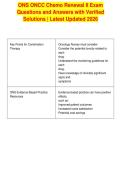
Key Points for Combination Oncology Nurses must consider
Therapy Consider the potential toxicity related to
each
drug.
Understand the monitoring guidelines for
each
drug.
Have knowledge of clinically significant
signs and
symptoms
ONS Evidence-Based Practice Evidence-based practice can have positive
Resources effects,
such as:
Improved patient outcomes
Increased nurse satisfaction
Potential cost savings
, Risk Factors For Colon Cancer Increased age is a risk factor for
developing
colorectal cancer. The chance of
developing
colorectal cancer increases markedly after
age 50.
Roughly 9 out of 10 people diagnosed with
colorectal cancer are at least 50 years old.
Smoking, alcohol intake, and a personal
history of
polyps are all things that increase risk.
Other risk
factors for the development of colorectal
cancer
include:
Racial and ethnic backgrounds (African
Americans
and Jews of Eastern European descent
[Ashkenazi
Jews] have highest incidence)
Diet high in red and processed meats
Physical inactivity, obesity
Type 2 diabetes
Family history of colon cancer or
inflammatory
bowel disease
Inherited familial syndromes (FAP,
HNPCC)
Questions and Answers with Verified
Solutions | Latest Updated 2026
Key Points for Combination Oncology Nurses must consider
Therapy Consider the potential toxicity related to
each
drug.
Understand the monitoring guidelines for
each
drug.
Have knowledge of clinically significant
signs and
symptoms
ONS Evidence-Based Practice Evidence-based practice can have positive
Resources effects,
such as:
Improved patient outcomes
Increased nurse satisfaction
Potential cost savings
, Risk Factors For Colon Cancer Increased age is a risk factor for
developing
colorectal cancer. The chance of
developing
colorectal cancer increases markedly after
age 50.
Roughly 9 out of 10 people diagnosed with
colorectal cancer are at least 50 years old.
Smoking, alcohol intake, and a personal
history of
polyps are all things that increase risk.
Other risk
factors for the development of colorectal
cancer
include:
Racial and ethnic backgrounds (African
Americans
and Jews of Eastern European descent
[Ashkenazi
Jews] have highest incidence)
Diet high in red and processed meats
Physical inactivity, obesity
Type 2 diabetes
Family history of colon cancer or
inflammatory
bowel disease
Inherited familial syndromes (FAP,
HNPCC)


