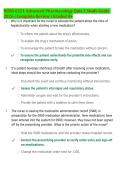
NURS 6521 Advanced Pharmacology Quiz 1 Study Guide
2026 | Complete Review | Graded A+
1. Why is it important for the nurse to educate the patient about the risks of
hepatotoxicity when starting a new medication?
To inform the patient about the drug's effectiveness.
To explain the drug's mechanism of action.
To encourage the patient to take the medication without concern.
To ensure the patient understands the potential side effects and can
recognize symptoms early.
2. If a patient develops shortness of breath after receiving a new medication,
what steps should the nurse take before contacting the provider?
Document the event and continue monitoring without intervention.
Assess the patient's vital signs and respiratory status.
Administer oxygen and wait for the provider's instructions.
Provide the patient with a sedative to calm them down.
3. The nurse is viewing the medication administration record (MAR) in
preparation for the 0900 medication administration. New medications have
been entered into the system for 0900; however, they have not been signed
off by the prescribing provider. What is the priority action of the nurse?
Hold the 0900 medications until the provider makes hospital rounds.
Contact the prescribing provider to verify order entry and sign off
on medications.
Change the medication order time for 1300.
, Go ahead with medication administration as the physician has 48
hours to sign the orders.
4. If a patient on sertraline develops gastrointestinal side effects after starting
azithromycin, what should the nurse's next step be?
Assess the patient for severity of side effects and notify the
provider.
Suggest the patient take the medications with food to reduce side
effects.
Advise the patient to stop taking azithromycin immediately.
Increase the dose of sertraline to counteract the side effects.
5. What is the primary purpose of reviewing a medication administration record
before administering medications?
To confirm the patient's identity.
To ensure patient safety and correct medication administration.
To check for drug interactions only.
To assess the patient's vital signs.
6. Which is the correct nursing action when administering a PO medication with
a narrow therapeutic range?
Double the interval of time between doses
Administer the medication intravenously
Assure the client of minimal side effects
Monitor and report plasma drug levels
, 7. If the provider determines that the patient has been using oxycontin beyond
the prescribed dosage, what should be the next step in managing the
patient's care?
Refill the oxycontin prescription as requested.
Discuss alternative pain management strategies with the patient.
Advise the patient to stop taking all medications.
Immediately refer the patient to a pain specialist without discussion.
8. What is appropriate discharge planning for a patient with newly diagnosed
diabetes?
Educating patient about prescribed medications and how to monitor
glucose
preparing the patient for multiple stays in the hospital
creating a plan of care for the patient that address's current problems
Explaining that the patients normal life activities will be altered forever
9. The first thing to do in providing discharge teaching to a patient who has just
been diagnosed with type 2 diabetes mellitus is:
Evaluate client learning.
Develop a teaching plan.
Formulate an educational nursing diagnosis.
Determine what the client knows and doesn't know about type 2
diabetes mellitus.
10. What are the key processes that influence the concentration of a drug in the
body?
2026 | Complete Review | Graded A+
1. Why is it important for the nurse to educate the patient about the risks of
hepatotoxicity when starting a new medication?
To inform the patient about the drug's effectiveness.
To explain the drug's mechanism of action.
To encourage the patient to take the medication without concern.
To ensure the patient understands the potential side effects and can
recognize symptoms early.
2. If a patient develops shortness of breath after receiving a new medication,
what steps should the nurse take before contacting the provider?
Document the event and continue monitoring without intervention.
Assess the patient's vital signs and respiratory status.
Administer oxygen and wait for the provider's instructions.
Provide the patient with a sedative to calm them down.
3. The nurse is viewing the medication administration record (MAR) in
preparation for the 0900 medication administration. New medications have
been entered into the system for 0900; however, they have not been signed
off by the prescribing provider. What is the priority action of the nurse?
Hold the 0900 medications until the provider makes hospital rounds.
Contact the prescribing provider to verify order entry and sign off
on medications.
Change the medication order time for 1300.
, Go ahead with medication administration as the physician has 48
hours to sign the orders.
4. If a patient on sertraline develops gastrointestinal side effects after starting
azithromycin, what should the nurse's next step be?
Assess the patient for severity of side effects and notify the
provider.
Suggest the patient take the medications with food to reduce side
effects.
Advise the patient to stop taking azithromycin immediately.
Increase the dose of sertraline to counteract the side effects.
5. What is the primary purpose of reviewing a medication administration record
before administering medications?
To confirm the patient's identity.
To ensure patient safety and correct medication administration.
To check for drug interactions only.
To assess the patient's vital signs.
6. Which is the correct nursing action when administering a PO medication with
a narrow therapeutic range?
Double the interval of time between doses
Administer the medication intravenously
Assure the client of minimal side effects
Monitor and report plasma drug levels
, 7. If the provider determines that the patient has been using oxycontin beyond
the prescribed dosage, what should be the next step in managing the
patient's care?
Refill the oxycontin prescription as requested.
Discuss alternative pain management strategies with the patient.
Advise the patient to stop taking all medications.
Immediately refer the patient to a pain specialist without discussion.
8. What is appropriate discharge planning for a patient with newly diagnosed
diabetes?
Educating patient about prescribed medications and how to monitor
glucose
preparing the patient for multiple stays in the hospital
creating a plan of care for the patient that address's current problems
Explaining that the patients normal life activities will be altered forever
9. The first thing to do in providing discharge teaching to a patient who has just
been diagnosed with type 2 diabetes mellitus is:
Evaluate client learning.
Develop a teaching plan.
Formulate an educational nursing diagnosis.
Determine what the client knows and doesn't know about type 2
diabetes mellitus.
10. What are the key processes that influence the concentration of a drug in the
body?