

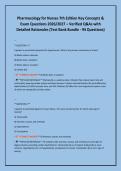
Pharmacology for Nurses 7th Edition Key Concepts &
Exam Questions 2026/2027 – Verified Q&As with
Detailed Rationales (Test Bank Bundle - 94 Questions)
---
**QUESTION 1:**
A patient is prescribed metoprolol for hypertension. What is the primary mechanism of action?
A) Blocks calcium channels
B) Blocks beta-1 receptors
C) Blocks alpha-1 receptors
D) Inhibits ACE
> 🎯 **CORRECT ANSWER:** B) Blocks beta-1 receptors
> 💡 **DETAILED RATIONALE:** Metoprolol is a selective beta-1 blocker that reduces heart rate and
contractility, lowering cardiac output and blood pressure. Calcium channel blockers (A) work differently,
alpha blockers (C) affect vascular tone, and ACE inhibitors (D) affect the renin-angiotensin system, none
of which are metoprolol's primary action.
---
**QUESTION 2:**
A patient is prescribed digoxin for heart failure. The nurse should monitor for which early sign of
toxicity?
A) Tachycardia
B) Anorexia, nausea, and vomiting
C) Hyperkalemia
D) Constipation
> 🎯 **CORRECT ANSWER:** B) Anorexia, nausea, and vomiting
> 💡 **DETAILED RATIONALE:** GI symptoms like anorexia, nausea, and vomiting are early signs of
digoxin toxicity, preceding cardiac dysrhythmias. Tachycardia (A) is not typical; bradycardia is more
common. Hypokalemia (C), not hyperkalemia, predisposes to toxicity. Constipation (D) is not a sign of
toxicity.
,---
**QUESTION 3:**
Which of the following medications is used to reverse the effects of a benzodiazepine overdose?
A) Naloxone
B) Flumazenil
C) Acetylcysteine
D) Atropine
> 🎯 **CORRECT ANSWER:** B) Flumazenil
> 💡 **DETAILED RATIONALE:** Flumazenil is a competitive antagonist at benzodiazepine receptors.
Naloxone (A) reverses opioids. Acetylcysteine (C) is for acetaminophen toxicity. Atropine (D) reverses
muscarinic effects of cholinergic agents.
---
**QUESTION 4:**
A patient is prescribed furosemide for heart failure. Which electrolyte imbalance is most concerning?
A) Hyperkalemia
B) Hypokalemia
C) Hypernatremia
D) Hypocalcemia
> 🎯 **CORRECT ANSWER:** B) Hypokalemia
> 💡 **DETAILED RATIONALE:** Furosemide is a loop diuretic that inhibits sodium-potassium-chloride
cotransport in the ascending loop of Henle, causing significant potassium loss and hypokalemia. It is the
most critical electrolyte imbalance to monitor due to arrhythmia risk. Hyperkalemia (A) occurs with
potassium-sparing diuretics.
---
**QUESTION 5:**
A patient is on warfarin therapy. Which lab value is used to monitor its therapeutic effect?
A) aPTT
,B) INR
C) Platelet count
D) D-dimer
> 🎯 **CORRECT ANSWER:** B) INR
> 💡 **DETAILED RATIONALE:** INR (International Normalized Ratio) is used to monitor warfarin, a
vitamin K antagonist, with a target of 2.0-3.0 for most indications. aPTT (A) monitors heparin. Platelet
count (C) monitors for HIT. D-dimer (D) is used to detect clots.
---
**QUESTION 6:**
A patient is prescribed lisinopril. What is a common adverse effect?
A) Hyperkalemia
B) Dry cough
C) Tachycardia
D) Weight gain
> 🎯 **CORRECT ANSWER:** B) Dry cough
> 💡 **DETAILED RATIONALE:** Lisinopril is an ACE inhibitor that can cause a dry, persistent cough due
to increased bradykinin levels. Hyperkalemia (A) can occur but is less common. Tachycardia (C) is not
typical. Weight gain (D) is not expected.
---
**QUESTION 7:**
A patient is prescribed metformin for type 2 diabetes. What is a serious adverse effect?
A) Lactic acidosis
B) Hypoglycemia
C) Weight gain
D) Hyperkalemia
> 🎯 **CORRECT ANSWER:** A) Lactic acidosis
, > 💡 **DETAILED RATIONALE:** Metformin can cause lactic acidosis, especially in renal impairment; it is
a rare but serious adverse effect. Hypoglycemia (B) is rare with metformin alone. Weight gain (C) is not
common. Hyperkalemia (D) is not a typical effect.
---
**QUESTION 8:**
A patient is prescribed morphine for pain. What is the most common side effect?
A) Constipation
B) Diarrhea
C) Tachypnea
D) Hypertension
> 🎯 **CORRECT ANSWER:** A) Constipation
> 💡 **DETAILED RATIONALE:** Constipation is the most common and bothersome side effect of
opioids like morphine, due to decreased GI motility. Diarrhea (B) is not common. Tachypnea (C) is not;
respiratory depression is. Hypotension (D), not hypertension, may occur.
---
**QUESTION 9:**
A patient is prescribed amiodarone. Which lab value should be monitored regularly?
A) Liver function tests
B) Renal function tests
C) Thyroid function tests
D) Complete blood count
> 🎯 **CORRECT ANSWER:** C) Thyroid function tests
> 💡 **DETAILED RATIONALE:** Amiodarone is rich in iodine and can cause hyperthyroidism or
hypothyroidism; thyroid function should be monitored every 6 months. LFTs (A) and renal function (B)
are also checked but thyroid is most specific to amiodarone. CBC (D) is less relevant.
---
**QUESTION 10:**
Which of the following drugs is a proton pump inhibitor?
Exam Questions 2026/2027 – Verified Q&As with
Detailed Rationales (Test Bank Bundle - 94 Questions)
---
**QUESTION 1:**
A patient is prescribed metoprolol for hypertension. What is the primary mechanism of action?
A) Blocks calcium channels
B) Blocks beta-1 receptors
C) Blocks alpha-1 receptors
D) Inhibits ACE
> 🎯 **CORRECT ANSWER:** B) Blocks beta-1 receptors
> 💡 **DETAILED RATIONALE:** Metoprolol is a selective beta-1 blocker that reduces heart rate and
contractility, lowering cardiac output and blood pressure. Calcium channel blockers (A) work differently,
alpha blockers (C) affect vascular tone, and ACE inhibitors (D) affect the renin-angiotensin system, none
of which are metoprolol's primary action.
---
**QUESTION 2:**
A patient is prescribed digoxin for heart failure. The nurse should monitor for which early sign of
toxicity?
A) Tachycardia
B) Anorexia, nausea, and vomiting
C) Hyperkalemia
D) Constipation
> 🎯 **CORRECT ANSWER:** B) Anorexia, nausea, and vomiting
> 💡 **DETAILED RATIONALE:** GI symptoms like anorexia, nausea, and vomiting are early signs of
digoxin toxicity, preceding cardiac dysrhythmias. Tachycardia (A) is not typical; bradycardia is more
common. Hypokalemia (C), not hyperkalemia, predisposes to toxicity. Constipation (D) is not a sign of
toxicity.
,---
**QUESTION 3:**
Which of the following medications is used to reverse the effects of a benzodiazepine overdose?
A) Naloxone
B) Flumazenil
C) Acetylcysteine
D) Atropine
> 🎯 **CORRECT ANSWER:** B) Flumazenil
> 💡 **DETAILED RATIONALE:** Flumazenil is a competitive antagonist at benzodiazepine receptors.
Naloxone (A) reverses opioids. Acetylcysteine (C) is for acetaminophen toxicity. Atropine (D) reverses
muscarinic effects of cholinergic agents.
---
**QUESTION 4:**
A patient is prescribed furosemide for heart failure. Which electrolyte imbalance is most concerning?
A) Hyperkalemia
B) Hypokalemia
C) Hypernatremia
D) Hypocalcemia
> 🎯 **CORRECT ANSWER:** B) Hypokalemia
> 💡 **DETAILED RATIONALE:** Furosemide is a loop diuretic that inhibits sodium-potassium-chloride
cotransport in the ascending loop of Henle, causing significant potassium loss and hypokalemia. It is the
most critical electrolyte imbalance to monitor due to arrhythmia risk. Hyperkalemia (A) occurs with
potassium-sparing diuretics.
---
**QUESTION 5:**
A patient is on warfarin therapy. Which lab value is used to monitor its therapeutic effect?
A) aPTT
,B) INR
C) Platelet count
D) D-dimer
> 🎯 **CORRECT ANSWER:** B) INR
> 💡 **DETAILED RATIONALE:** INR (International Normalized Ratio) is used to monitor warfarin, a
vitamin K antagonist, with a target of 2.0-3.0 for most indications. aPTT (A) monitors heparin. Platelet
count (C) monitors for HIT. D-dimer (D) is used to detect clots.
---
**QUESTION 6:**
A patient is prescribed lisinopril. What is a common adverse effect?
A) Hyperkalemia
B) Dry cough
C) Tachycardia
D) Weight gain
> 🎯 **CORRECT ANSWER:** B) Dry cough
> 💡 **DETAILED RATIONALE:** Lisinopril is an ACE inhibitor that can cause a dry, persistent cough due
to increased bradykinin levels. Hyperkalemia (A) can occur but is less common. Tachycardia (C) is not
typical. Weight gain (D) is not expected.
---
**QUESTION 7:**
A patient is prescribed metformin for type 2 diabetes. What is a serious adverse effect?
A) Lactic acidosis
B) Hypoglycemia
C) Weight gain
D) Hyperkalemia
> 🎯 **CORRECT ANSWER:** A) Lactic acidosis
, > 💡 **DETAILED RATIONALE:** Metformin can cause lactic acidosis, especially in renal impairment; it is
a rare but serious adverse effect. Hypoglycemia (B) is rare with metformin alone. Weight gain (C) is not
common. Hyperkalemia (D) is not a typical effect.
---
**QUESTION 8:**
A patient is prescribed morphine for pain. What is the most common side effect?
A) Constipation
B) Diarrhea
C) Tachypnea
D) Hypertension
> 🎯 **CORRECT ANSWER:** A) Constipation
> 💡 **DETAILED RATIONALE:** Constipation is the most common and bothersome side effect of
opioids like morphine, due to decreased GI motility. Diarrhea (B) is not common. Tachypnea (C) is not;
respiratory depression is. Hypotension (D), not hypertension, may occur.
---
**QUESTION 9:**
A patient is prescribed amiodarone. Which lab value should be monitored regularly?
A) Liver function tests
B) Renal function tests
C) Thyroid function tests
D) Complete blood count
> 🎯 **CORRECT ANSWER:** C) Thyroid function tests
> 💡 **DETAILED RATIONALE:** Amiodarone is rich in iodine and can cause hyperthyroidism or
hypothyroidism; thyroid function should be monitored every 6 months. LFTs (A) and renal function (B)
are also checked but thyroid is most specific to amiodarone. CBC (D) is less relevant.
---
**QUESTION 10:**
Which of the following drugs is a proton pump inhibitor?


