

E C I T CA R P AO · 4 8 1 D
WGU
◆ ◆
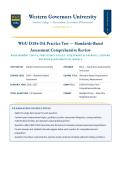
Western Governors University
D184 Teachers College — Curriculum, Assessment & Instruction
EST. 1997
A NEW KIND OF U
WGU D184 OA Practice Test — Standards-Based
Assessment Comprehensive Review
M E A S U R E M E N T TO P I CS , P R O F I C I E N CY S C A L E S , A SS E SS M E N T B LU E P R I N TS , S CO R I N G
M E T H O D S & M AT H E M AT I C A L M O D E LS
INSTITUTION Western Governors University PROGRAM M.Ed. — Curriculum, Assessment &
Instruction
COURSE CODE D184 — Standards-Based COURSE TITLE Standards-Based Assessment &
Assessment Proficiency Measurement
ACADEMIC YEAR EXAM TITLE D184 OA Practice Test —
Comprehensive Review
TOTAL QUESTIONS 120 Questions FORMAT Multiple Choice — Select the
Single Best Answer
EXAMINATION INSTRUCTIONS
▸ Select the single best answer for each question.
▸ Content spans measurement topics, proficiency scales, assessment blueprints, scoring methods,
mathematical models, and standards-based grading systems.
▸ Questions reflect WGU D184 OA practice test format and competency-based assessment expectations.
▸ Correct answers and detailed rationales appear below each question for comprehensive test
preparation.
▸ Questions have been randomized to promote active recall and simulate authentic testing conditions.
, SECTION I — D184 OA PRACTICE TEST COMPREHENSIVE
Questions 1 – 120
EXAMINATION
1. How are measurement topics beneficial to teachers?
A. They eliminate the need for lesson planning by providing ready-made activities
B. They help teachers identify a small set of themes to focus on during instruction
C. They replace all forms of assessment with observation only
D. They determine student grades automatically without teacher judgment
CORRECT ANSWER B — They help teachers identify a small set of themes to focus on during
instruction
RATIONALE Measurement topics distill broad standards into manageable, focused themes
that guide instruction. Rather than trying to address everything in a subject area
simultaneously, teachers can concentrate on a small set of specific, assessable
topics — ensuring depth of coverage rather than superficial breadth. This focus
allows for more intentional lesson planning, targeted assessment design, and
clearer communication with students about what they are learning. Measurement
topics do not eliminate lesson planning, replace assessment, or automate grading
— they are organizational tools that make standards more actionable for both
teachers and students.
,2. An ELA teacher is unpacking CCSS.ELA-Literacy.RL.7.10. Which terms reflect the content of
this standard?
A. Vocabulary, spelling, and grammar
B. Stories, dramas, poems
C. Writing, speaking, and listening
D. Research, citation, and editing
CORRECT ANSWER B — Stories, dramas, poems
RATIONALE Standard RL.7.10 specifies that students should "read and comprehend literature,
including stories, dramas, and poems" at the grades 6-8 text complexity band.
The content terms — stories, dramas, and poems — identify the specific types of
literature students should engage with. These terms define the genre focus of the
standard and help teachers identify what texts to include in instruction and
assessment. Vocabulary, spelling, grammar, writing, research — these are
addressed in other ELA standards, not RL.7.10. Extracting the content terms from
a standard is the first step in identifying the measurement topic and designing
aligned assessments.
, 3. A U.S. history standard states: "The student understands the differences between the
economic, technological, and human resources of both sides of a conflict." Which focus
statement reflects this standard?
A. Knows the dates of major battles during the conflict
B. Knows about the materials that contributed to an event and its outcome
C. Knows the names of military leaders on both sides
D. Knows the geographic boundaries before and after the conflict
CORRECT ANSWER B — Knows about the materials that contributed to an event and its
outcome
RATIONALE The standard focuses on the DIFFERENCES between the resources (economic,
technological, human) of opposing sides in a conflict. The focus statement
"Knows about the materials that contributed to an event and its outcome"
captures the essence — understanding what resources each side possessed and
how those resources affected the conflict's result. This is declarative knowledge:
comprehending the relationship between resources and outcomes. Knowing
dates, leader names, or geographic boundaries addresses different historical
knowledge that is not the focus of this particular standard. A well-written focus
statement should directly reflect the standard's content and cognitive demand.
WGU
◆ ◆
Western Governors University
D184 Teachers College — Curriculum, Assessment & Instruction
EST. 1997
A NEW KIND OF U
WGU D184 OA Practice Test — Standards-Based
Assessment Comprehensive Review
M E A S U R E M E N T TO P I CS , P R O F I C I E N CY S C A L E S , A SS E SS M E N T B LU E P R I N TS , S CO R I N G
M E T H O D S & M AT H E M AT I C A L M O D E LS
INSTITUTION Western Governors University PROGRAM M.Ed. — Curriculum, Assessment &
Instruction
COURSE CODE D184 — Standards-Based COURSE TITLE Standards-Based Assessment &
Assessment Proficiency Measurement
ACADEMIC YEAR EXAM TITLE D184 OA Practice Test —
Comprehensive Review
TOTAL QUESTIONS 120 Questions FORMAT Multiple Choice — Select the
Single Best Answer
EXAMINATION INSTRUCTIONS
▸ Select the single best answer for each question.
▸ Content spans measurement topics, proficiency scales, assessment blueprints, scoring methods,
mathematical models, and standards-based grading systems.
▸ Questions reflect WGU D184 OA practice test format and competency-based assessment expectations.
▸ Correct answers and detailed rationales appear below each question for comprehensive test
preparation.
▸ Questions have been randomized to promote active recall and simulate authentic testing conditions.
, SECTION I — D184 OA PRACTICE TEST COMPREHENSIVE
Questions 1 – 120
EXAMINATION
1. How are measurement topics beneficial to teachers?
A. They eliminate the need for lesson planning by providing ready-made activities
B. They help teachers identify a small set of themes to focus on during instruction
C. They replace all forms of assessment with observation only
D. They determine student grades automatically without teacher judgment
CORRECT ANSWER B — They help teachers identify a small set of themes to focus on during
instruction
RATIONALE Measurement topics distill broad standards into manageable, focused themes
that guide instruction. Rather than trying to address everything in a subject area
simultaneously, teachers can concentrate on a small set of specific, assessable
topics — ensuring depth of coverage rather than superficial breadth. This focus
allows for more intentional lesson planning, targeted assessment design, and
clearer communication with students about what they are learning. Measurement
topics do not eliminate lesson planning, replace assessment, or automate grading
— they are organizational tools that make standards more actionable for both
teachers and students.
,2. An ELA teacher is unpacking CCSS.ELA-Literacy.RL.7.10. Which terms reflect the content of
this standard?
A. Vocabulary, spelling, and grammar
B. Stories, dramas, poems
C. Writing, speaking, and listening
D. Research, citation, and editing
CORRECT ANSWER B — Stories, dramas, poems
RATIONALE Standard RL.7.10 specifies that students should "read and comprehend literature,
including stories, dramas, and poems" at the grades 6-8 text complexity band.
The content terms — stories, dramas, and poems — identify the specific types of
literature students should engage with. These terms define the genre focus of the
standard and help teachers identify what texts to include in instruction and
assessment. Vocabulary, spelling, grammar, writing, research — these are
addressed in other ELA standards, not RL.7.10. Extracting the content terms from
a standard is the first step in identifying the measurement topic and designing
aligned assessments.
, 3. A U.S. history standard states: "The student understands the differences between the
economic, technological, and human resources of both sides of a conflict." Which focus
statement reflects this standard?
A. Knows the dates of major battles during the conflict
B. Knows about the materials that contributed to an event and its outcome
C. Knows the names of military leaders on both sides
D. Knows the geographic boundaries before and after the conflict
CORRECT ANSWER B — Knows about the materials that contributed to an event and its
outcome
RATIONALE The standard focuses on the DIFFERENCES between the resources (economic,
technological, human) of opposing sides in a conflict. The focus statement
"Knows about the materials that contributed to an event and its outcome"
captures the essence — understanding what resources each side possessed and
how those resources affected the conflict's result. This is declarative knowledge:
comprehending the relationship between resources and outcomes. Knowing
dates, leader names, or geographic boundaries addresses different historical
knowledge that is not the focus of this particular standard. A well-written focus
statement should directly reflect the standard's content and cognitive demand.


