

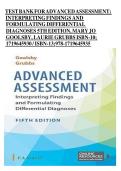
TEST BANK FOR ADVANCED ASSESSMENT:
L
YFT L
YFT L
YF
T L
YFT L
YF
T
INTERPRETING FINDINGS AND
L
YF
T YFT L Y FT L YFT L
FORMULATING DIFFERENTIAL
YFT L Y FT L Y FT L
DIAGNOSES 5TH EDITION, MARY JO
YFT L YFT L Y FT L Y FT L Y FT L Y FT L
GOOLSBY, LAURIE GRUBBS ISBN-10;
YFT L YFT L Y FT L Y FT L
1719645930 / ISBN-13;978-1719645935
YFT L Y FT L Y FT L L
T
F
Y
,Chapter 1. Assessment and Clinical Decision-Making: Overview
YFT L L
T
F
Y Y FT L Y FT L YFT L Y FT L
Multiple Choice
L
YF
T
Identify the choice that best completes the statement or answers the question.
L
YFT YFT L L
YFT L
YFT L
YFT YFT L L
YFT L
YFT L
YFT L
YFT YFT L
1. Which type of clinical decision-making is most reliable?
YFT L YFT L YFT L YFT L L
YFT L
YFT YFT L
A. Intuitive
B. Analytical
C. Experiential
D. Augenblick
2. Which of the following is false? To obtain adequate history, health-care providers must be:
L
YFT YFT L YFT L YFT L L
YFT L
YFT YFTL YFT L L
YFT L
YFT L
YFT L
YFT L
YFT
A. Methodical and systematic YFT L YFT L
B. Attentive to the patient’s verbal and nonverbal language YFT L L
YFT L
YFT YFT L YFT L L
YFT YFT L
C. Able to accurately interpret the patient’s responses YFT L YFT L YF
TL L
YFT YFT L YFT L
D. Adept at reading into the patient’s statements YFT L YFT L YFT L YFT L YFT L YFT L
3. Essential parts of a health history include all of the following except: YFT L L
YFT YFT L YFT L Y FT L L
T
F
Y YFT L YF T L YFT L YFT L YF T L
A. Chief complaint YFT L
B. History of the present illness L
YF
T YFT L YFT L YFT L
C. Current vital signs L
YFT L
YFT
D. All of the above are essential history components
YFT L YFT L YFT L YFT L YFT L YFT L L
YFT
4. Which of the following is false? While performing the physical examination, the examiner must
YFT L L
YFT YFT L L
YFT YFT L YF T L YFT L YFT L L
YFT L
YFT L
YFT L
YFT L
YFT
be able to: L
YFT YF T L YF T L
A. Differentiate between normal and abnormal findings L
YFT YFT L L
YFT YFT L L
YFT
B. Recall knowledge of a range of conditions and their associated signs and symptoms L
YFT YFT L YFTL YFT L L
YFT YFT L L
YFT L
YFT YFTL YFT L L
YFT YFT L
C. Recognize how certain conditions affect the response to other conditions YFT L YFT L YFT L YF T L YFTL L
YFT L
YFT YFT L L
YFT
D. Foresee unpredictable findings YFT L YFT L
5. The following is the least reliable source of information for diagnostic statistics:
L
YFT YFTL YFT L YFT L L
YFT YFT L L
YFT YFT L YF T L L
YFT L
YFT
A. Evidence-based investigations L
YFT
B. Primary reports of research L
YFT YFT L L
YFT
C. Estimation based on a provider’s experience YFT L L
YFT L
YFT L
YFT YFT L
D. Published meta-analyses L
YFT
6. The following can be used to assist in sound clinical decision-making:
L
YFT YFT L YFTL L
YFT YFT L YFT L L
YFT YFTL YFT L YF T L
A. Algorithm published in a peer-reviewed journal article YFTL YFT L L
YFT L
YFT L
YFT YFTL
B. Clinical practice guidelines YFT L YFT L
C. Evidence-based research L
YFT
D. All of the above YF T L YFT L YFT L
7. If a diagnostic study has high sensitivity, this indicates a:
L
YFT YFT L YFT L L
YF
T YFT L L
YFT L
YFT YFT L L
YFT
A. High percentage of persons with the given condition will have an abnormal result
L
YFT YFT L YFT L YFT L YFT L L
YFT L
YFT L
YFT Y FT L L
YFT L
YFT YF T L
B. Low percentage of persons with the given condition will have an abnormal result
L
YFT YFT L YFT L YFT L YFT L L
YFT L
YFT YFT L Y FT L L
YFT L
YFT YF T L
C. Low likelihood of normal result in persons without a given condition
L
YFT L
YFT YFT L YFT L YFT L L
YFT L
YFT YFT L L
YFT L
YFT
D. None of the above L
YFT YFT L Y FT L
, 8. If a diagnostic study has high specificity, this indicates a:
YFT L L
YFT L
YFT L
T
F
Y YFTL L
YFT L
YFT L
YFT L
YFT
A. Low percentage of healthy individuals will show a normal result
L
YFT L
YFT YFT L YFT L L
YFT L
YF T L
YFT YFT L L
YFT
B. High percentage of healthy individuals will show a normal result
YFT L L
YFT YFT L L
YF
T YFT L YF TL L
YFT YFT L YFT L
C. High percentage of individuals with a disorder will show a normal result
L
YFT YFT L YFT L YFT L YFT L YFT L YFT L YFT L YFT L L
YFT YFT L
D. Low percentage of individuals with a disorder will show an abnormal result
L
YFT L
YFT L
YFT YFT L L
YFT YFT L L
YFT YFT L L
YFT L
YFT L
YF T
9. A likelihood ratio above 1 indicates that a diagnostic test showing a:
L
T
F
Y YFT L L
YFT YFT L L
YFT L
YFT YFT L YFT L YFT L L
YFT L
YFT
A. Positive result is strongly associated with the disease YFT L YFT L YFT L L
YFT YFT L YFT L L
YFT
B. Negative result is strongly associated with absence of the disease L
YFT YF T L L
YFT L
YFT YFT L YFT L L
YFT YFT L L
YFT
C. Positive result is weakly associated with the disease YFT L YFT L YFT L L
YFT L
YFT L
YFT L
YFT
D. Negative result is weakly associated with absence of the disease L
YFT YF T L L
YFT L
YFT L
YFT YFT L L
YFT L
YFT L
YFT
Y F T L 10. Which of the following clinical reasoning tools is defined as evidence-based resource based
YFT L Y FT L L
YF T Y FT L Y FT L YF TL YFT L L
YF T YF T L YF T L Y FT L L
YF T L
YFT
on mathematical modeling to express the likelihood of a condition in select situations, settings,
YFT L YFT L YFT L L
YFT L
YFT L
YFT YFT L YFT L L
YFT L
YFT L
YFT L
YFT L
YFT L
YFT
and/or patients?
L
YFT L
YFT
A. Clinical practice guideline L
YFT YFT L
B. Clinical decision rule L
YFT YFT L
C. Clinical algorithm L
YFT
D. Clinical recommendation L
YFT
, Answer Section
L
YFT
MULTIPLE CHOICE
L
T
F
Y
1. ANS: B Y F T L Y F T L
Croskerry (2009) describes two major types of clinical diagnostic decision-making: intuitiveYF T L YF TL Y FT L YFT L YF T L YF T L Y FT L YF T L YF T L YF T L
and analytical. Intuitive decision-making (similar to Augenblink decision-making) is based on
YFT L YF T L YF T L YF T L L
YF T Y FTL YFT L YF T L YFT L Y FT L L
YF T
the experience and intuition of the clinician and is less reliable and paired with fairly common
YFT L YFT L L
YF T Y FT L Y FT L YFT L YF T L YF TL YFT L Y FT L L
YF T Y FT L YF T L YFT L L
YF T YFT L
errors. In contrast, analytical decision-making is based on careful consideration and has greater
YFT L YFT L YFT L L
YFT YFT L YFT L YFT L YFT L YFTL YFT L YFT L YFT L L
YFT
reliability with rare errors.
YFT L Y FT L YF T L YF T L
PTS: 1
2. ANS: D Y F T L Y F T L
To obtain adequate history, providers must be well organized, attentive to the patient’s verbal and
L
YF
T YFTL L
YF
T L
YFT L
YFT L
YFT L
YFT YFT L YF
TL YF
TL L
YFT L
YF
T L
YFT L
YFT
nonverbal language, and able to accurately interpret the patient’s responses to questions.
YFT L Y FT L YF T L L
YF T Y FT L YFT L YF T L YFT L YFT L YF T L YF T L L
YFT
Rather than reading into the patient’s statements, they clarify any areas of uncertainty.
YFT L YF T L Y FT L YF TL YFT L YF T L YFT L YFT L YFT L YFT L Y FT L YFT L YF TL
PTS: 1
3. ANS: C Y F T L Y F T L
Vital signs are part of the physical examination portion of patient assessment, not part of the health
L
YFT L
YFT L
YFT YFT L YFTL L
YFT L
YFT L
YFT YFT L L
YFT YFT L YFT L L
YFT L
YFT YFTL L
YFT
history.
YFT L
PTS: 1
4. ANS: D Y F T L Y F T L
While performing the physical examination, the examiner must be able to differentiate between
YFT L YFT L YFT L L
YF T YFT L YFTL YFT L YFT L L
YFT YFT L YFT L YFT L
normal and abnormal findings, recall knowledge of a range of conditions, including their
YFT L YF T L YF T L Y FT L YFT L L
YF T YFT L Y FT L YF T L YFT L L
YF T YFT L YFT L
associated signs and symptoms, recognize how certain conditions affect the response to other
YFT L YFT L Y FT L YF T L L
YF T Y FT L YFT L YF TL YF T L YFT L YFT L YF T L L
YFT
conditions, and distinguish the relevance of varied abnormal findings.
YFT L YFT L YF T L YF T L YF T L L
YF T YF T L YFT L Y FT L
PTS: 1
5. ANS: C Y F T L Y F T L
Sources for diagnostic statistics include textbooks, primary reports of research, and published
YFT L YFT L Y FT L YF T L YFT L L
YFT Y FT L YFT L L
YF T YFT L YF T L
meta-analyses. Another source of statistics, the one that has been most widely used and
YFT L YFT L YFT L YFT L YF T L YF T L YFT L Y FT L YFT L YF TL YF T L L
YFT YFT L Y FT L
available for application to the reasoning process, is the estimation based on a provider’s
YFT L YF T L L
YF T Y FT L YFT L YFT L Y FT L YFT L Y FT L YF T L L
YF T Y FT L L
YF T YFT L
experience, although these are rarely accurate. Over the past decade, the availability of
YFT L YFT L YF T L Y FT L L
YF T YF T L YFT L YF T L YFT L YFT L YFT L YF T L YFT L
evidence on which to base clinical reasoning is improving, and there is an increasing
YFT L Y FT L YF T L Y FT L YFT L YFT L L
YFT YFTL YFT L YFT L YFT L YFT L L
YFT L
YFT
expectation that clinical reasoning be based on scientific evidence. Evidence-based statistics
L
YFT YFT L YFT L L
YFT YFT L Y FT L YF T L Y FT L YFT L YFT L Y FT L
are also increasingly being used to develop resources to facilitate clinical decision-making.
YFT L YFT L YF TL YFT L YF T L Y FT L YFTL YFT L YFT L YFTL YFT L YF T L
PTS: 1
6. ANS: D Y F T L Y F T L
To assist in clinical decision-making, a number of evidence-based resources have been developed
L
YF
T L
YFT L
YFT YFT L YFT L L
YFT L
YFT L
YFT YFT L L
YFT L
YFT YFTL
to assist the clinician. Resources, such as algorithms and clinical practice guidelines, assist in
YFT L YFT L YFT L YF TL YF T L YFT L L
YF T L
YF T Y FT L YF T L YF TL YFT L YF T L YFT L
clinical reasoning when properly applied.
YFT L YF T L YFT L Y FT L Y FT L
L
YFT L
YFT L
YF
T L
YFT L
YF
T
INTERPRETING FINDINGS AND
L
YF
T YFT L Y FT L YFT L
FORMULATING DIFFERENTIAL
YFT L Y FT L Y FT L
DIAGNOSES 5TH EDITION, MARY JO
YFT L YFT L Y FT L Y FT L Y FT L Y FT L
GOOLSBY, LAURIE GRUBBS ISBN-10;
YFT L YFT L Y FT L Y FT L
1719645930 / ISBN-13;978-1719645935
YFT L Y FT L Y FT L L
T
F
Y
,Chapter 1. Assessment and Clinical Decision-Making: Overview
YFT L L
T
F
Y Y FT L Y FT L YFT L Y FT L
Multiple Choice
L
YF
T
Identify the choice that best completes the statement or answers the question.
L
YFT YFT L L
YFT L
YFT L
YFT YFT L L
YFT L
YFT L
YFT L
YFT YFT L
1. Which type of clinical decision-making is most reliable?
YFT L YFT L YFT L YFT L L
YFT L
YFT YFT L
A. Intuitive
B. Analytical
C. Experiential
D. Augenblick
2. Which of the following is false? To obtain adequate history, health-care providers must be:
L
YFT YFT L YFT L YFT L L
YFT L
YFT YFTL YFT L L
YFT L
YFT L
YFT L
YFT L
YFT
A. Methodical and systematic YFT L YFT L
B. Attentive to the patient’s verbal and nonverbal language YFT L L
YFT L
YFT YFT L YFT L L
YFT YFT L
C. Able to accurately interpret the patient’s responses YFT L YFT L YF
TL L
YFT YFT L YFT L
D. Adept at reading into the patient’s statements YFT L YFT L YFT L YFT L YFT L YFT L
3. Essential parts of a health history include all of the following except: YFT L L
YFT YFT L YFT L Y FT L L
T
F
Y YFT L YF T L YFT L YFT L YF T L
A. Chief complaint YFT L
B. History of the present illness L
YF
T YFT L YFT L YFT L
C. Current vital signs L
YFT L
YFT
D. All of the above are essential history components
YFT L YFT L YFT L YFT L YFT L YFT L L
YFT
4. Which of the following is false? While performing the physical examination, the examiner must
YFT L L
YFT YFT L L
YFT YFT L YF T L YFT L YFT L L
YFT L
YFT L
YFT L
YFT L
YFT
be able to: L
YFT YF T L YF T L
A. Differentiate between normal and abnormal findings L
YFT YFT L L
YFT YFT L L
YFT
B. Recall knowledge of a range of conditions and their associated signs and symptoms L
YFT YFT L YFTL YFT L L
YFT YFT L L
YFT L
YFT YFTL YFT L L
YFT YFT L
C. Recognize how certain conditions affect the response to other conditions YFT L YFT L YFT L YF T L YFTL L
YFT L
YFT YFT L L
YFT
D. Foresee unpredictable findings YFT L YFT L
5. The following is the least reliable source of information for diagnostic statistics:
L
YFT YFTL YFT L YFT L L
YFT YFT L L
YFT YFT L YF T L L
YFT L
YFT
A. Evidence-based investigations L
YFT
B. Primary reports of research L
YFT YFT L L
YFT
C. Estimation based on a provider’s experience YFT L L
YFT L
YFT L
YFT YFT L
D. Published meta-analyses L
YFT
6. The following can be used to assist in sound clinical decision-making:
L
YFT YFT L YFTL L
YFT YFT L YFT L L
YFT YFTL YFT L YF T L
A. Algorithm published in a peer-reviewed journal article YFTL YFT L L
YFT L
YFT L
YFT YFTL
B. Clinical practice guidelines YFT L YFT L
C. Evidence-based research L
YFT
D. All of the above YF T L YFT L YFT L
7. If a diagnostic study has high sensitivity, this indicates a:
L
YFT YFT L YFT L L
YF
T YFT L L
YFT L
YFT YFT L L
YFT
A. High percentage of persons with the given condition will have an abnormal result
L
YFT YFT L YFT L YFT L YFT L L
YFT L
YFT L
YFT Y FT L L
YFT L
YFT YF T L
B. Low percentage of persons with the given condition will have an abnormal result
L
YFT YFT L YFT L YFT L YFT L L
YFT L
YFT YFT L Y FT L L
YFT L
YFT YF T L
C. Low likelihood of normal result in persons without a given condition
L
YFT L
YFT YFT L YFT L YFT L L
YFT L
YFT YFT L L
YFT L
YFT
D. None of the above L
YFT YFT L Y FT L
, 8. If a diagnostic study has high specificity, this indicates a:
YFT L L
YFT L
YFT L
T
F
Y YFTL L
YFT L
YFT L
YFT L
YFT
A. Low percentage of healthy individuals will show a normal result
L
YFT L
YFT YFT L YFT L L
YFT L
YF T L
YFT YFT L L
YFT
B. High percentage of healthy individuals will show a normal result
YFT L L
YFT YFT L L
YF
T YFT L YF TL L
YFT YFT L YFT L
C. High percentage of individuals with a disorder will show a normal result
L
YFT YFT L YFT L YFT L YFT L YFT L YFT L YFT L YFT L L
YFT YFT L
D. Low percentage of individuals with a disorder will show an abnormal result
L
YFT L
YFT L
YFT YFT L L
YFT YFT L L
YFT YFT L L
YFT L
YFT L
YF T
9. A likelihood ratio above 1 indicates that a diagnostic test showing a:
L
T
F
Y YFT L L
YFT YFT L L
YFT L
YFT YFT L YFT L YFT L L
YFT L
YFT
A. Positive result is strongly associated with the disease YFT L YFT L YFT L L
YFT YFT L YFT L L
YFT
B. Negative result is strongly associated with absence of the disease L
YFT YF T L L
YFT L
YFT YFT L YFT L L
YFT YFT L L
YFT
C. Positive result is weakly associated with the disease YFT L YFT L YFT L L
YFT L
YFT L
YFT L
YFT
D. Negative result is weakly associated with absence of the disease L
YFT YF T L L
YFT L
YFT L
YFT YFT L L
YFT L
YFT L
YFT
Y F T L 10. Which of the following clinical reasoning tools is defined as evidence-based resource based
YFT L Y FT L L
YF T Y FT L Y FT L YF TL YFT L L
YF T YF T L YF T L Y FT L L
YF T L
YFT
on mathematical modeling to express the likelihood of a condition in select situations, settings,
YFT L YFT L YFT L L
YFT L
YFT L
YFT YFT L YFT L L
YFT L
YFT L
YFT L
YFT L
YFT L
YFT
and/or patients?
L
YFT L
YFT
A. Clinical practice guideline L
YFT YFT L
B. Clinical decision rule L
YFT YFT L
C. Clinical algorithm L
YFT
D. Clinical recommendation L
YFT
, Answer Section
L
YFT
MULTIPLE CHOICE
L
T
F
Y
1. ANS: B Y F T L Y F T L
Croskerry (2009) describes two major types of clinical diagnostic decision-making: intuitiveYF T L YF TL Y FT L YFT L YF T L YF T L Y FT L YF T L YF T L YF T L
and analytical. Intuitive decision-making (similar to Augenblink decision-making) is based on
YFT L YF T L YF T L YF T L L
YF T Y FTL YFT L YF T L YFT L Y FT L L
YF T
the experience and intuition of the clinician and is less reliable and paired with fairly common
YFT L YFT L L
YF T Y FT L Y FT L YFT L YF T L YF TL YFT L Y FT L L
YF T Y FT L YF T L YFT L L
YF T YFT L
errors. In contrast, analytical decision-making is based on careful consideration and has greater
YFT L YFT L YFT L L
YFT YFT L YFT L YFT L YFT L YFTL YFT L YFT L YFT L L
YFT
reliability with rare errors.
YFT L Y FT L YF T L YF T L
PTS: 1
2. ANS: D Y F T L Y F T L
To obtain adequate history, providers must be well organized, attentive to the patient’s verbal and
L
YF
T YFTL L
YF
T L
YFT L
YFT L
YFT L
YFT YFT L YF
TL YF
TL L
YFT L
YF
T L
YFT L
YFT
nonverbal language, and able to accurately interpret the patient’s responses to questions.
YFT L Y FT L YF T L L
YF T Y FT L YFT L YF T L YFT L YFT L YF T L YF T L L
YFT
Rather than reading into the patient’s statements, they clarify any areas of uncertainty.
YFT L YF T L Y FT L YF TL YFT L YF T L YFT L YFT L YFT L YFT L Y FT L YFT L YF TL
PTS: 1
3. ANS: C Y F T L Y F T L
Vital signs are part of the physical examination portion of patient assessment, not part of the health
L
YFT L
YFT L
YFT YFT L YFTL L
YFT L
YFT L
YFT YFT L L
YFT YFT L YFT L L
YFT L
YFT YFTL L
YFT
history.
YFT L
PTS: 1
4. ANS: D Y F T L Y F T L
While performing the physical examination, the examiner must be able to differentiate between
YFT L YFT L YFT L L
YF T YFT L YFTL YFT L YFT L L
YFT YFT L YFT L YFT L
normal and abnormal findings, recall knowledge of a range of conditions, including their
YFT L YF T L YF T L Y FT L YFT L L
YF T YFT L Y FT L YF T L YFT L L
YF T YFT L YFT L
associated signs and symptoms, recognize how certain conditions affect the response to other
YFT L YFT L Y FT L YF T L L
YF T Y FT L YFT L YF TL YF T L YFT L YFT L YF T L L
YFT
conditions, and distinguish the relevance of varied abnormal findings.
YFT L YFT L YF T L YF T L YF T L L
YF T YF T L YFT L Y FT L
PTS: 1
5. ANS: C Y F T L Y F T L
Sources for diagnostic statistics include textbooks, primary reports of research, and published
YFT L YFT L Y FT L YF T L YFT L L
YFT Y FT L YFT L L
YF T YFT L YF T L
meta-analyses. Another source of statistics, the one that has been most widely used and
YFT L YFT L YFT L YFT L YF T L YF T L YFT L Y FT L YFT L YF TL YF T L L
YFT YFT L Y FT L
available for application to the reasoning process, is the estimation based on a provider’s
YFT L YF T L L
YF T Y FT L YFT L YFT L Y FT L YFT L Y FT L YF T L L
YF T Y FT L L
YF T YFT L
experience, although these are rarely accurate. Over the past decade, the availability of
YFT L YFT L YF T L Y FT L L
YF T YF T L YFT L YF T L YFT L YFT L YFT L YF T L YFT L
evidence on which to base clinical reasoning is improving, and there is an increasing
YFT L Y FT L YF T L Y FT L YFT L YFT L L
YFT YFTL YFT L YFT L YFT L YFT L L
YFT L
YFT
expectation that clinical reasoning be based on scientific evidence. Evidence-based statistics
L
YFT YFT L YFT L L
YFT YFT L Y FT L YF T L Y FT L YFT L YFT L Y FT L
are also increasingly being used to develop resources to facilitate clinical decision-making.
YFT L YFT L YF TL YFT L YF T L Y FT L YFTL YFT L YFT L YFTL YFT L YF T L
PTS: 1
6. ANS: D Y F T L Y F T L
To assist in clinical decision-making, a number of evidence-based resources have been developed
L
YF
T L
YFT L
YFT YFT L YFT L L
YFT L
YFT L
YFT YFT L L
YFT L
YFT YFTL
to assist the clinician. Resources, such as algorithms and clinical practice guidelines, assist in
YFT L YFT L YFT L YF TL YF T L YFT L L
YF T L
YF T Y FT L YF T L YF TL YFT L YF T L YFT L
clinical reasoning when properly applied.
YFT L YF T L YFT L Y FT L Y FT L


