

NBME CBSE (USMLE Step 1) Exam 2026-2027 | Actual Questions
National Board of Medical Examiners | Actual Q&A | Medical Students and IMGs
Introduction
This comprehensive question bank contains 190 original questions designed to mirror the format, rigor,
and clinical vignette style of the official NBME Comprehensive Basic Science Examination (CBSE) and
USMLE Step 1 assessment. The questions span all six core domains: Biochemistry, Molecular Biology, and
Genetics (29 questions); Anatomy, Embryology, and Histology (29 questions); Physiology and
Pathophysiology (47 questions); Pharmacology and Therapeutics (38 questions); Microbiology and
Immunology (29 questions); and Behavioral Sciences, Biostatistics, and Medical Ethics (18 questions).
Each question includes a detailed rationale grounded in standard medical curricula and core textbooks
including First Aid for the USMLE Step 1, BRS Physiology, and Lippincott Illustrated Reviews. This
resource is intended as an original study aid to help medical students (MS1/MS2) and international
medical graduates (IMGs) build basic science clinical mastery and prepare with confidence for the 2026-
2027 NBME CBSE examination cycle.
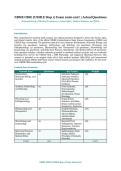
Content Area Overview
Content Area Questions Key Topics Weight
Biochemistry, 29 Metabolic Pathways, 15%
Molecular Biology, and Molecular Genetics,
Genetics Inherited Disorders,
DNA/RNA/Protein
Synthesis
Anatomy, Embryology, 29 Gross Anatomy, 15%
and Histology Neuroanatomy,
Embryological
Development, Tissue
Histology
Physiology and 47 Organ System 25%
Pathophysiology Function, Acid-Base,
Renal, Cardiovascular,
Respiratory, Endocrine
Pharmacology and 38 Drug Mechanisms, 20%
Therapeutics Pharmacokinetics,
Adverse Effects,
Antimicrobials,
Autonomics
Microbiology and 29 Bacterial/Viral 15%
Immunology Pathogenesis, Immune
Responses, Vaccines,
Hypersensitivity
Behavioral Sciences, 18 Epidemiology, Study 10%
Biostatistics, and Design, Ethical
Medical Ethics Principles, Psychiatric
Disorders
Total 190 100%
NBME CBSE (USMLE Step 1) Exam 2026-2027
,Actual Questions
Domain: Biochemistry, Molecular Biology, and Genetics
1. A newborn develops jaundice, hepatomegaly, and hypoglycemia after fasting. Liver
biopsy reveals increased glycogen with abnormal structure. Which enzyme is most likely
deficient?
A. Glucose-6-phosphatase
B. Debranching enzyme
C. Branching enzyme
D. Myophosphorylase
Answer: C
Rationale: Branching enzyme deficiency (Andersen disease/Glycogen Storage Disease Type IV)
causes abnormal glycogen with long, unbranched chains, leading to hepatomegaly and liver
failure.
2. A patient with xerophthalmia and night blindness has low serum retinol levels. Which
form of vitamin A is essential for the visual cycle in rod cells?
A. Retinoic acid
B. Retinal (retinaldehyde)
C. Retinyl ester
D. Beta-carotene
Answer: B
Rationale: Retinal (11-cis-retinal) combines with opsin to form rhodopsin in rod cells, which is
essential for scotopic (low-light) vision.
3. Which of the following amino acids is classified as both glucogenic and ketogenic?
A. Leucine
B. Lysine
C. Isoleucine
D. Alanine
Answer: C
Rationale: Isoleucine is both glucogenic and ketogenic. Leucine and lysine are exclusively
ketogenic, while alanine is exclusively glucogenic.
4. A patient with Lesch-Nyhan syndrome has hyperuricemia and self-mutilating behavior.
Which enzyme is deficient?
A. Xanthine oxidase
B. Hypoxanthine-guanine phosphoribosyltransferase (HGPRT)
C. Adenosine deaminase
D. PRPP synthetase
Answer: B
Rationale: HGPRT deficiency causes Lesch-Nyhan syndrome, characterized by hyperuricemia,
choreoathetosis, intellectual disability, and self-mutilation.
5. Which vitamin is a cofactor for the enzyme pyruvate dehydrogenase?
A. Vitamin B1 (thiamine)
B. Vitamin B2 (riboflavin)
C. Vitamin B3 (niacin)
D. Vitamin B5 (pantothenic acid)
Answer: A
NBME CBSE (USMLE Step 1) Exam 2026-2027
, Rationale: Thiamine pyrophosphate (TPP) is a required cofactor for pyruvate dehydrogenase,
alpha-ketoglutarate dehydrogenase, and transketolase.
6. A mutation in which type of collagen is associated with osteogenesis imperfecta?
A. Type I
B. Type II
C. Type III
D. Type IV
Answer: A
Rationale: Osteogenesis imperfecta results from mutations in type I collagen, the most
abundant collagen in bone, skin, and tendons.
7. Which of the following is the committed step of cholesterol synthesis?
A. HMG-CoA reductase
B. HMG-CoA synthase
C. Mevalonate kinase
D. Squalene synthase
Answer: A
Rationale: HMG-CoA reductase catalyzes the rate-limiting and committed step of cholesterol
synthesis, converting HMG-CoA to mevalonate.
8. A patient with galactosemia develops cataracts. Which sugar alcohol accumulates in the
lens of the eye?
A. Sorbitol
B. Galactitol
C. Mannitol
D. Xylitol
Answer: B
Rationale: In galactosemia, excess galactose is reduced to galactitol by aldose reductase.
Galactitol accumulation in the lens causes osmotic damage and cataracts.
9. Which of the following is the primary function of the signal recognition particle (SRP)?
A. DNA replication
B. Targeting ribosomes synthesizing secretory proteins to the rough ER
C. mRNA splicing
D. Protein degradation
Answer: B
Rationale: SRP recognizes the signal peptide on nascent polypeptides and directs the ribosome-
mRNA complex to the rough ER for co-translational translocation.
10. A patient with maple syrup urine disease accumulates which of the following?
A. Phenylalanine
B. Branched-chain amino acids (leucine, isoleucine, valine)
C. Homocysteine
D. Tyrosine
Answer: B
Rationale: Maple syrup urine disease results from deficiency of branched-chain alpha-ketoacid
dehydrogenase, causing accumulation of leucine, isoleucine, and valine.
11. Which of the following enzymes is responsible for unwinding DNA during replication?
A. DNA polymerase III
NBME CBSE (USMLE Step 1) Exam 2026-2027
, B. Helicase
C. Primase
D. Ligase
Answer: B
Rationale: Helicase unwinds the double-stranded DNA at the replication fork by breaking
hydrogen bonds between base pairs.
12. A patient with phenylketonuria (PKU) accumulates phenylalanine. Which enzyme is
deficient?
A. Tyrosinase
B. Phenylalanine hydroxylase
C. Homogentisate oxidase
D. Dihydropteridine reductase
Answer: B
Rationale: Classical PKU is caused by deficiency of phenylalanine hydroxylase, which normally
converts phenylalanine to tyrosine.
13. Which of the following is a characteristic of DNA polymerase III in E. coli?
A. 5' to 3' exonuclease activity only
B. 3' to 5' exonuclease (proofreading) activity
C. RNA-dependent DNA polymerase activity
D. Ligase activity
Answer: B
Rationale: DNA polymerase III has 3' to 5' exonuclease activity for proofreading, ensuring high
fidelity during DNA replication.
14. A patient develops peripheral neuropathy after prolonged use of isoniazid. Which
vitamin supplement could have prevented this?
A. Vitamin B6 (pyridoxine)
B. Vitamin B12 (cobalamin)
C. Folate
D. Vitamin C
Answer: A
Rationale: Isoniazid depletes pyridoxine (B6), leading to peripheral neuropathy. Co-
administration of B6 prevents this adverse effect.
15. Which of the following is the function of topoisomerase?
A. Synthesizing RNA primers
B. Relieving torsional strain (supercoiling) ahead of the replication fork
C. Joining Okazaki fragments
D. Proofreading newly synthesized DNA
Answer: B
Rationale: Topoisomerase (gyrase in prokaryotes) relieves positive supercoiling ahead of the
replication fork to allow continued unwinding.
16. Which of the following genetic conditions is caused by trinucleotide repeat expansion of
CGG on the FMR1 gene?
A. Huntington disease
B. Fragile X syndrome
C. Myotonic dystrophy
D. Friedreich ataxia
NBME CBSE (USMLE Step 1) Exam 2026-2027
National Board of Medical Examiners | Actual Q&A | Medical Students and IMGs
Introduction
This comprehensive question bank contains 190 original questions designed to mirror the format, rigor,
and clinical vignette style of the official NBME Comprehensive Basic Science Examination (CBSE) and
USMLE Step 1 assessment. The questions span all six core domains: Biochemistry, Molecular Biology, and
Genetics (29 questions); Anatomy, Embryology, and Histology (29 questions); Physiology and
Pathophysiology (47 questions); Pharmacology and Therapeutics (38 questions); Microbiology and
Immunology (29 questions); and Behavioral Sciences, Biostatistics, and Medical Ethics (18 questions).
Each question includes a detailed rationale grounded in standard medical curricula and core textbooks
including First Aid for the USMLE Step 1, BRS Physiology, and Lippincott Illustrated Reviews. This
resource is intended as an original study aid to help medical students (MS1/MS2) and international
medical graduates (IMGs) build basic science clinical mastery and prepare with confidence for the 2026-
2027 NBME CBSE examination cycle.
Content Area Overview
Content Area Questions Key Topics Weight
Biochemistry, 29 Metabolic Pathways, 15%
Molecular Biology, and Molecular Genetics,
Genetics Inherited Disorders,
DNA/RNA/Protein
Synthesis
Anatomy, Embryology, 29 Gross Anatomy, 15%
and Histology Neuroanatomy,
Embryological
Development, Tissue
Histology
Physiology and 47 Organ System 25%
Pathophysiology Function, Acid-Base,
Renal, Cardiovascular,
Respiratory, Endocrine
Pharmacology and 38 Drug Mechanisms, 20%
Therapeutics Pharmacokinetics,
Adverse Effects,
Antimicrobials,
Autonomics
Microbiology and 29 Bacterial/Viral 15%
Immunology Pathogenesis, Immune
Responses, Vaccines,
Hypersensitivity
Behavioral Sciences, 18 Epidemiology, Study 10%
Biostatistics, and Design, Ethical
Medical Ethics Principles, Psychiatric
Disorders
Total 190 100%
NBME CBSE (USMLE Step 1) Exam 2026-2027
,Actual Questions
Domain: Biochemistry, Molecular Biology, and Genetics
1. A newborn develops jaundice, hepatomegaly, and hypoglycemia after fasting. Liver
biopsy reveals increased glycogen with abnormal structure. Which enzyme is most likely
deficient?
A. Glucose-6-phosphatase
B. Debranching enzyme
C. Branching enzyme
D. Myophosphorylase
Answer: C
Rationale: Branching enzyme deficiency (Andersen disease/Glycogen Storage Disease Type IV)
causes abnormal glycogen with long, unbranched chains, leading to hepatomegaly and liver
failure.
2. A patient with xerophthalmia and night blindness has low serum retinol levels. Which
form of vitamin A is essential for the visual cycle in rod cells?
A. Retinoic acid
B. Retinal (retinaldehyde)
C. Retinyl ester
D. Beta-carotene
Answer: B
Rationale: Retinal (11-cis-retinal) combines with opsin to form rhodopsin in rod cells, which is
essential for scotopic (low-light) vision.
3. Which of the following amino acids is classified as both glucogenic and ketogenic?
A. Leucine
B. Lysine
C. Isoleucine
D. Alanine
Answer: C
Rationale: Isoleucine is both glucogenic and ketogenic. Leucine and lysine are exclusively
ketogenic, while alanine is exclusively glucogenic.
4. A patient with Lesch-Nyhan syndrome has hyperuricemia and self-mutilating behavior.
Which enzyme is deficient?
A. Xanthine oxidase
B. Hypoxanthine-guanine phosphoribosyltransferase (HGPRT)
C. Adenosine deaminase
D. PRPP synthetase
Answer: B
Rationale: HGPRT deficiency causes Lesch-Nyhan syndrome, characterized by hyperuricemia,
choreoathetosis, intellectual disability, and self-mutilation.
5. Which vitamin is a cofactor for the enzyme pyruvate dehydrogenase?
A. Vitamin B1 (thiamine)
B. Vitamin B2 (riboflavin)
C. Vitamin B3 (niacin)
D. Vitamin B5 (pantothenic acid)
Answer: A
NBME CBSE (USMLE Step 1) Exam 2026-2027
, Rationale: Thiamine pyrophosphate (TPP) is a required cofactor for pyruvate dehydrogenase,
alpha-ketoglutarate dehydrogenase, and transketolase.
6. A mutation in which type of collagen is associated with osteogenesis imperfecta?
A. Type I
B. Type II
C. Type III
D. Type IV
Answer: A
Rationale: Osteogenesis imperfecta results from mutations in type I collagen, the most
abundant collagen in bone, skin, and tendons.
7. Which of the following is the committed step of cholesterol synthesis?
A. HMG-CoA reductase
B. HMG-CoA synthase
C. Mevalonate kinase
D. Squalene synthase
Answer: A
Rationale: HMG-CoA reductase catalyzes the rate-limiting and committed step of cholesterol
synthesis, converting HMG-CoA to mevalonate.
8. A patient with galactosemia develops cataracts. Which sugar alcohol accumulates in the
lens of the eye?
A. Sorbitol
B. Galactitol
C. Mannitol
D. Xylitol
Answer: B
Rationale: In galactosemia, excess galactose is reduced to galactitol by aldose reductase.
Galactitol accumulation in the lens causes osmotic damage and cataracts.
9. Which of the following is the primary function of the signal recognition particle (SRP)?
A. DNA replication
B. Targeting ribosomes synthesizing secretory proteins to the rough ER
C. mRNA splicing
D. Protein degradation
Answer: B
Rationale: SRP recognizes the signal peptide on nascent polypeptides and directs the ribosome-
mRNA complex to the rough ER for co-translational translocation.
10. A patient with maple syrup urine disease accumulates which of the following?
A. Phenylalanine
B. Branched-chain amino acids (leucine, isoleucine, valine)
C. Homocysteine
D. Tyrosine
Answer: B
Rationale: Maple syrup urine disease results from deficiency of branched-chain alpha-ketoacid
dehydrogenase, causing accumulation of leucine, isoleucine, and valine.
11. Which of the following enzymes is responsible for unwinding DNA during replication?
A. DNA polymerase III
NBME CBSE (USMLE Step 1) Exam 2026-2027
, B. Helicase
C. Primase
D. Ligase
Answer: B
Rationale: Helicase unwinds the double-stranded DNA at the replication fork by breaking
hydrogen bonds between base pairs.
12. A patient with phenylketonuria (PKU) accumulates phenylalanine. Which enzyme is
deficient?
A. Tyrosinase
B. Phenylalanine hydroxylase
C. Homogentisate oxidase
D. Dihydropteridine reductase
Answer: B
Rationale: Classical PKU is caused by deficiency of phenylalanine hydroxylase, which normally
converts phenylalanine to tyrosine.
13. Which of the following is a characteristic of DNA polymerase III in E. coli?
A. 5' to 3' exonuclease activity only
B. 3' to 5' exonuclease (proofreading) activity
C. RNA-dependent DNA polymerase activity
D. Ligase activity
Answer: B
Rationale: DNA polymerase III has 3' to 5' exonuclease activity for proofreading, ensuring high
fidelity during DNA replication.
14. A patient develops peripheral neuropathy after prolonged use of isoniazid. Which
vitamin supplement could have prevented this?
A. Vitamin B6 (pyridoxine)
B. Vitamin B12 (cobalamin)
C. Folate
D. Vitamin C
Answer: A
Rationale: Isoniazid depletes pyridoxine (B6), leading to peripheral neuropathy. Co-
administration of B6 prevents this adverse effect.
15. Which of the following is the function of topoisomerase?
A. Synthesizing RNA primers
B. Relieving torsional strain (supercoiling) ahead of the replication fork
C. Joining Okazaki fragments
D. Proofreading newly synthesized DNA
Answer: B
Rationale: Topoisomerase (gyrase in prokaryotes) relieves positive supercoiling ahead of the
replication fork to allow continued unwinding.
16. Which of the following genetic conditions is caused by trinucleotide repeat expansion of
CGG on the FMR1 gene?
A. Huntington disease
B. Fragile X syndrome
C. Myotonic dystrophy
D. Friedreich ataxia
NBME CBSE (USMLE Step 1) Exam 2026-2027


