IC&RC ADC Exam Prep 2026/2027 | Questions & Correct
Answers | Graded A+
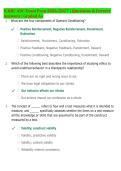
1. What are the four components of Operant Conditioning?
Positive Reinforcement, Negative Reinforcement, Punishment,
Extinction
Reinforcement, Punishment, Conditioning, Extinction
Positive Feedback, Negative Feedback, Punishment, Reward
Positive Conditioning, Negative Conditioning, Punishment, Reward
2. Which of the following best describes the importance of studying ethics to
avoid unethical behavior in a therapeutic relationship?
There are no right and wrong ways to act.
We have legal obligations to our clients.
Our behavior affects our clients
Our actions impact our profession as a whole.
3. The concept of ______ refers to how well a test measures what it is intended to
measure, and ______ specifically assesses whether the items on a test measure
all the knowledge or skills that are assumed to be part of the construct
measured by a test.
Validity; construct validity
Validity; predictive validity
Validity; content validity
Reliability internal consistency
,4. Describe how the Quadrant Model contributes to effective service planning
in addiction treatment.
The Quadrant Model is used to measure the effectiveness of
counseling techniques.
The Quadrant Model is primarily concerned with legal issues in
addiction counseling.
The Quadrant Model focuses solely on the medical aspects of
addiction.
The Quadrant Model provides a structured approach to identify and
address the varying needs of individuals in addiction treatment.
5. If a therapist receives a subpoena for a patient's records, what ethical
principle must they consider before disclosing any information?
Duty to warn
Cultural sensitivity
Informed consent
Confidentiality
6. Describe how Behaviorism approaches the treatment of substance use
disorders.
Behaviorism emphasizes understanding the emotional roots of
addiction.
Behaviorism relies on medication to treat substance use disorders.
Behaviorism focuses on modifying behaviors associated with
substance use by creating new responses to triggers.
Behaviorism encourages clients to explore their past traumas.
,7. In a therapeutic setting, how might a counselor utilize the principles of
Classical Conditioning to help a client with a substance use disorder?
By using punishment to discourage substance use.
By associating positive feelings with sober activities to replace
cravings.
By focusing solely on cognitive restructuring techniques.
By encouraging clients to avoid all triggers without further support.
8. Alcohol primarily affects which of your body's systems?
respiratory system
central nervous system
digestive system
circulatory system
9. In a counseling session, how might recognizing the family roles identified by
Sharon Wegscheider-Cruse assist a therapist in developing a treatment plan
for a client with a substance use disorder?
It allows the therapist to address family dynamics and involve family
members in the recovery process.
It helps the therapist to focus solely on the individual without
considering family influences.
It provides a checklist for diagnosing the client's addiction severity.
It encourages the therapist to ignore family issues and concentrate on
individual therapy.
, 10. If a counselor learns about ongoing domestic violence in a client's home but
the client denies any abuse, what should the counselor do?
Discuss the situation further with the client to gather more
information.
Refer the client to another counselor for further evaluation.
Respect the client's wishes and take no action.
Report the situation to the appropriate authorities as required by
law.
11. In a group therapy session, how might a counselor utilize the concept of
Universality to enhance the treatment experience for clients?
By encouraging clients to share their common struggles, fostering a
sense of belonging.
By emphasizing the differences between clients' backgrounds.
By minimizing the importance of shared experiences.
By focusing exclusively on individual achievements.
12. In a counseling session, if a counselor shares a personal story that does not
relate to the client's issues, what impact might this have on the therapeutic
relationship?
It would create a more relaxed atmosphere.
It could undermine the client's trust and distract from their needs.
It would demonstrate the counselor's expertise.
It would enhance the client's understanding of the counselor.
13. Who is known for developing the concept of Classical Conditioning?
Answers | Graded A+
1. What are the four components of Operant Conditioning?
Positive Reinforcement, Negative Reinforcement, Punishment,
Extinction
Reinforcement, Punishment, Conditioning, Extinction
Positive Feedback, Negative Feedback, Punishment, Reward
Positive Conditioning, Negative Conditioning, Punishment, Reward
2. Which of the following best describes the importance of studying ethics to
avoid unethical behavior in a therapeutic relationship?
There are no right and wrong ways to act.
We have legal obligations to our clients.
Our behavior affects our clients
Our actions impact our profession as a whole.
3. The concept of ______ refers to how well a test measures what it is intended to
measure, and ______ specifically assesses whether the items on a test measure
all the knowledge or skills that are assumed to be part of the construct
measured by a test.
Validity; construct validity
Validity; predictive validity
Validity; content validity
Reliability internal consistency
,4. Describe how the Quadrant Model contributes to effective service planning
in addiction treatment.
The Quadrant Model is used to measure the effectiveness of
counseling techniques.
The Quadrant Model is primarily concerned with legal issues in
addiction counseling.
The Quadrant Model focuses solely on the medical aspects of
addiction.
The Quadrant Model provides a structured approach to identify and
address the varying needs of individuals in addiction treatment.
5. If a therapist receives a subpoena for a patient's records, what ethical
principle must they consider before disclosing any information?
Duty to warn
Cultural sensitivity
Informed consent
Confidentiality
6. Describe how Behaviorism approaches the treatment of substance use
disorders.
Behaviorism emphasizes understanding the emotional roots of
addiction.
Behaviorism relies on medication to treat substance use disorders.
Behaviorism focuses on modifying behaviors associated with
substance use by creating new responses to triggers.
Behaviorism encourages clients to explore their past traumas.
,7. In a therapeutic setting, how might a counselor utilize the principles of
Classical Conditioning to help a client with a substance use disorder?
By using punishment to discourage substance use.
By associating positive feelings with sober activities to replace
cravings.
By focusing solely on cognitive restructuring techniques.
By encouraging clients to avoid all triggers without further support.
8. Alcohol primarily affects which of your body's systems?
respiratory system
central nervous system
digestive system
circulatory system
9. In a counseling session, how might recognizing the family roles identified by
Sharon Wegscheider-Cruse assist a therapist in developing a treatment plan
for a client with a substance use disorder?
It allows the therapist to address family dynamics and involve family
members in the recovery process.
It helps the therapist to focus solely on the individual without
considering family influences.
It provides a checklist for diagnosing the client's addiction severity.
It encourages the therapist to ignore family issues and concentrate on
individual therapy.
, 10. If a counselor learns about ongoing domestic violence in a client's home but
the client denies any abuse, what should the counselor do?
Discuss the situation further with the client to gather more
information.
Refer the client to another counselor for further evaluation.
Respect the client's wishes and take no action.
Report the situation to the appropriate authorities as required by
law.
11. In a group therapy session, how might a counselor utilize the concept of
Universality to enhance the treatment experience for clients?
By encouraging clients to share their common struggles, fostering a
sense of belonging.
By emphasizing the differences between clients' backgrounds.
By minimizing the importance of shared experiences.
By focusing exclusively on individual achievements.
12. In a counseling session, if a counselor shares a personal story that does not
relate to the client's issues, what impact might this have on the therapeutic
relationship?
It would create a more relaxed atmosphere.
It could undermine the client's trust and distract from their needs.
It would demonstrate the counselor's expertise.
It would enhance the client's understanding of the counselor.
13. Who is known for developing the concept of Classical Conditioning?