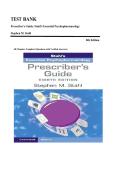
TEST BANK
Prescriber's Guide: Stahl's Essential Psychopharmacology
Stephen M. Stahl
8th Edition
All Chapters Complete (Questions with Verified Answers)
,Table of Contents
1. acamprosate; 56. gabapentin; 111. protriptyline;
2. agomelatine; 57. galantamine; 112. quazepam;
3. alprazolam; 58. guanfacine; 113. quetiapine;
4. amisulpride; 59. haloperidol; 114. ramelteon;
5. amitriptyline; 60. hydroxyzine; 115. reboxetine;
6. amoxapine; 61. iloperidone; 116. risperidone;
7. amphetamin (d); 62. imipramine; 117. rivastigmine;
8. amphetamine (d,l); 63. isocarboxazid; 118. selegiline;
9. aripiprazole; 64. ketamine; 119. sertindole;
10. armodafinil; 65. lamotrigine; 120. sertraline;
11. asenapine; 66. levetiracetam; 121. sildenafil;
12. atomoxetine; 67. lemborexant; 122. sodium oxybate;
13. benztropine; 68. levomilnacipran; 123. solriamfetol;
14. blonanserin; 69. lisdexamfetamine; 124. sulpiride;
15. bremelanotide; 70. lithium; 125. suvorexant;
16. brexanolone; 71. lofexidine; 126. tasimelteon;
17. brexpiprazole; 72. lofepramine; 127. temazepam;
18. buprenorphine; 73. loflazeptate; 128. thioridazine;
19. bupropion; 74. lorazepam; 129. thiothixene;
20. buspirone; 75. loxapine; 130. tiagabine;
21. caprylidene; 76. lumateperone; 131. tianeptine;
22. carbamazepine; 77. lurasidone; 132. topiramate;
23. cariprazine; 78. maprotiline; 133. tranylcypromine;
24. chlordiazepoxide; 79. memantine; 134. trazodone;
25. chlorpromazine; 80. methylfolate (l); 135. triazolam;
26. citalopram; 81. methylphenidate (d); 136. trifluoperazine;
27. clomipramine; 82. methylphenidate (d,l); 137. trihexyphenidyl;
28. clonazepam; 83. mianserin; 138. triiodothyronine;
29. clonidine; 84. midazolam; 139. trimipramine;
30. clorazepate; 85. milnacipran; 140. valbenazine;
31. clozapine; 86. mirtazapine; 141. valproate;
32. cyamemazine; 87. moclobemide; 142. varenicline;
33. desipramine; 88. modafinil; 143. venlafaxine;
34. desvenlafaxine; 89. molindone; 144. vilazodone;
35. deutetrabenazine; 90. nalmefene; 145. vortioxetine;
36. dextromethorphan; 91. naltrexone; 146. zaleplon;
37. diazepam; 92. naltrexone-bupropion; 147. ziprasidone;
38. diphenhydramine; 93. nefazodone; 148. zolpidem;
39. disulfiram; 94. nortriptyline; 149. zonisamide;
40. donepezil; 95. olanzapine; 150. zopiclone;
41. dothiepin; 96. oxazepam; 151. zotepine;
42. doxepin; 97. oxcarbazepine; 152. zuclopenthixol;
43. duloxetine; 98. paliperidone;
44. escitalopram; 99. paroxetine;
45. esketamine; 100. perospirone;
46. estazolam; 101. perphenazine;
47. eszopiclone; 102. phenelzine;
48. flibanserin; 103. phentermine-topiramate;
49. flumazenil; 104. pimavanserin;
50. flunitrazepam; 105. pimozide;
51. fluoxetine; 106. pipothiazine;
52. flupenthixol; 107. pitolisant;
53. fluphenazine; 108. prazosin;
54. flurazepam; 109. pregabalin;
55. fluvoxamine; 110. propranolol;
,Chapter Questions on Alcohol abstinence/Alcohol dependence/Alcohol
withdrawal
1.
A client has been prescribed naltrexone (Trexan) for treatment of alcohol dependence. The nurse
has explained the drugs purpose to the client. The nurse determines that the client has understood
the instructions when the client identifies which of the following about the drug?
A)
Causes itching if alcohol is consumed
B)
Produces the euphoria of alcohol
C)
Reduces the appeal of alcohol
D)
Improves appetite and nutritional status
2.
An adolescent client tells the nurse that he or she occasionally sniffs airplane glue. When
discussing the effects of long-term use of inhalants, which of the following would the nurse most
likely include?
A)
Tremors and CNS arousal
B)
Enhanced normal heart rhythms
C)
Enhanced attention focus and memory
D)
www.nursylab.com
, Brain damage and cognitive abnormalities
3.
A client tells the nurse that he is committed to trying to quit smoking. When teaching the client
about smoking cessation, which of the following would the nurse include?
A)
Success usually involves more than one type of intervention.
B)
Relapse is fairly rare within the first year of quitting.
C)
Ear acupressure is a highly proven method for quitting.
D)
Education is key for smoking cessation.
4.
The nurse is completing the admission of a client who is seeking treatment for alcoholism. He
tells the nurse that the last time he had any alcohol to drink was at 10:00 AM before he left for
the hospital. The nurse closely monitors the client. Which of the following would lead the nurse
to suspect that the client is experiencing stage 1 of alcohol withdrawal syndrome? Select all that
apply.
A)
Slight diaphoresis
B)
Hand tremors
C)
Intermittent confusion
D)
Prescriber's Guide: Stahl's Essential Psychopharmacology
Stephen M. Stahl
8th Edition
All Chapters Complete (Questions with Verified Answers)
,Table of Contents
1. acamprosate; 56. gabapentin; 111. protriptyline;
2. agomelatine; 57. galantamine; 112. quazepam;
3. alprazolam; 58. guanfacine; 113. quetiapine;
4. amisulpride; 59. haloperidol; 114. ramelteon;
5. amitriptyline; 60. hydroxyzine; 115. reboxetine;
6. amoxapine; 61. iloperidone; 116. risperidone;
7. amphetamin (d); 62. imipramine; 117. rivastigmine;
8. amphetamine (d,l); 63. isocarboxazid; 118. selegiline;
9. aripiprazole; 64. ketamine; 119. sertindole;
10. armodafinil; 65. lamotrigine; 120. sertraline;
11. asenapine; 66. levetiracetam; 121. sildenafil;
12. atomoxetine; 67. lemborexant; 122. sodium oxybate;
13. benztropine; 68. levomilnacipran; 123. solriamfetol;
14. blonanserin; 69. lisdexamfetamine; 124. sulpiride;
15. bremelanotide; 70. lithium; 125. suvorexant;
16. brexanolone; 71. lofexidine; 126. tasimelteon;
17. brexpiprazole; 72. lofepramine; 127. temazepam;
18. buprenorphine; 73. loflazeptate; 128. thioridazine;
19. bupropion; 74. lorazepam; 129. thiothixene;
20. buspirone; 75. loxapine; 130. tiagabine;
21. caprylidene; 76. lumateperone; 131. tianeptine;
22. carbamazepine; 77. lurasidone; 132. topiramate;
23. cariprazine; 78. maprotiline; 133. tranylcypromine;
24. chlordiazepoxide; 79. memantine; 134. trazodone;
25. chlorpromazine; 80. methylfolate (l); 135. triazolam;
26. citalopram; 81. methylphenidate (d); 136. trifluoperazine;
27. clomipramine; 82. methylphenidate (d,l); 137. trihexyphenidyl;
28. clonazepam; 83. mianserin; 138. triiodothyronine;
29. clonidine; 84. midazolam; 139. trimipramine;
30. clorazepate; 85. milnacipran; 140. valbenazine;
31. clozapine; 86. mirtazapine; 141. valproate;
32. cyamemazine; 87. moclobemide; 142. varenicline;
33. desipramine; 88. modafinil; 143. venlafaxine;
34. desvenlafaxine; 89. molindone; 144. vilazodone;
35. deutetrabenazine; 90. nalmefene; 145. vortioxetine;
36. dextromethorphan; 91. naltrexone; 146. zaleplon;
37. diazepam; 92. naltrexone-bupropion; 147. ziprasidone;
38. diphenhydramine; 93. nefazodone; 148. zolpidem;
39. disulfiram; 94. nortriptyline; 149. zonisamide;
40. donepezil; 95. olanzapine; 150. zopiclone;
41. dothiepin; 96. oxazepam; 151. zotepine;
42. doxepin; 97. oxcarbazepine; 152. zuclopenthixol;
43. duloxetine; 98. paliperidone;
44. escitalopram; 99. paroxetine;
45. esketamine; 100. perospirone;
46. estazolam; 101. perphenazine;
47. eszopiclone; 102. phenelzine;
48. flibanserin; 103. phentermine-topiramate;
49. flumazenil; 104. pimavanserin;
50. flunitrazepam; 105. pimozide;
51. fluoxetine; 106. pipothiazine;
52. flupenthixol; 107. pitolisant;
53. fluphenazine; 108. prazosin;
54. flurazepam; 109. pregabalin;
55. fluvoxamine; 110. propranolol;
,Chapter Questions on Alcohol abstinence/Alcohol dependence/Alcohol
withdrawal
1.
A client has been prescribed naltrexone (Trexan) for treatment of alcohol dependence. The nurse
has explained the drugs purpose to the client. The nurse determines that the client has understood
the instructions when the client identifies which of the following about the drug?
A)
Causes itching if alcohol is consumed
B)
Produces the euphoria of alcohol
C)
Reduces the appeal of alcohol
D)
Improves appetite and nutritional status
2.
An adolescent client tells the nurse that he or she occasionally sniffs airplane glue. When
discussing the effects of long-term use of inhalants, which of the following would the nurse most
likely include?
A)
Tremors and CNS arousal
B)
Enhanced normal heart rhythms
C)
Enhanced attention focus and memory
D)
www.nursylab.com
, Brain damage and cognitive abnormalities
3.
A client tells the nurse that he is committed to trying to quit smoking. When teaching the client
about smoking cessation, which of the following would the nurse include?
A)
Success usually involves more than one type of intervention.
B)
Relapse is fairly rare within the first year of quitting.
C)
Ear acupressure is a highly proven method for quitting.
D)
Education is key for smoking cessation.
4.
The nurse is completing the admission of a client who is seeking treatment for alcoholism. He
tells the nurse that the last time he had any alcohol to drink was at 10:00 AM before he left for
the hospital. The nurse closely monitors the client. Which of the following would lead the nurse
to suspect that the client is experiencing stage 1 of alcohol withdrawal syndrome? Select all that
apply.
A)
Slight diaphoresis
B)
Hand tremors
C)
Intermittent confusion
D)