

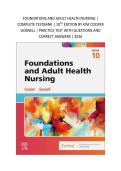
FOUNDATIONS AND ADULT HEALTH NURSING |
COMPLETE TESTBANK | 10TH EDITION BY KIM COOPER
GOSNELL | PRACTICE TEST WITH QUESTIONS AND
CORRECT ANSWERS | 2026
,1. A nurse is caring for a postoperative client who is reluctant to
cough and deep-breathe because of incision pain. Which action
should the nurse take first?
A. Encourage the client to avoid coughing until the pain is gone.
B. Teach the client to splint the incision before coughing.
C. Document the refusal and return later.
D. Place the client in Trendelenburg position.
Correct Answer: B
Expansion: Splinting the incision reduces pain and supports
effective coughing and deep breathing, helping prevent atelectasis
and pneumonia. Avoiding coughing, delaying action, and
Trendelenburg positioning are inappropriate.
2. A client with shortness of breath is using accessory muscles to
breathe. What does this finding indicate?
A. Improved oxygenation
B. Respiratory distress
C. Normal aging
D. Hyperventilation only
Correct Answer: B
Expansion: Accessory muscle use indicates increased work of
breathing and respiratory distress. It is not a normal finding and
requires assessment and intervention.
3. A nurse is planning care for a client at risk for falls. Which
intervention is most appropriate?
A. Keep the side rails up only during meals.
, B. Place the call light within reach.
C. Encourage the client to walk alone to build confidence.
D. Lower the bed and keep the room dark.
Correct Answer: B
Expansion: Placing the call light within reach promotes safety and
helps the client request assistance. Unassisted ambulation and
poor lighting increase fall risk.
4. A client with diabetes reports shaking, sweating, and confusion.
What should the nurse do first?
A. Give the client rapid-acting carbohydrate.
B. Administer long-acting insulin.
C. Reassess in 30 minutes.
D. Encourage exercise.
Correct Answer: A
Expansion: These are signs of hypoglycemia, and the client needs a
fast source of glucose if able to swallow. Insulin and exercise are
unsafe in this situation.
5. A nurse is teaching hand hygiene. Which situation requires hand
hygiene?
A. Before touching a client
B. After touching blood pressure equipment only
C. Before entering the nurse’s station
D. After reading the chart
Correct Answer: A
Expansion: Hand hygiene is essential before patient contact to
, reduce transmission of microorganisms. It is also needed after
exposure to body fluids and contaminated surfaces.
6. Which client is at highest risk for pressure injury?
A. A mobile client who walks daily
B. A client who is incontinent and immobile
C. A client with a strong appetite
D. A client with normal skin turgor
Correct Answer: B
Expansion: Immobility and incontinence greatly increase pressure
injury risk due to prolonged pressure and moisture. Mobility helps
prevent skin breakdown.
7. A nurse is preparing to administer oral medication to a client.
Which action is most appropriate?
A. Leave the medication at the bedside if the client is sleeping.
B. Verify the client’s identity before administration.
C. Crush every tablet before giving it.
D. Administer medication without checking allergies.
Correct Answer: B
Expansion: Correct client identification is a core safety step before
medication administration. Crushing all tablets and ignoring
allergies can cause harm.
8. A client with COPD is prescribed oxygen. Which instruction is most
important?
COMPLETE TESTBANK | 10TH EDITION BY KIM COOPER
GOSNELL | PRACTICE TEST WITH QUESTIONS AND
CORRECT ANSWERS | 2026
,1. A nurse is caring for a postoperative client who is reluctant to
cough and deep-breathe because of incision pain. Which action
should the nurse take first?
A. Encourage the client to avoid coughing until the pain is gone.
B. Teach the client to splint the incision before coughing.
C. Document the refusal and return later.
D. Place the client in Trendelenburg position.
Correct Answer: B
Expansion: Splinting the incision reduces pain and supports
effective coughing and deep breathing, helping prevent atelectasis
and pneumonia. Avoiding coughing, delaying action, and
Trendelenburg positioning are inappropriate.
2. A client with shortness of breath is using accessory muscles to
breathe. What does this finding indicate?
A. Improved oxygenation
B. Respiratory distress
C. Normal aging
D. Hyperventilation only
Correct Answer: B
Expansion: Accessory muscle use indicates increased work of
breathing and respiratory distress. It is not a normal finding and
requires assessment and intervention.
3. A nurse is planning care for a client at risk for falls. Which
intervention is most appropriate?
A. Keep the side rails up only during meals.
, B. Place the call light within reach.
C. Encourage the client to walk alone to build confidence.
D. Lower the bed and keep the room dark.
Correct Answer: B
Expansion: Placing the call light within reach promotes safety and
helps the client request assistance. Unassisted ambulation and
poor lighting increase fall risk.
4. A client with diabetes reports shaking, sweating, and confusion.
What should the nurse do first?
A. Give the client rapid-acting carbohydrate.
B. Administer long-acting insulin.
C. Reassess in 30 minutes.
D. Encourage exercise.
Correct Answer: A
Expansion: These are signs of hypoglycemia, and the client needs a
fast source of glucose if able to swallow. Insulin and exercise are
unsafe in this situation.
5. A nurse is teaching hand hygiene. Which situation requires hand
hygiene?
A. Before touching a client
B. After touching blood pressure equipment only
C. Before entering the nurse’s station
D. After reading the chart
Correct Answer: A
Expansion: Hand hygiene is essential before patient contact to
, reduce transmission of microorganisms. It is also needed after
exposure to body fluids and contaminated surfaces.
6. Which client is at highest risk for pressure injury?
A. A mobile client who walks daily
B. A client who is incontinent and immobile
C. A client with a strong appetite
D. A client with normal skin turgor
Correct Answer: B
Expansion: Immobility and incontinence greatly increase pressure
injury risk due to prolonged pressure and moisture. Mobility helps
prevent skin breakdown.
7. A nurse is preparing to administer oral medication to a client.
Which action is most appropriate?
A. Leave the medication at the bedside if the client is sleeping.
B. Verify the client’s identity before administration.
C. Crush every tablet before giving it.
D. Administer medication without checking allergies.
Correct Answer: B
Expansion: Correct client identification is a core safety step before
medication administration. Crushing all tablets and ignoring
allergies can cause harm.
8. A client with COPD is prescribed oxygen. Which instruction is most
important?


