

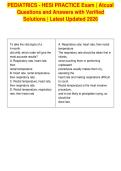
PEDIATRICS - HESI PRACTICE Exam | Atcual
Questions and Answers with Verified
Solutions | Latest Updated 2026
To take the vital signs of a A. Respiratory rate, heart rate, then rectal
4-month temperature
old child, which order will give the The respiratory rate should be taken first in
most accurate results? infants,
A. Respiratory rate, heart rate, since touching them or performing
then unpleasant
rectal temperature procedures usually makes them cry,
B. Heart rate, rectal temperature, elevating the
then respiratory rate. heart rate and making respirations difficult
C. Rectal temperature, heart rate, to count.
then respiratory rate Rectal temperature is the most invasive
D. Rectal temperature, respiratory procedure,
rate, then heart rate and is mot likely to precipitate crying, so
should be
done last.
,When planning the care for a child D. stresses the suture line
who has had a cleft lip repair, the Prevention of stress on the lip suture line is
nurse knows that crying should be essential for optimum healing and the
minimized because it cosmetic
A. increases salivation appearance of a cleft lip repair. Although
B. increases the respiratory rate crying
C. leads to vomiting also causes increased salivation,
D. stresses the suture line increased
respiratory rate and may lead to vomiting,
these
conditions do not create a problem for the
child
with a cleft lip repair.
A full-term infant is admitted to the A. choking, coughing, and cyanosis
newborn nursery. After careful (A) includes the "3 C's" of esophageal
assessment, the nurse suspects atresia
that caused by the overflow of secretions into
the infant may have an the
esophageal trachea. (B) is characteristic of pyloric
atresia. Which symptoms is this stenosis in
newborn likely to have exhibited? the infant. (C) could be due to prematurity
A. choking, coughing, and or
cyanosis sepsis, and grunting is a sign of respiratory
B. projectile vomiting and cyanosis distress.
C. apneic spells and grunting (D) is characteristic of a diaphragmatic
D. scaphoid abdomen and hernia.
anorexia
, Which behavior would the nurse C. display possessiveness of toys
expect a two-year-old child to Two-year old children are egocentric and
exhibit? unable
A. build a house with blocks to share with other children. (A, B, and D)
B. ride a tricycle are
C. display possessiveness of toys behaviors of a preschooler.
D. look at a picture book for 15
minutes
A 5-month-old is admitted to the B. serum BUN and creatinine levels
hospital with vomiting and Regardless of a client's age, adequate
diarrhea. renal
The pediatrician prescribed function must be present before adding
dextrose potassium
5% and 0.25% normal saline with to IV fluids. (A) is important in determining
2 the
mEq KCI/100 mL to be infused at need for fluid replacement. (C) is not
25mL/hr. Prior to initiating the indicated. (D)
infusion, the nurse should obtain is useful information, but will not impact
which assessment finding? administration of the prescribed IV
A. frequency of emesis is the last solution.
8
hours
B. serum BUN and creatinine
levels
C. current blood sugar level
D. appearance of the stool
Questions and Answers with Verified
Solutions | Latest Updated 2026
To take the vital signs of a A. Respiratory rate, heart rate, then rectal
4-month temperature
old child, which order will give the The respiratory rate should be taken first in
most accurate results? infants,
A. Respiratory rate, heart rate, since touching them or performing
then unpleasant
rectal temperature procedures usually makes them cry,
B. Heart rate, rectal temperature, elevating the
then respiratory rate. heart rate and making respirations difficult
C. Rectal temperature, heart rate, to count.
then respiratory rate Rectal temperature is the most invasive
D. Rectal temperature, respiratory procedure,
rate, then heart rate and is mot likely to precipitate crying, so
should be
done last.
,When planning the care for a child D. stresses the suture line
who has had a cleft lip repair, the Prevention of stress on the lip suture line is
nurse knows that crying should be essential for optimum healing and the
minimized because it cosmetic
A. increases salivation appearance of a cleft lip repair. Although
B. increases the respiratory rate crying
C. leads to vomiting also causes increased salivation,
D. stresses the suture line increased
respiratory rate and may lead to vomiting,
these
conditions do not create a problem for the
child
with a cleft lip repair.
A full-term infant is admitted to the A. choking, coughing, and cyanosis
newborn nursery. After careful (A) includes the "3 C's" of esophageal
assessment, the nurse suspects atresia
that caused by the overflow of secretions into
the infant may have an the
esophageal trachea. (B) is characteristic of pyloric
atresia. Which symptoms is this stenosis in
newborn likely to have exhibited? the infant. (C) could be due to prematurity
A. choking, coughing, and or
cyanosis sepsis, and grunting is a sign of respiratory
B. projectile vomiting and cyanosis distress.
C. apneic spells and grunting (D) is characteristic of a diaphragmatic
D. scaphoid abdomen and hernia.
anorexia
, Which behavior would the nurse C. display possessiveness of toys
expect a two-year-old child to Two-year old children are egocentric and
exhibit? unable
A. build a house with blocks to share with other children. (A, B, and D)
B. ride a tricycle are
C. display possessiveness of toys behaviors of a preschooler.
D. look at a picture book for 15
minutes
A 5-month-old is admitted to the B. serum BUN and creatinine levels
hospital with vomiting and Regardless of a client's age, adequate
diarrhea. renal
The pediatrician prescribed function must be present before adding
dextrose potassium
5% and 0.25% normal saline with to IV fluids. (A) is important in determining
2 the
mEq KCI/100 mL to be infused at need for fluid replacement. (C) is not
25mL/hr. Prior to initiating the indicated. (D)
infusion, the nurse should obtain is useful information, but will not impact
which assessment finding? administration of the prescribed IV
A. frequency of emesis is the last solution.
8
hours
B. serum BUN and creatinine
levels
C. current blood sugar level
D. appearance of the stool


