

N158 Pediatric Assessment Exam | Atcual
Questions and Answers with Verified
Solutions | Latest Updated 2026
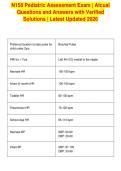
Preferred location to take pulse for Brachial Pulse
child under 2yrs
PMI for < 7yrs Left 4th ICS medial to the nipple
Neonate HR 100-180 bpm
Infant (6-month) HR 100-160 bpm
Toddler HR 80-130 bpm
Preschooler HR 70-120 bpm
School-Age HR 65-110 bpm
Neonate BP SBP: 60-90
DBP: 20-60
Infant BP SBP: 87-105
DBP: 53-66
, Toddler BP SBP: 95-105
DBP: 53-66
School-Age BP SBP: 97-112
DBP: 57-71
Cardiac system considerations for 1) Innocent heart murmur (common)
children 2) HR variable w/ respirations
3) Liver palpable 1-3 cm below right costal
margin
Neonates Circulating Blood 85-90 ml/kg
Volume
Infants Circulating Blood Volume 75-80 ml/kg
Children (Toddler, Preschooler, 70-75 ml/kg
School-Age)
Respiratory System considerations 1) Obligate nose breather
for children 2) Small, flexible airway (high risk for
airway
obstruction)
3) Barrel chest
4) Chest wall thin, compliant; Angle of rib
attachment longitudinal
5) Irregular, periodic breathing, apnea
(less than 20
sec)
6) Abdominal respirations
Questions and Answers with Verified
Solutions | Latest Updated 2026
Preferred location to take pulse for Brachial Pulse
child under 2yrs
PMI for < 7yrs Left 4th ICS medial to the nipple
Neonate HR 100-180 bpm
Infant (6-month) HR 100-160 bpm
Toddler HR 80-130 bpm
Preschooler HR 70-120 bpm
School-Age HR 65-110 bpm
Neonate BP SBP: 60-90
DBP: 20-60
Infant BP SBP: 87-105
DBP: 53-66
, Toddler BP SBP: 95-105
DBP: 53-66
School-Age BP SBP: 97-112
DBP: 57-71
Cardiac system considerations for 1) Innocent heart murmur (common)
children 2) HR variable w/ respirations
3) Liver palpable 1-3 cm below right costal
margin
Neonates Circulating Blood 85-90 ml/kg
Volume
Infants Circulating Blood Volume 75-80 ml/kg
Children (Toddler, Preschooler, 70-75 ml/kg
School-Age)
Respiratory System considerations 1) Obligate nose breather
for children 2) Small, flexible airway (high risk for
airway
obstruction)
3) Barrel chest
4) Chest wall thin, compliant; Angle of rib
attachment longitudinal
5) Irregular, periodic breathing, apnea
(less than 20
sec)
6) Abdominal respirations


