

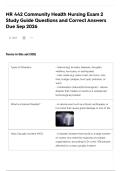
NR 442 Community Health Nursing Exam 2
Study Guide Questions and Correct Answers
Due Sep 2026
Save
Terms in this set (105)
Types of Disasters: - Natural (eg. tornado, diseases, droughts,
wildfires, hurricane, or earthquake)
- Man-made (e.g. plane crash, terrorism, riots,
fires, bridge collapse, toxic spill, pollution, or
wars)
- Combination (natural/technological) - natural
disaster that creates or results in a widespread
technological problem
What is a Natural Disaster? - A natural event such as a flood, earthquake, or
hurricane that causes great damage or loss of life
Mass Casualty Incident (MCI) - A disaster situation that results in a large number
of victims who need the response of multiple
organizations; according to Dr. Lewis >100 people
affected for a mass casualty incident
,What is multiple casualties range? - 1 to 99 individuals
What is terrorism? - The use of violence and intimidation in the
pursuit of political or social aims; unlawful use of
force according to the FBI
What are weapons of mass - Weapon designed to cause death or serious
destruction? bodily injury; e.g. toxins, chemicals, explosives,
biological agents, etc.
What is Anthrax? - Spore-forming gram + bacterium Bacillus
antracis; through inhalation is esp deadly
- S/S: Fevers + chills, chest discomfort, shortness
of breath, confusion, dizziness, cough, N/V,
stomach pains, headaches, fatigue, body aches
are common primarily through inhalation
methods
Bioterrorism - The deliberate spread of pathogenic organisms
into a community to cause widespread illness,
fear, and panic
- E.g. small pox, anthrax, Ebola are category A
agents
- E.g. Typhus, ricin toxin, west Nile virus, E.coli,
and food safety threats are category B
- Influenza, TB, or rabies are category C and the
third highest priority
Characteristics of Disasters - Frequency, predictability, preventability,
imminence-speed of onset, scope, and intensity
, Prevention in Disasters primary - aimed at preventing the occurrence of
a disaster/limiting consequences
- during nondisaster/predisaster stages
secondary - search, rescue, triage of victims
- assessment of destruction and devastation
- implemented once disaster occurs
tertiary - focus on recovery and restoring
community to previous levels of function
- aimed at preventing a recurrence/minimizing
effects of future disasters
Disaster Management - The plans that are in place designating the
community's response to a disaster
- Respond more quickly, more effectively, and
less confusion
- Ensures resources are available
- Basic Disaster Supply Kit - BOB (Bug Out Bag)
- Important papers, antiseptics, food, clothing,
etc.
Governmental Responsibilities - Local government (first responders) responsible
for safety and welfare
- State government involved when disaster
overwhelms local community resources
- Federal government through Department of
Homeland Security, CDC, FEMA
Study Guide Questions and Correct Answers
Due Sep 2026
Save
Terms in this set (105)
Types of Disasters: - Natural (eg. tornado, diseases, droughts,
wildfires, hurricane, or earthquake)
- Man-made (e.g. plane crash, terrorism, riots,
fires, bridge collapse, toxic spill, pollution, or
wars)
- Combination (natural/technological) - natural
disaster that creates or results in a widespread
technological problem
What is a Natural Disaster? - A natural event such as a flood, earthquake, or
hurricane that causes great damage or loss of life
Mass Casualty Incident (MCI) - A disaster situation that results in a large number
of victims who need the response of multiple
organizations; according to Dr. Lewis >100 people
affected for a mass casualty incident
,What is multiple casualties range? - 1 to 99 individuals
What is terrorism? - The use of violence and intimidation in the
pursuit of political or social aims; unlawful use of
force according to the FBI
What are weapons of mass - Weapon designed to cause death or serious
destruction? bodily injury; e.g. toxins, chemicals, explosives,
biological agents, etc.
What is Anthrax? - Spore-forming gram + bacterium Bacillus
antracis; through inhalation is esp deadly
- S/S: Fevers + chills, chest discomfort, shortness
of breath, confusion, dizziness, cough, N/V,
stomach pains, headaches, fatigue, body aches
are common primarily through inhalation
methods
Bioterrorism - The deliberate spread of pathogenic organisms
into a community to cause widespread illness,
fear, and panic
- E.g. small pox, anthrax, Ebola are category A
agents
- E.g. Typhus, ricin toxin, west Nile virus, E.coli,
and food safety threats are category B
- Influenza, TB, or rabies are category C and the
third highest priority
Characteristics of Disasters - Frequency, predictability, preventability,
imminence-speed of onset, scope, and intensity
, Prevention in Disasters primary - aimed at preventing the occurrence of
a disaster/limiting consequences
- during nondisaster/predisaster stages
secondary - search, rescue, triage of victims
- assessment of destruction and devastation
- implemented once disaster occurs
tertiary - focus on recovery and restoring
community to previous levels of function
- aimed at preventing a recurrence/minimizing
effects of future disasters
Disaster Management - The plans that are in place designating the
community's response to a disaster
- Respond more quickly, more effectively, and
less confusion
- Ensures resources are available
- Basic Disaster Supply Kit - BOB (Bug Out Bag)
- Important papers, antiseptics, food, clothing,
etc.
Governmental Responsibilities - Local government (first responders) responsible
for safety and welfare
- State government involved when disaster
overwhelms local community resources
- Federal government through Department of
Homeland Security, CDC, FEMA


