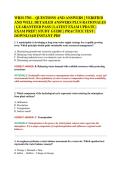
CPESC PART 1 PRACTICE EXAM– QUESTIONS
AND ANSWERS | VERIFIED AND WELL
DETAILED ANSWERS | PLUS RATIONALES |
GUARANTEED PASS | LATEST EXAM UPDATE |
EXAM PREP | STUDY GUIDE | PRACTICE TEST
1. A construction site is preparing to begin grading operations on a 25-acre project. Before
disturbing soil, what is the most critical initial step for achieving compliance with erosion
and sediment control requirements?
A. Install permanent landscaping
B. Develop and implement an approved Stormwater Pollution Prevention Plan (SWPPP) or
equivalent erosion and sediment control plan
C. Begin grading and install controls later if sediment becomes visible
D. Excavate detention basins after utilities are installed
Rationale:
A comprehensive SWPPP or erosion and sediment control plan identifies site risks, specifies
control measures, outlines inspection procedures, and establishes compliance requirements
before land disturbance begins.
2. What is the primary objective of erosion control practices?
A. Increase runoff velocity
B. Prevent soil particles from becoming detached and transported
C. Eliminate all rainfall infiltration
D. Increase sediment deposition downstream
Rationale:
Erosion control focuses on preventing soil detachment at the source, reducing sediment
generation before transport occurs.
3. Which factor has the greatest influence on erosion potential at a construction site?
A. Paint color of equipment
B. Soil exposure combined with rainfall intensity and runoff
,C. Number of workers on site
D. Fence height
Rationale:
Exposed soil, intense rainfall, and concentrated runoff are the primary drivers of erosion on
disturbed construction sites.
4. A project manager schedules grading immediately before a forecasted week of heavy
rainfall. From a CPESC perspective, what is the best recommendation?
A. Proceed without changes.
B. Delay major soil disturbance or install temporary erosion and sediment controls before
grading.
C. Remove all perimeter controls.
D. Increase equipment speed.
Rationale:
Proper planning reduces erosion risk by minimizing exposed soil before significant storm
events and ensuring controls are operational.
5. Which Best Management Practice (BMP) primarily reduces the velocity of runoff on
steep slopes?
A. Riprap check structures or slope interruption practices
B. Concrete sidewalks
C. Utility trenches
D. Property markers
Rationale:
Practices that interrupt runoff flow reduce water velocity, minimizing erosion and sediment
transport on slopes.
6. What is the primary function of sediment control measures?
A. Prevent rainfall
B. Capture sediment after erosion has occurred but before leaving the site
,C. Increase runoff speed
D. Eliminate vegetation
Rationale:
Sediment controls are designed to intercept and retain eroded soil before it reaches receiving
waters or adjacent properties.
7. Which soil type is generally most susceptible to erosion when left unprotected?
A. Dense gravel
B. Fine silt soils
C. Solid bedrock
D. Large cobbles
Rationale:
Fine silt particles detach and transport easily, making silt-rich soils highly vulnerable to
erosion.
8. A CPESC inspector notices sediment leaving a construction site through a storm drain
inlet. What should be the immediate priority?
A. Ignore the discharge until the next inspection.
B. Install or improve sediment control measures and prevent additional off-site discharge.
C. Increase grading activities.
D. Remove perimeter controls.
Rationale:
Sediment leaving the site indicates control failure that requires immediate corrective action to
protect downstream water quality.
9. Which practice is considered one of the most effective long-term erosion control
methods?
A. Permanent vegetation establishment
B. Removing all vegetation
C. Continuous soil disturbance
D. Increasing runoff concentration
, Rationale:
Healthy vegetation stabilizes soil, reduces runoff velocity, and provides one of the most
effective long-term erosion control solutions.
10. Why are construction entrances stabilized with aggregate?
A. To improve vehicle speed
B. To reduce tracking of sediment onto public roads
C. To increase runoff
D. To store construction materials
Rationale:
Stabilized entrances help remove soil from vehicle tires, reducing sediment tracking and
protecting surrounding roadways.
11. Which principle best supports effective erosion prevention?
A. Disturb the maximum area possible at one time.
B. Minimize disturbed areas and stabilize exposed soils as soon as practical.
C. Delay stabilization until project completion.
D. Remove all temporary controls early.
Rationale:
Limiting exposed soil and promptly stabilizing disturbed areas significantly reduces erosion
potential.
12. What is the primary purpose of a silt fence?
A. Divert floodwaters
B. Filter sediment from sheet flow runoff
C. Increase runoff velocity
D. Replace sediment basins
Rationale:
Silt fences intercept shallow overland flow, allowing suspended sediment to settle before water
leaves the site.
AND ANSWERS | VERIFIED AND WELL
DETAILED ANSWERS | PLUS RATIONALES |
GUARANTEED PASS | LATEST EXAM UPDATE |
EXAM PREP | STUDY GUIDE | PRACTICE TEST
1. A construction site is preparing to begin grading operations on a 25-acre project. Before
disturbing soil, what is the most critical initial step for achieving compliance with erosion
and sediment control requirements?
A. Install permanent landscaping
B. Develop and implement an approved Stormwater Pollution Prevention Plan (SWPPP) or
equivalent erosion and sediment control plan
C. Begin grading and install controls later if sediment becomes visible
D. Excavate detention basins after utilities are installed
Rationale:
A comprehensive SWPPP or erosion and sediment control plan identifies site risks, specifies
control measures, outlines inspection procedures, and establishes compliance requirements
before land disturbance begins.
2. What is the primary objective of erosion control practices?
A. Increase runoff velocity
B. Prevent soil particles from becoming detached and transported
C. Eliminate all rainfall infiltration
D. Increase sediment deposition downstream
Rationale:
Erosion control focuses on preventing soil detachment at the source, reducing sediment
generation before transport occurs.
3. Which factor has the greatest influence on erosion potential at a construction site?
A. Paint color of equipment
B. Soil exposure combined with rainfall intensity and runoff
,C. Number of workers on site
D. Fence height
Rationale:
Exposed soil, intense rainfall, and concentrated runoff are the primary drivers of erosion on
disturbed construction sites.
4. A project manager schedules grading immediately before a forecasted week of heavy
rainfall. From a CPESC perspective, what is the best recommendation?
A. Proceed without changes.
B. Delay major soil disturbance or install temporary erosion and sediment controls before
grading.
C. Remove all perimeter controls.
D. Increase equipment speed.
Rationale:
Proper planning reduces erosion risk by minimizing exposed soil before significant storm
events and ensuring controls are operational.
5. Which Best Management Practice (BMP) primarily reduces the velocity of runoff on
steep slopes?
A. Riprap check structures or slope interruption practices
B. Concrete sidewalks
C. Utility trenches
D. Property markers
Rationale:
Practices that interrupt runoff flow reduce water velocity, minimizing erosion and sediment
transport on slopes.
6. What is the primary function of sediment control measures?
A. Prevent rainfall
B. Capture sediment after erosion has occurred but before leaving the site
,C. Increase runoff speed
D. Eliminate vegetation
Rationale:
Sediment controls are designed to intercept and retain eroded soil before it reaches receiving
waters or adjacent properties.
7. Which soil type is generally most susceptible to erosion when left unprotected?
A. Dense gravel
B. Fine silt soils
C. Solid bedrock
D. Large cobbles
Rationale:
Fine silt particles detach and transport easily, making silt-rich soils highly vulnerable to
erosion.
8. A CPESC inspector notices sediment leaving a construction site through a storm drain
inlet. What should be the immediate priority?
A. Ignore the discharge until the next inspection.
B. Install or improve sediment control measures and prevent additional off-site discharge.
C. Increase grading activities.
D. Remove perimeter controls.
Rationale:
Sediment leaving the site indicates control failure that requires immediate corrective action to
protect downstream water quality.
9. Which practice is considered one of the most effective long-term erosion control
methods?
A. Permanent vegetation establishment
B. Removing all vegetation
C. Continuous soil disturbance
D. Increasing runoff concentration
, Rationale:
Healthy vegetation stabilizes soil, reduces runoff velocity, and provides one of the most
effective long-term erosion control solutions.
10. Why are construction entrances stabilized with aggregate?
A. To improve vehicle speed
B. To reduce tracking of sediment onto public roads
C. To increase runoff
D. To store construction materials
Rationale:
Stabilized entrances help remove soil from vehicle tires, reducing sediment tracking and
protecting surrounding roadways.
11. Which principle best supports effective erosion prevention?
A. Disturb the maximum area possible at one time.
B. Minimize disturbed areas and stabilize exposed soils as soon as practical.
C. Delay stabilization until project completion.
D. Remove all temporary controls early.
Rationale:
Limiting exposed soil and promptly stabilizing disturbed areas significantly reduces erosion
potential.
12. What is the primary purpose of a silt fence?
A. Divert floodwaters
B. Filter sediment from sheet flow runoff
C. Increase runoff velocity
D. Replace sediment basins
Rationale:
Silt fences intercept shallow overland flow, allowing suspended sediment to settle before water
leaves the site.