

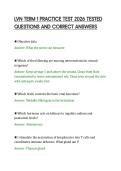
LVN TERM 1 PRACTICE TEST 2026 TESTED
QUESTIONS AND CORRECT ANSWERS
◉ Objective data
Answer: What the nurse can measure
◉ Which of the following are nursing interventions for wound
irrigation?
Answer: Keep syringe 1 inch above the wound. Clean from least
contaminated to most contaminated site. Clean area around the skin
with antiseptic swabs first.
◉ Which brain controls the basic vital functions?
Answer: Medulla Oblongata in the brainstem
◉ Which hormone acts on kidneys to regulate sodium and
potassium levels?
Answer: Aldosterone
◉ I stimulate the maturation of lymphocytes into T cells and
coordinates immune defenses. What gland am I?
Answer: Thymus gland
, ◉ What does epinephrine and norepinephrine do?
Answer: Raise heart rate, vasoconstriction, release glucose reserves,
produce adrenal glands, neurotransmitters
◉ Blood is returned to which part of the heart?
Answer: Right atrium/superiorvenacava
◉ Oxygenated blood exits through which part of the heart?
Answer: Aorta in the left ventricle
◉ Range of motion (ROM)
Answer: Move joints smoothly and gently, repeat based on orders,
perform to the point of resistance, stop if patient is in pain
◉ What is the BEST method to maintain privacy for a patient when
doing a bed bath?
Answer: Close the curtains
◉ What enzymes are produced by the pancreas and what are their
functions?
Answer: amylase ( digest sugars- carbohydrates), trypsin (digest
proteins), lipase (digest fat)
QUESTIONS AND CORRECT ANSWERS
◉ Objective data
Answer: What the nurse can measure
◉ Which of the following are nursing interventions for wound
irrigation?
Answer: Keep syringe 1 inch above the wound. Clean from least
contaminated to most contaminated site. Clean area around the skin
with antiseptic swabs first.
◉ Which brain controls the basic vital functions?
Answer: Medulla Oblongata in the brainstem
◉ Which hormone acts on kidneys to regulate sodium and
potassium levels?
Answer: Aldosterone
◉ I stimulate the maturation of lymphocytes into T cells and
coordinates immune defenses. What gland am I?
Answer: Thymus gland
, ◉ What does epinephrine and norepinephrine do?
Answer: Raise heart rate, vasoconstriction, release glucose reserves,
produce adrenal glands, neurotransmitters
◉ Blood is returned to which part of the heart?
Answer: Right atrium/superiorvenacava
◉ Oxygenated blood exits through which part of the heart?
Answer: Aorta in the left ventricle
◉ Range of motion (ROM)
Answer: Move joints smoothly and gently, repeat based on orders,
perform to the point of resistance, stop if patient is in pain
◉ What is the BEST method to maintain privacy for a patient when
doing a bed bath?
Answer: Close the curtains
◉ What enzymes are produced by the pancreas and what are their
functions?
Answer: amylase ( digest sugars- carbohydrates), trypsin (digest
proteins), lipase (digest fat)


