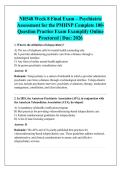
NR548 Week 8 Final Exam – Psychiatric
Assessment for the PMHNP Complete 100-
Question Practice Exam Examplify Online
Proctored | Due: 2026
1. What is the definition of telepsychiatry?
A) The use of telephone calls for mental health counseling only
B) A provider administering psychiatric care from a distance through a
technological interface
C) Any form of online mental health application
D) In-person psychiatric consultations only
Answer: B
Rationale: Telepsychiatry is a subset of telehealth in which a provider administers
psychiatric care from a distance through a technological interface. Telepsychiatric
services include psychiatric interview, psychiatric evaluations, therapy, medication
management, consultation, and client education.
2. In 2018, the American Psychiatric Association (APA), in conjunction with
the American Telemedicine Association (ATA), developed:
A) A mandatory telehealth certification program
B) Best practices for providing videoconferencing-based telepsychiatric care
C) Federal reimbursement guidelines for telepsychiatry
D) A list of state licensing compacts
Answer: B
Rationale: The APA and ATA jointly published best practices for
videoconferencing-based telepsychiatric care. These guidelines address technical,
administrative, and clinical considerations to ensure safe and effective
telepsychiatry services.
,3. Which of the following is a verified benefit of telepsychiatry? (Select all that
apply)
A) Improved access to care
B) Reduced no-show rates
C) Increased patient satisfaction
D) Elimination of all privacy concerns
Answer: A, B, C
Rationale: Telepsychiatry has been shown to improve access to care, particularly
for patients in rural or underserved areas, reduce no-show rates, and increase
patient satisfaction. However, it does not eliminate privacy concerns; providers
must still adhere to HIPAA and other confidentiality requirements.
4. During telepsychiatry sessions, both the provider and client locations
should:
A) Remain undisclosed to protect privacy
B) Be documented in the medical record
C) Be kept confidential from all parties
D) Never be discussed during sessions
Answer: B
Rationale: During telepsychiatry sessions, both the provider and client locations
should be documented in the medical record. Knowing a patient's location at the
time of care impacts emergency management and local available resources.
5. When a patient changes locations during telepsychiatry treatment, the
provider should:
A) Continue the session without any changes
B) Be aware of the impact of location on emergency management protocols
C) Terminate the session immediately
D) Require the patient to return to their original location
Answer: B
,Rationale: As patients change locations, providers shall be aware of the impact of
location on emergency management protocols, including police, emergency rooms,
and crisis teams. Providers should consider the use of a "Patient Support Person"
(PSP) as clinically indicated.
6. What video conferencing platform requirements should telepsychiatry
providers select?
A) Any free platform available online
B) Platforms with appropriate verification, confidentiality, and security parameters
C) Platforms that do not require encryption
D) Platforms that store all sessions indefinitely
Answer: B
Rationale: Providers should select video conferencing applications that have the
appropriate verification, confidentiality, and security parameters. This ensures
compliance with HIPAA and protects patient privacy.
7. In clinically unsupervised telepsychiatry settings, providers should:
A) Avoid discussing location with patients
B) Discuss the importance of consistency in where the patient is located for
sessions
C) Require patients to be in a healthcare facility
D) Prohibit the use of support persons
Answer: B
Rationale: Providers should discuss the importance of having consistency in
where the patient is located for sessions. This helps ensure appropriate emergency
management and access to local resources.
8. If a patient and/or a Patient Support Person (PSP) will not cooperate in
emergency management:
A) The provider should terminate the therapeutic relationship
B) Providers shall be prepared to work with local emergency personnel
, C) The provider should ignore the situation
D) The provider should report the patient to authorities immediately
Answer: B
Rationale: If a patient and/or a PSP will not cooperate in his or her own
emergency management, providers shall be prepared to work with local emergency
personnel in case the patient needs emergency services and/or involuntary
hospitalization.
9. Care coordination in telemental health requires:
A) No communication with other providers
B) Consent from the patient and regular communication with other professionals
C) Sharing all information without patient consent
D) Avoiding all interdisciplinary communication
Answer: B
Rationale: With consent from the patient and in accordance with privacy
guidelines, telemental health providers should arrange for appropriate and regular
communication with other professionals and organizations involved in the care of
the patient.
10. The Ryan Haight Act primarily regulates:
A) In-person psychiatric assessments
B) The prescribing of controlled substances via telemedicine
C) Mental health counseling techniques
D) Insurance reimbursement for psychiatric care
Answer: B
Rationale: The Ryan Haight Act regulates the prescribing of controlled substances
via telemedicine. It requires an in-person evaluation before prescribing controlled
substances, with certain exceptions.
Assessment for the PMHNP Complete 100-
Question Practice Exam Examplify Online
Proctored | Due: 2026
1. What is the definition of telepsychiatry?
A) The use of telephone calls for mental health counseling only
B) A provider administering psychiatric care from a distance through a
technological interface
C) Any form of online mental health application
D) In-person psychiatric consultations only
Answer: B
Rationale: Telepsychiatry is a subset of telehealth in which a provider administers
psychiatric care from a distance through a technological interface. Telepsychiatric
services include psychiatric interview, psychiatric evaluations, therapy, medication
management, consultation, and client education.
2. In 2018, the American Psychiatric Association (APA), in conjunction with
the American Telemedicine Association (ATA), developed:
A) A mandatory telehealth certification program
B) Best practices for providing videoconferencing-based telepsychiatric care
C) Federal reimbursement guidelines for telepsychiatry
D) A list of state licensing compacts
Answer: B
Rationale: The APA and ATA jointly published best practices for
videoconferencing-based telepsychiatric care. These guidelines address technical,
administrative, and clinical considerations to ensure safe and effective
telepsychiatry services.
,3. Which of the following is a verified benefit of telepsychiatry? (Select all that
apply)
A) Improved access to care
B) Reduced no-show rates
C) Increased patient satisfaction
D) Elimination of all privacy concerns
Answer: A, B, C
Rationale: Telepsychiatry has been shown to improve access to care, particularly
for patients in rural or underserved areas, reduce no-show rates, and increase
patient satisfaction. However, it does not eliminate privacy concerns; providers
must still adhere to HIPAA and other confidentiality requirements.
4. During telepsychiatry sessions, both the provider and client locations
should:
A) Remain undisclosed to protect privacy
B) Be documented in the medical record
C) Be kept confidential from all parties
D) Never be discussed during sessions
Answer: B
Rationale: During telepsychiatry sessions, both the provider and client locations
should be documented in the medical record. Knowing a patient's location at the
time of care impacts emergency management and local available resources.
5. When a patient changes locations during telepsychiatry treatment, the
provider should:
A) Continue the session without any changes
B) Be aware of the impact of location on emergency management protocols
C) Terminate the session immediately
D) Require the patient to return to their original location
Answer: B
,Rationale: As patients change locations, providers shall be aware of the impact of
location on emergency management protocols, including police, emergency rooms,
and crisis teams. Providers should consider the use of a "Patient Support Person"
(PSP) as clinically indicated.
6. What video conferencing platform requirements should telepsychiatry
providers select?
A) Any free platform available online
B) Platforms with appropriate verification, confidentiality, and security parameters
C) Platforms that do not require encryption
D) Platforms that store all sessions indefinitely
Answer: B
Rationale: Providers should select video conferencing applications that have the
appropriate verification, confidentiality, and security parameters. This ensures
compliance with HIPAA and protects patient privacy.
7. In clinically unsupervised telepsychiatry settings, providers should:
A) Avoid discussing location with patients
B) Discuss the importance of consistency in where the patient is located for
sessions
C) Require patients to be in a healthcare facility
D) Prohibit the use of support persons
Answer: B
Rationale: Providers should discuss the importance of having consistency in
where the patient is located for sessions. This helps ensure appropriate emergency
management and access to local resources.
8. If a patient and/or a Patient Support Person (PSP) will not cooperate in
emergency management:
A) The provider should terminate the therapeutic relationship
B) Providers shall be prepared to work with local emergency personnel
, C) The provider should ignore the situation
D) The provider should report the patient to authorities immediately
Answer: B
Rationale: If a patient and/or a PSP will not cooperate in his or her own
emergency management, providers shall be prepared to work with local emergency
personnel in case the patient needs emergency services and/or involuntary
hospitalization.
9. Care coordination in telemental health requires:
A) No communication with other providers
B) Consent from the patient and regular communication with other professionals
C) Sharing all information without patient consent
D) Avoiding all interdisciplinary communication
Answer: B
Rationale: With consent from the patient and in accordance with privacy
guidelines, telemental health providers should arrange for appropriate and regular
communication with other professionals and organizations involved in the care of
the patient.
10. The Ryan Haight Act primarily regulates:
A) In-person psychiatric assessments
B) The prescribing of controlled substances via telemedicine
C) Mental health counseling techniques
D) Insurance reimbursement for psychiatric care
Answer: B
Rationale: The Ryan Haight Act regulates the prescribing of controlled substances
via telemedicine. It requires an in-person evaluation before prescribing controlled
substances, with certain exceptions.