Page 1 of 151
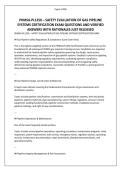
PHMSA-PL1250 – SAFETY EVALUATION OF GAS PIPELINE
SYSTEMS CERTIFICATION EXAM QUESTIONS AND VERIFIED
ANSWERS WITH RATIONALES JUST RELEASED
PHMSA-PL1250 – SAFETY EVALUATION OF GAS PIPELINE SYSTEMS CERTIFICATION EXAM
## Gas Pipeline Safety Regulations & Compliance (Core Exam Area)
This is the highest-weighted section of the PHMSA-PL1250 Certification Exam and serves as the
foundation for all subsequent PHMSA gas inspector training courses. Candidates are expected
to understand the federal pipeline safety regulations governing the design, construction,
operation, maintenance, and inspection of gas pipeline systems. Emphasis is placed on applying
49 CFR Part 192, identifying regulatory requirements, evaluating operator compliance,
understanding inspector responsibilities, documenting findings, and recognizing safety
deficiencies during pipeline evaluations. Successful completion of PL1250 is a prerequisite for
many advanced PHMSA inspector courses.
---
## Gas Pipeline Design, Construction & Materials
A major exam domain covering the fundamental characteristics of gas transmission and
distribution systems.
Topics include pipeline classifications, transmission and distribution systems, steel and plastic
pipelines, pipeline materials, pipe manufacturing, valves, fittings, regulators, pressure control
equipment, welding fundamentals, pipeline construction methods, installation practices,
pipeline markings, and right-of-way considerations.
---
## Pipeline Operations & Maintenance
One of the most frequently tested sections.
Topics include normal pipeline operations, operating procedures, maintenance programs, valve
inspections, patrol requirements, leak surveys, emergency valves, regulator stations, operating
records, maintenance documentation, repair procedures, abandonment procedures, and
operational safety.
---
## Pipeline Integrity Management & Risk Assessment
, Page 2 of 151
A major inspection and compliance domain.
Topics include integrity management programs, High Consequence Areas (HCAs), risk
assessment, threat identification, consequence analysis, preventive measures, mitigative
measures, baseline assessments, integrity evaluations, performance monitoring, and integrity
program documentation.
---
## Corrosion Control & Cathodic Protection
A heavily tested technical area.
Topics include external corrosion, internal corrosion, atmospheric corrosion, protective
coatings, cathodic protection systems, corrosion monitoring, electrical isolation, pipe-to-soil
potential measurements, corrosion inspections, corrosion records, and corrosion mitigation
practices.
---
## Leak Detection, Testing & Pipeline Inspection
A critical practical section emphasizing inspection methods.
Topics include leak surveys, pressure testing, hydrostatic testing, pneumatic testing, leak
detection equipment, inline inspection (ILI), smart pigging, visual inspections, non-destructive
testing (NDT), pipeline patrols, inspection intervals, and evaluation of pipeline defects.
---
## Pressure Control & Overpressure Protection
A major operational domain.
Topics include Maximum Allowable Operating Pressure (MAOP), pressure regulators, relief
valves, overpressure protection systems, pressure monitoring, pressure testing, regulator
stations, pressure calculations, and pressure system inspections.
---
## Pipeline Components & System Evaluation
, Page 3 of 151
Candidates must understand the function and inspection of major pipeline components.
Topics include compressors, valves, meters, regulators, service lines, transmission lines,
distribution mains, control stations, piping components, emergency shutdown devices, and
system performance evaluations.
---
## Emergency Response & Incident Investigation
A frequently tested safety section.
Topics include emergency response plans, gas leaks, fires, explosions, incident reporting, public
safety, operator response procedures, emergency shutdown, failure investigations, root cause
analysis, corrective actions, and safety-related condition reporting.
---
## Inspection Procedures, Documentation & Operator Qualification
A major compliance and enforcement section.
Topics include inspection planning, field inspections, inspection checklists, record reviews,
operator qualification (OQ), documentation requirements, inspection reports, enforcement
procedures, compliance verification, corrective actions, and inspector ethics.
---
## SECTION 1: GAS PIPELINE SAFETY REGULATIONS & COMPLIANCE (Questions 1-30)
---
1. What is the primary purpose of the PHMSA-PL1250 Certification Exam for pipeline safety
inspectors, and why is this certification considered a foundation for advanced inspector
training?
, Page 4 of 151
A. To provide a comprehensive overview of pipeline construction methods and welding
techniques.
B. To establish a foundational understanding of 49 CFR Part 192 regulations, inspector
responsibilities, and regulatory compliance evaluation.
C. To certify candidates as qualified pipeline operators under federal regulations.
D. To replace the need for operator qualification (OQ) programs in pipeline safety.
Correct Answer: B
Rationale: The PL1250 certification establishes the foundation for all other PHMSA gas
inspector training . It focuses on applying 49 CFR Part 192 regulations, identifying regulatory
requirements, evaluating operator compliance, and recognizing safety deficiencies.
---
PHMSA-PL1250 – SAFETY EVALUATION OF GAS PIPELINE
SYSTEMS CERTIFICATION EXAM QUESTIONS AND VERIFIED
ANSWERS WITH RATIONALES JUST RELEASED
PHMSA-PL1250 – SAFETY EVALUATION OF GAS PIPELINE SYSTEMS CERTIFICATION EXAM
## Gas Pipeline Safety Regulations & Compliance (Core Exam Area)
This is the highest-weighted section of the PHMSA-PL1250 Certification Exam and serves as the
foundation for all subsequent PHMSA gas inspector training courses. Candidates are expected
to understand the federal pipeline safety regulations governing the design, construction,
operation, maintenance, and inspection of gas pipeline systems. Emphasis is placed on applying
49 CFR Part 192, identifying regulatory requirements, evaluating operator compliance,
understanding inspector responsibilities, documenting findings, and recognizing safety
deficiencies during pipeline evaluations. Successful completion of PL1250 is a prerequisite for
many advanced PHMSA inspector courses.
---
## Gas Pipeline Design, Construction & Materials
A major exam domain covering the fundamental characteristics of gas transmission and
distribution systems.
Topics include pipeline classifications, transmission and distribution systems, steel and plastic
pipelines, pipeline materials, pipe manufacturing, valves, fittings, regulators, pressure control
equipment, welding fundamentals, pipeline construction methods, installation practices,
pipeline markings, and right-of-way considerations.
---
## Pipeline Operations & Maintenance
One of the most frequently tested sections.
Topics include normal pipeline operations, operating procedures, maintenance programs, valve
inspections, patrol requirements, leak surveys, emergency valves, regulator stations, operating
records, maintenance documentation, repair procedures, abandonment procedures, and
operational safety.
---
## Pipeline Integrity Management & Risk Assessment
, Page 2 of 151
A major inspection and compliance domain.
Topics include integrity management programs, High Consequence Areas (HCAs), risk
assessment, threat identification, consequence analysis, preventive measures, mitigative
measures, baseline assessments, integrity evaluations, performance monitoring, and integrity
program documentation.
---
## Corrosion Control & Cathodic Protection
A heavily tested technical area.
Topics include external corrosion, internal corrosion, atmospheric corrosion, protective
coatings, cathodic protection systems, corrosion monitoring, electrical isolation, pipe-to-soil
potential measurements, corrosion inspections, corrosion records, and corrosion mitigation
practices.
---
## Leak Detection, Testing & Pipeline Inspection
A critical practical section emphasizing inspection methods.
Topics include leak surveys, pressure testing, hydrostatic testing, pneumatic testing, leak
detection equipment, inline inspection (ILI), smart pigging, visual inspections, non-destructive
testing (NDT), pipeline patrols, inspection intervals, and evaluation of pipeline defects.
---
## Pressure Control & Overpressure Protection
A major operational domain.
Topics include Maximum Allowable Operating Pressure (MAOP), pressure regulators, relief
valves, overpressure protection systems, pressure monitoring, pressure testing, regulator
stations, pressure calculations, and pressure system inspections.
---
## Pipeline Components & System Evaluation
, Page 3 of 151
Candidates must understand the function and inspection of major pipeline components.
Topics include compressors, valves, meters, regulators, service lines, transmission lines,
distribution mains, control stations, piping components, emergency shutdown devices, and
system performance evaluations.
---
## Emergency Response & Incident Investigation
A frequently tested safety section.
Topics include emergency response plans, gas leaks, fires, explosions, incident reporting, public
safety, operator response procedures, emergency shutdown, failure investigations, root cause
analysis, corrective actions, and safety-related condition reporting.
---
## Inspection Procedures, Documentation & Operator Qualification
A major compliance and enforcement section.
Topics include inspection planning, field inspections, inspection checklists, record reviews,
operator qualification (OQ), documentation requirements, inspection reports, enforcement
procedures, compliance verification, corrective actions, and inspector ethics.
---
## SECTION 1: GAS PIPELINE SAFETY REGULATIONS & COMPLIANCE (Questions 1-30)
---
1. What is the primary purpose of the PHMSA-PL1250 Certification Exam for pipeline safety
inspectors, and why is this certification considered a foundation for advanced inspector
training?
, Page 4 of 151
A. To provide a comprehensive overview of pipeline construction methods and welding
techniques.
B. To establish a foundational understanding of 49 CFR Part 192 regulations, inspector
responsibilities, and regulatory compliance evaluation.
C. To certify candidates as qualified pipeline operators under federal regulations.
D. To replace the need for operator qualification (OQ) programs in pipeline safety.
Correct Answer: B
Rationale: The PL1250 certification establishes the foundation for all other PHMSA gas
inspector training . It focuses on applying 49 CFR Part 192 regulations, identifying regulatory
requirements, evaluating operator compliance, and recognizing safety deficiencies.
---