

Digestive System Anatomy and Physiology
Study online at https://quizlet.com/_jpoww5
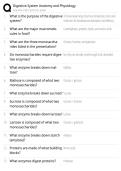
1. What is the purpose of the digestive To break down large food macromolecules into small
system? molecules for bloodstream absorption and delivery.
2. What are the major macromole- Carbohydrates, proteins, lipids, and nucleic acids.
cules in food?
3. What are the three monosaccha- Glucose, fructose, and galactose.
rides listed in the presentation?
4. Do monosaccharides require diges- No, they are already small enough to be absorbed.
tive enzymes?
5. What enzyme breaks down mal- Maltase.
tose?
6. Maltose is composed of what two Glucose + glucose.
monosaccharides?
7. What enzyme breaks down sucrose? Sucrase.
8. Sucrose is composed of what two Glucose + fructose.
monosaccharides?
9. What enzyme breaks down lactose? Lactase.
10. Lactose is composed of what two Glucose + galactose.
monosaccharides?
11. What enzyme breaks down starch Amylase.
(amylose)?
12. Proteins are made of what building Amino acids.
blocks?
13. What enzymes digest proteins? Proteases.
1/8
, Digestive System Anatomy and Physiology
Study online at https://quizlet.com/_jpoww5
14. What are triglycerides composed Three fatty acids and one glycerol.
of?
15. What enzymes digest lipids? Lipases.
16. What are nucleic acids? DNA and RNA.
17. What enzymes break down nucleic Nucleases.
acids?
18. What is another name for the diges- Gastrointestinal (GI) tract or alimentary canal.
tive tract?
19. What type of structure is the diges- A muscular tube.
tive tract?
20. From where to where does the di- From the oral cavity to the anus.
gestive tract extend?
21. What structures does the digestive Pharynx, esophagus, stomach, small intestine, and
tract pass through? large intestine.
22. What is ingestion? The entry of materials into the digestive tract through
the mouth.
23. What is mechanical digestion? Crushing, shearing, and muscle contractions that make
materials easier to move.
24. What is chemical digestion? The chemical breakdown of food into small organic
molecules for absorption.
25. What is secretion? The release of water, acids, enzymes, buffers, and salts.
26. What is absorption?
2/8
Study online at https://quizlet.com/_jpoww5
1. What is the purpose of the digestive To break down large food macromolecules into small
system? molecules for bloodstream absorption and delivery.
2. What are the major macromole- Carbohydrates, proteins, lipids, and nucleic acids.
cules in food?
3. What are the three monosaccha- Glucose, fructose, and galactose.
rides listed in the presentation?
4. Do monosaccharides require diges- No, they are already small enough to be absorbed.
tive enzymes?
5. What enzyme breaks down mal- Maltase.
tose?
6. Maltose is composed of what two Glucose + glucose.
monosaccharides?
7. What enzyme breaks down sucrose? Sucrase.
8. Sucrose is composed of what two Glucose + fructose.
monosaccharides?
9. What enzyme breaks down lactose? Lactase.
10. Lactose is composed of what two Glucose + galactose.
monosaccharides?
11. What enzyme breaks down starch Amylase.
(amylose)?
12. Proteins are made of what building Amino acids.
blocks?
13. What enzymes digest proteins? Proteases.
1/8
, Digestive System Anatomy and Physiology
Study online at https://quizlet.com/_jpoww5
14. What are triglycerides composed Three fatty acids and one glycerol.
of?
15. What enzymes digest lipids? Lipases.
16. What are nucleic acids? DNA and RNA.
17. What enzymes break down nucleic Nucleases.
acids?
18. What is another name for the diges- Gastrointestinal (GI) tract or alimentary canal.
tive tract?
19. What type of structure is the diges- A muscular tube.
tive tract?
20. From where to where does the di- From the oral cavity to the anus.
gestive tract extend?
21. What structures does the digestive Pharynx, esophagus, stomach, small intestine, and
tract pass through? large intestine.
22. What is ingestion? The entry of materials into the digestive tract through
the mouth.
23. What is mechanical digestion? Crushing, shearing, and muscle contractions that make
materials easier to move.
24. What is chemical digestion? The chemical breakdown of food into small organic
molecules for absorption.
25. What is secretion? The release of water, acids, enzymes, buffers, and salts.
26. What is absorption?
2/8


